
CATL startet Testproduktion von Batteriezellen in Ungarn
Source: PR Newswire
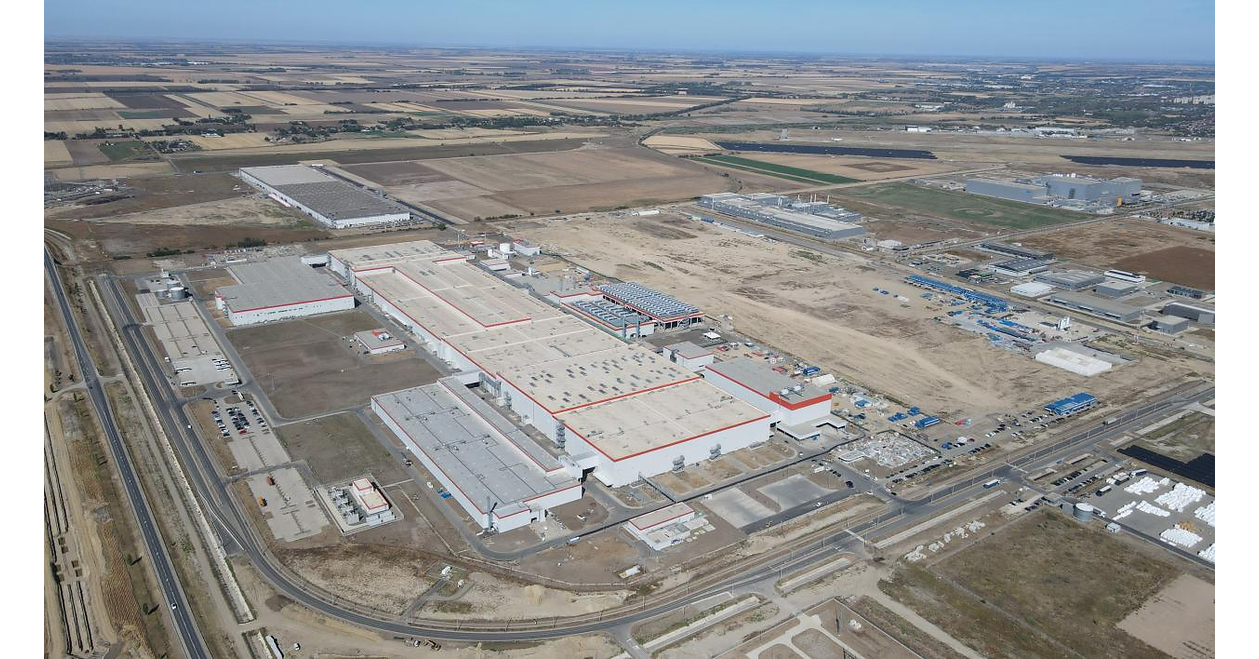
CATL began test production on September 22 at its new Debrecen, Hungary battery-cell plant after obtaining all required operating and environmental permits. Once fully operational, the 100GWh facility will be CATL's largest production site outside China and will supply European EV manufacturers, materially expanding regional battery supply-chain capacity. CATL has already produced 537,000 battery modules in Debrecen since autumn 2024, while authorities confirmed that previously identified deficiencies had been remedied.
Analysis
The investable implication is not a near-term volume event but a localization-driven reset in European EV battery procurement. A scaled regional CATL footprint lowers freight, inventory and FX friction for OEMs while improving just-in-time supply reliability; that should strengthen OEM gross-margin resilience versus European peers still dependent on imported cells. BMW is the clearest potential beneficiary given its Hungarian manufacturing concentration, but supplier allocation and cell chemistry remain the key confirmation variables.
The more consequential second-order effect is pricing pressure on European cell and materials ecosystems. CATL's local manufacturing scale raises the hurdle for Korean cell suppliers (373220 KS, 006400 KS) and for high-cost European battery projects to earn acceptable returns, especially if European EV demand remains below original capacity-planning assumptions. Cathode/materials suppliers such as Umicore (UMI BB) may gain regional volume but face weaker pricing power if CATL maintains vertical-integration leverage and dual-sources inputs.
The initial equity reaction should be limited: test-line operation does not establish commercial yield, qualification status, or customer offtake. Over the next 1-3 months, watch disclosed customer qualifications, scrap/yield progression and any revision to OEM battery sourcing; these determine whether cost savings enter 2027 vehicle margins. Over 6-18 months, the principal risk is regulatory rather than operational: EU local-content, subsidy, or Chinese-owned supply-chain restrictions could reduce the strategic value of European production despite physical localization. The contrarian view is that this capacity worsens European EV oversupply and prompts OEMs to pass battery savings to consumers, limiting margin upside while damaging local battery competitors.
AllMind Terminal
AI-powered research, real-time alerts, and portfolio analytics for institutional investors.
Request TrialMarket Sentiment
Overall Sentiment
strongly positive
Sentiment Score
0.58
Key Decisions for Investors
- Place BMW GR on a 1-3 month watch-list for a long versus Mercedes-Benz Group (MBG GR) only if BMW confirms Debrecen cell qualification or improves 2027 EV margin/COGS guidance. Target a 5-8% relative move; exit if BMW flags delayed Neue Klasse ramp, supplier requalification, or no battery-cost benefit.
- Maintain a structural bearish bias on European battery-cell economics rather than chase OEMs immediately: evaluate a 6-12 month short UMI BB versus long BMW GR after reviewing Umicore's contracted cathode volumes and pricing exposure. The thesis fails if EU support creates protected returns or Umicore demonstrates firm take-or-pay volumes with pass-through pricing.
- For Korean cell suppliers, use any catalyst-driven strength in LG Energy Solution (373220 KS) or Samsung SDI (006400 KS) to assess 6-12 month relative shorts versus a global auto basket; localized Chinese supply increases European pricing competition. Do not initiate without Europe-specific utilization and customer-contract data.
- Set alerts for EU battery local-content rules, tariff/subsidy decisions, and CATL commercial-start milestones. A restrictive policy outcome is the fastest falsifier of the localized-supply thesis and would favor incumbent European/Korean suppliers over CATL-linked OEM cost savings.
More News
- Oil falls on report Asia will import highest volume of crude since start of Iran war
- America’s Asian allies want a Trump-Xi truce — but not at their expense
- Chinese authorities reportedly in possession of F-35 components in Hong Kong
- Meta announces new lightweight virtual reality glasses to one-up Apple’s Vision Pro
- Trump evalúa prohibir exportaciones de diésel de EE.UU.
- ASPI's Cutler on Trump-Xi Summit, Trade Relations
From AllMind Research
- Anthropic IPO Preview: Valuation, Timing, and What to Watch
- Shein After the IPO: Venue, Valuation, and What Must Be Proved
- What AI Research Tools Should a Small Hedge Fund Buy First?
- Automating Financial Model Updates: A Source-Controlled Workflow
- Weekly Update: Live Event Center, In-App Documents, and Faster Transcripts