
Apex Intelligence Raises Nearly US$50 Million in Angel Funding to Build Self-Evolving Foundation Models
Source: PR Newswire
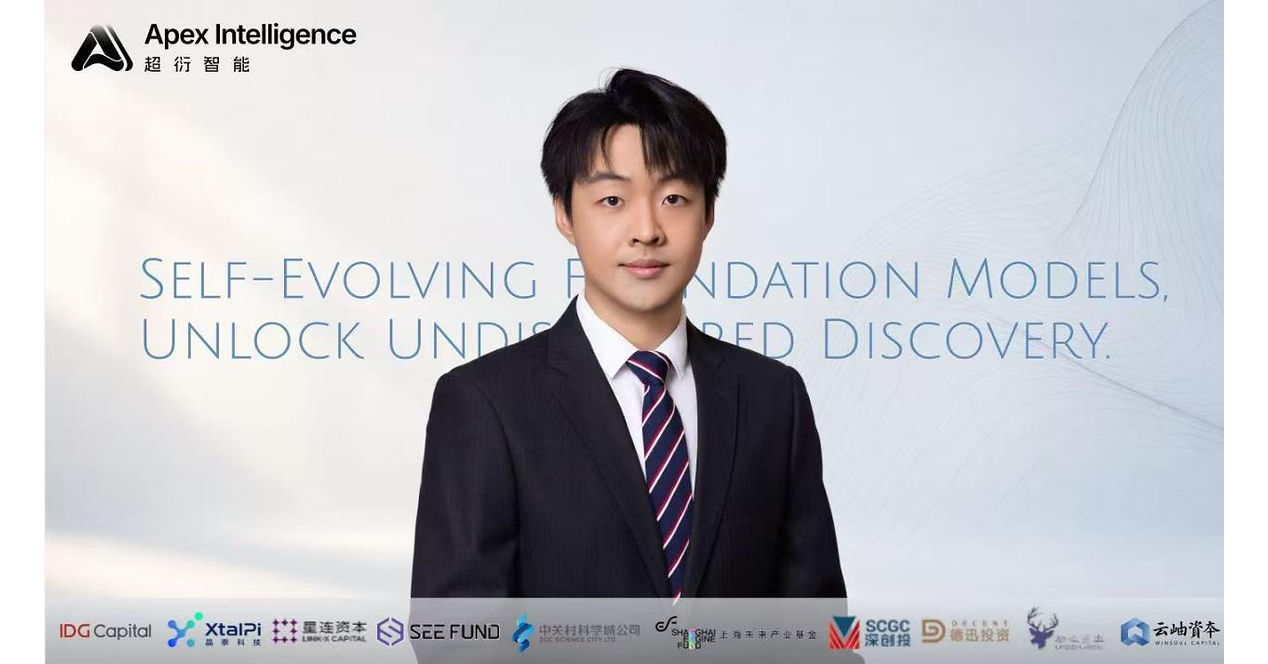
Beijing-based Apex Intelligence raised nearly US$50 million across angel and angel-plus rounds to develop recursively self-improving, self-evolving foundation models for scientific research. Founded in June 2026, the startup claims its system has generated AI-conference-quality research, improved AI-training and GPU-kernel workflows, and completed a proof of the decades-old majorization conjecture. The company plans to invest in compute and model training while recruiting research talent through visits to leading North American universities.
Analysis
The investable implication is less about a new model vendor and more about the accelerating monetization of AI in closed-loop R&D workflows. If credible, autonomous experimentation raises the value of proprietary data, simulators, lab automation and domain-specific validation layers—not generic chatbot distribution. This favors platform owners with enterprise data and workflow control, notably MSFT through Azure, GitHub and scientific-computing customers, while IBM can benefit only if watsonx converts its regulated-industry relationships into measurable research-agent deployments rather than pilots.
For NVDA, the near-term read-through is marginally negative only at the margin: Chinese research-model developers have incentive to optimize software and kernels around constrained hardware availability, which can reduce GPU-hours required per experiment and accelerate domestic-stack substitution. That is not a demand-destruction thesis in the next 1-3 months; frontier research remains compute-intensive. The 6-18 month risk is that efficiency gains plus Chinese accelerator ecosystem progress shift incremental Chinese AI capex away from NVIDIA, with export-control changes the dominant swing factor.
The company’s technical claims are not yet a basis for revenue underwriting: conference-quality outputs and benchmark results do not establish reproducibility, cost per validated discovery, IP ownership, or willingness of pharmaceutical/chip customers to deploy. Consensus may overvalue the "AI scientist" narrative before the bottleneck—physical experimentation, data rights, and regulated validation—has been solved. The more likely first commercial use is optimization of software, simulation and quant-research loops, where results are rapidly measurable, rather than broad scientific discovery.
AllMind Terminal
AI-powered research, real-time alerts, and portfolio analytics for institutional investors.
Request TrialMarket Sentiment
Overall Sentiment
moderately positive
Sentiment Score
0.62
Ticker Sentiment
Key Decisions for Investors
- No direct private-market inference from this funding event; treat it as an alert for evidence of paid deployments, disclosed compute partners, and independently reproduced results over the next 3-6 months.
- Maintain MSFT as the liquid large-cap expression of enterprise research-agent adoption; add only on Azure AI guidance acceleration or disclosed agentic-R&D workloads. Thesis is falsified if Azure growth decelerates without offsetting AI service-margin expansion over the next two earnings reports.
- Avoid using this item alone to short NVDA. Instead, monitor Chinese accelerator/vendor disclosures and NVIDIA China revenue commentary; consider an NVDA hedge only if export restrictions tighten further or China exposure declines materially for two consecutive quarters.
- Watch IBM rather than initiate: a long requires evidence that watsonx or consulting bookings convert into recurring, high-margin scientific/industrial agent revenue. Absent this, the likely outcome is narrative support without enough earnings sensitivity to justify multiple expansion.
More News
- Investors react to Fed hike and market sell-off: Brace for 'higher for longer' rates
- The Fed decision, Clarity Act fails in Senate, Ford's truck prices and more in Morning Squawk
- Snap tries to bring AR glasses to enterprise market, partnering with Nvidia, AWS and Salesforce
- Hyperscaler debt signals warning sign, Apollo cautions
- Why Forgent Power Stock Keeps Going Up
- Fed decision looms large; Zuckerberg on AI safety fears - what’s moving markets