
Cooper Standard Introduces FlexiFit™ Portfolio to Simplify Vehicle Assembly and Improve Manufacturing Efficiency
Source: PR Newswire
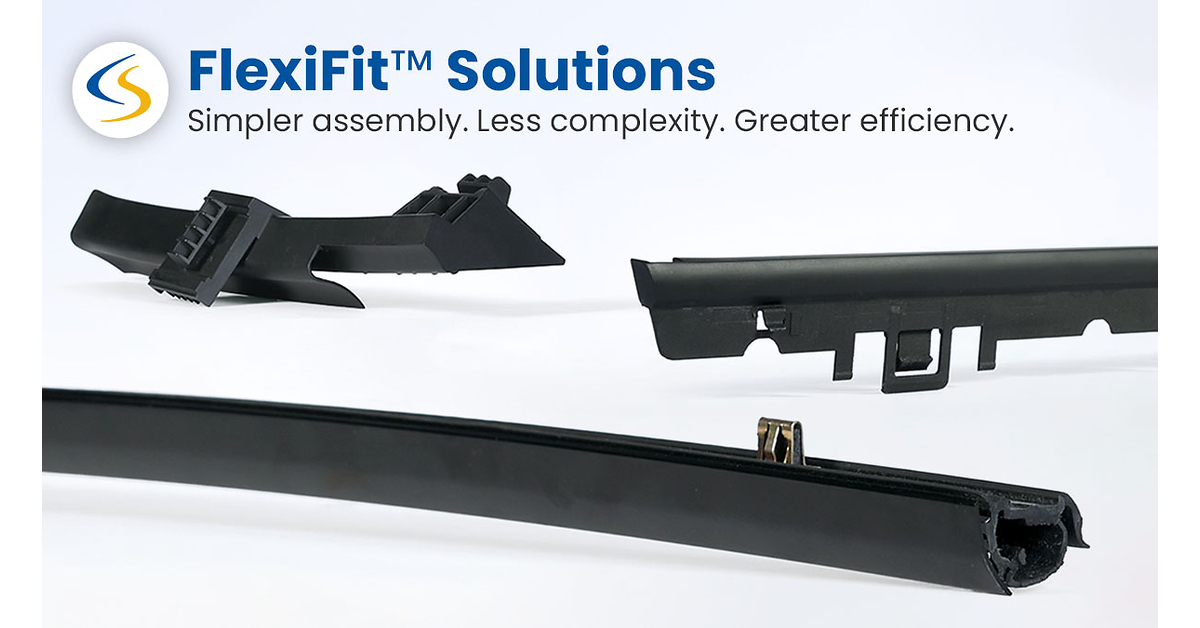
Cooper Standard introduced its FlexiFit portfolio of integrated automotive sealing solutions, with three products available for customer program development. The designs offer up to 20% weight reduction for the Glass Guide, more than 10% assembly labor savings and up to 40% weight reduction for the Hidden Outer Waist Belt, and up to 24% weight reduction for the Roof Rail. The launch targets simpler assembly, reduced material and logistics complexity, and sustainability goals; the article reports no financial results or customer awards.
Analysis
FlexiFit is a product opportunity, not yet evidence of incremental earnings: the designs are available for customer program development, and the release does not identify awards, launch dates, volumes, pricing, or expected revenue. The key investment question is value capture. If OEMs adopt the integrated designs, Cooper-Standard could gain content through design wins and become harder to displace; however, fewer components and lower material use also give procurement teams a basis to demand lower per-vehicle pricing. Assembly savings may accrue mainly to automakers unless CPS can defend pricing or win broader program scope.
Near term, the press release alone is unlikely to support a durable re-rating. Over 1–3 months, look for named program awards, customer validation, or earnings commentary that links FlexiFit to bookings, margins, or launch timing. Over 6–18 months, realized adoption and production execution matter more than the stated design-level weight and labor reductions. Those figures are company claims versus traditional designs, not independently verified fleet-wide savings.
The contrarian angle is that OEM labor and logistics pressure makes integration commercially relevant, but investors may overread a portfolio launch as confirmed demand. Conversely, if CPS wins programs and retains pricing, the strategic value could exceed the initial direct revenue by improving customer embedment. Adoption delays, redesign costs, OEM price-downs, or inability to demonstrate production savings would weaken that case.
AllMind Terminal
AI-powered research, real-time alerts, and portfolio analytics for institutional investors.
Request TrialMarket Sentiment
Overall Sentiment
mildly positive
Sentiment Score
0.30
Ticker Sentiment
Key Decisions for Investors
- No event-driven CPS position on the announcement alone; treat it as a watch item pending customer awards and evidence of commercial conversion.
- At the next earnings update, verify program wins, expected start-of-production dates, incremental content per vehicle, and whether management links the portfolio to bookings or margin outlook. Avoid inferring financial impact from the stated design savings.
- Revisit a CPS long only if customer adoption and pricing discipline are evidenced; the thesis is weakened by delayed launches, material price concessions, or no measurable contribution to outlook over the next 1–3 months.
- Track OEM assembly-cost priorities as a demand catalyst, but distinguish value accruing to automakers from value retained by CPS; integrated designs could reduce supplier component revenue even while lowering customer costs.
More News
- Stocks slump, bonds leap as AI giants’ spending spooks investors
- DoorDash offers $17 billion for Instacart: ‘the largest companies are only eating more and more of the pie’
- Alphabet Erases $500 Billion as ChatGPT, Google AI Cut into Search
- Alphabet just had its worst day as a public company. BofA now values Google search at a lower multiple than fossil fuel stocks
- The U.S. and EU could break their tariff truce over a record-breaking $3.4 billion Airbus loan and a reignited 17-year dispute between aviation giants
- PC chip plunge wipes out a quarter of Intel’s value