
FlowBelow's New Trailer AeroSlider Cuts Fuel Use by 3 Gallons for Every 1,000 Miles
Source: PR Newswire
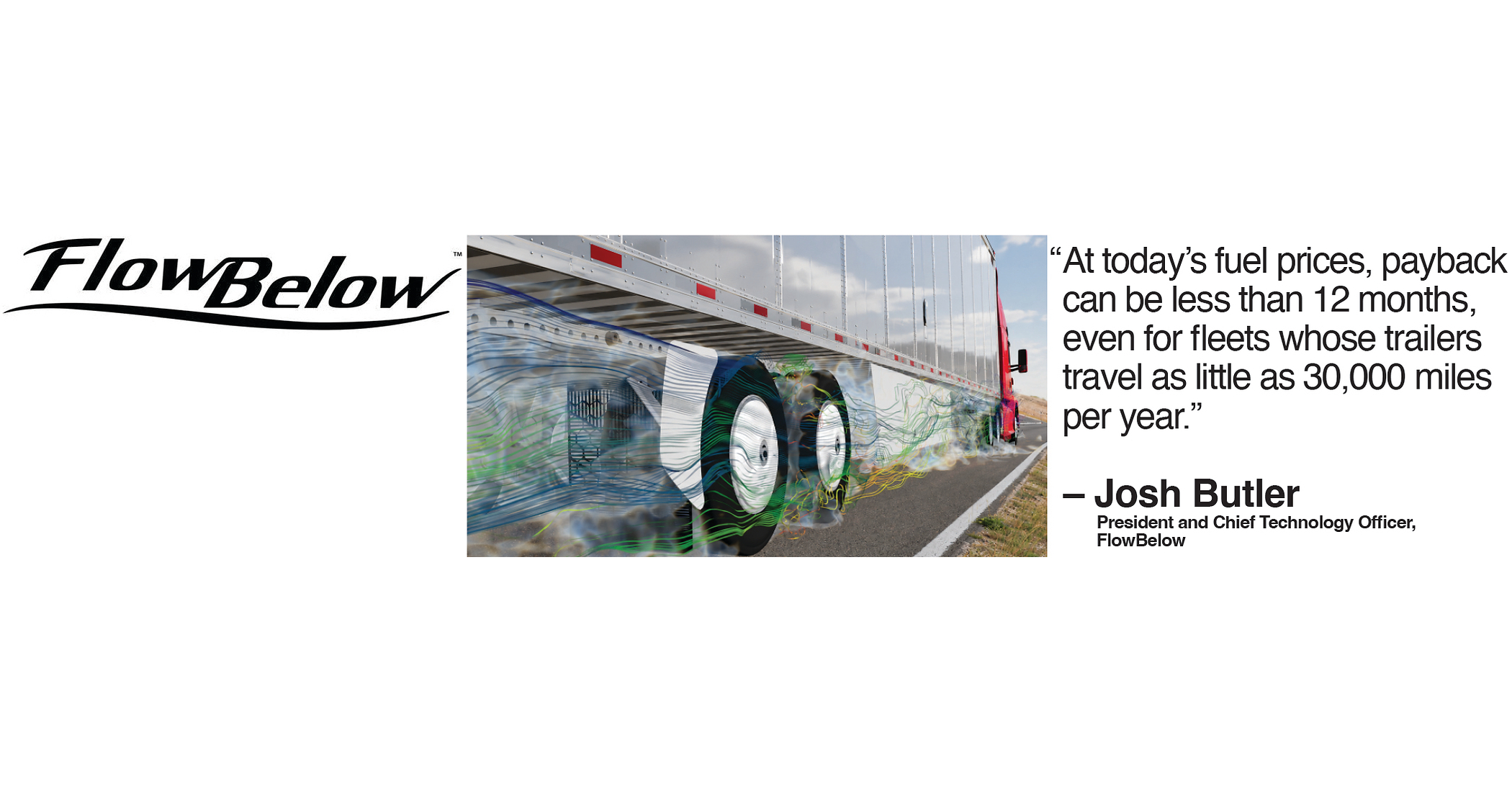
FlowBelow introduced a redesigned Trailer AeroSlider that the company says saves 3.0 gallons per 1,000 miles, combining independent test results of 1.77 gallons from rear fairings and flow-through mud flaps with 1.23 gallons from trailer wheel covers. At the Oct. 12 national diesel average of $6.179 per gallon, that equates to approximately $18.54 saved per 1,000 miles; FlowBelow says payback can be under 12 months at current fuel prices, including for trailers traveling 30,000 miles annually. The under-30-pound system installs in less than 45 minutes and is available for retrofit or specification on new trailers.
Analysis
The investable question is not whether the modeled fuel savings are attractive at today’s diesel price, but whether they translate into verified fleet-wide savings after purchase cost, trailer utilization, installation, and operating variability. The independent test provides a useful signal, but the reported combined benefit joins measurements from separate tests; it should not be treated as a guaranteed result on every trailer or duty cycle.
The key second-order issue is who captures the savings. Carriers with high trailer utilization and control over equipment procurement have the clearest potential benefit. Where fuel surcharges closely track fuel expense, efficiency gains may not flow dollar-for-dollar to carrier earnings: contract terms and surcharge formulas determine whether savings accrue to the carrier or customer. Trailer manufacturers could gain a modest differentiation opportunity if the system becomes an option on new builds, while retrofit adoption competes for fleet capex with other efficiency upgrades.
Near term (days), the release is unlikely to move broad transportation earnings absent a named public-company link or material orders. Over 1–3 months, watch for disclosed fleet deployments, pricing, and repeatable third-party results across trailer types and routes. Over 6–18 months, broad adoption could lower fuel intensity, but manufacturing capacity, durability, and retrofit economics—not the headline payback claim—will determine scale. The contrarian risk is that high diesel prices make ROI look unusually compelling; lower fuel prices or lower trailer miles can extend payback sharply. No direct public-equity trade is supported by this announcement alone.
AllMind Terminal
AI-powered research, real-time alerts, and portfolio analytics for institutional investors.
Request TrialMarket Sentiment
Overall Sentiment
mildly positive
Sentiment Score
0.38
Key Decisions for Investors
- No immediate position: FlowBelow is not identified as a publicly traded company in the supplied data, and the release does not identify customer commitments or order volumes.
- Set an alert for named fleet deployments and procurement disclosures over the next 1–3 months. Prioritize carriers with high trailer utilization and owned or controlled equipment; verify whether fuel-surcharge formulas allow the carrier to retain efficiency gains.
- Before underwriting savings, request the full MVT Solutions report and validate test conditions, variability, installed system cost, maintenance experience, and realized fuel savings across reefer and dry-van duty cycles. The combined 3.0-gallon figure is not a single-test result.
- Falsify the adoption thesis if realized savings fall materially below the tested figures, retrofit costs or maintenance erode payback, or fleet disclosures show limited deployment despite sustained high diesel prices.
More News
- BlackRock, GIC among investors chasing Indian telecom major Jio's IPO as anchor bids top $26 billion
- Nscale, Anthropic Eye $45 Billion Cloud Deal as AI Trade Rebounds
- Elice shares plunge 28% on debut as investor doubts over AI trade deepen
- Gartner analyst behind tech rout: AI returns are not yet large enough to justify neocloud build-out
- Walmart’s Flipkart is quietly building a food delivery challenger in India
- Alibaba Backs Chinese Robovan Maker in $400 Million Fundraising