
Huawei'den Zhou Jianjun: Watt Başına Jeton Sayısını En Üst Düzeye Çıkarmak İçin Şebekeye Bağlantılı Bir AIDC Çözümü Oluşturmak
Source: PR Newswire
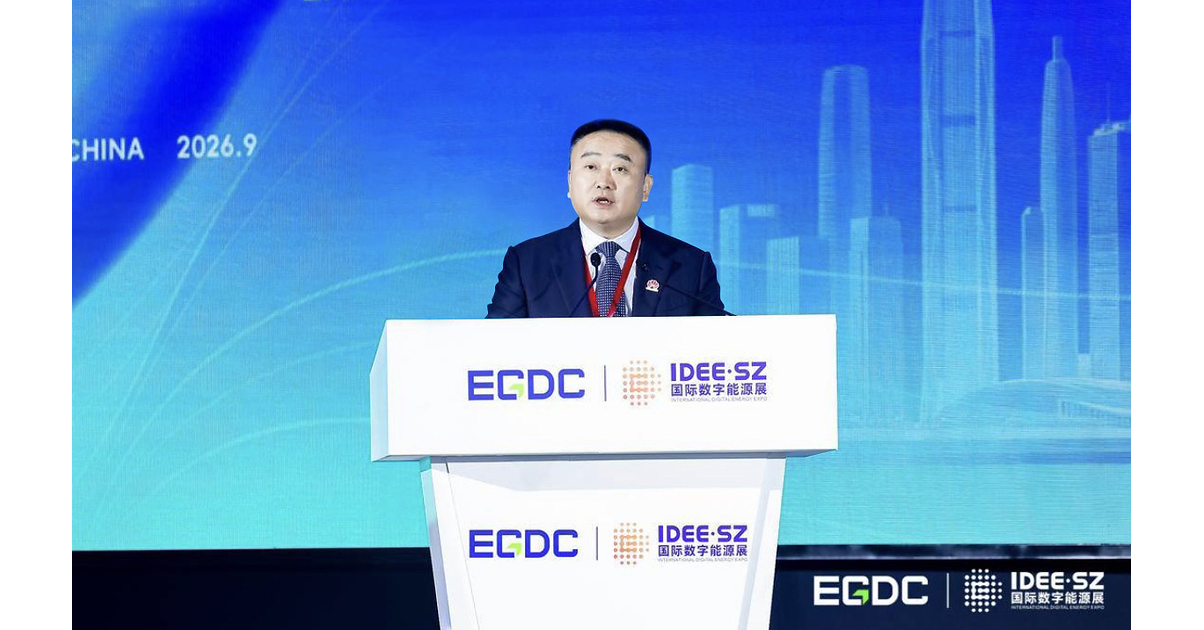
Huawei unveiled a grid-integrated AI data center (AIDC) solution designed to maximize tokens produced per watt as AI campuses scale from megawatt capacity toward hundreds of megawatts and gigawatt levels. The system combines grid-forming power electronics and energy storage, 1,000V FusionSolar inverters, a 1,000V LUTERRA energy-storage platform, MW-scale AI-enabled liquid cooling, and modular prefabrication. The offering aims to improve reliability and energy efficiency for high-density AI computing while enabling data centers to support weaker, more volatile grids with rising renewable-energy penetration.
Analysis
This is not yet an investable earnings event, but it sharpens the competitive risk that AI-data-center infrastructure becomes an integrated power-and-thermal systems market rather than a collection of discrete UPS, cooling and rack-power products. Huawei can bundle power electronics, storage controls, cooling and monitoring into a lower-cost turnkey offering in China and export markets, pressuring standalone vendors where procurement is price-led. The likely near-term beneficiaries are Chinese grid-forming inverter, battery-storage and liquid-cooling supply chains; the most insulated Western incumbents are those with installed-base service revenue, local certifications and exposure to North American utility interconnection constraints.
The more important second-order implication is that flexible data-center load could become a grid asset. If operators can monetize curtailment, storage dispatch and power-quality services, project economics improve even without a step-change in GPU utilization; this would favor diversified electrical-equipment suppliers such as ETN and Schneider Electric (SU.PA) over pure-play cooling vendors. Conversely, the claim of superior "tokens per watt" has no disclosed third-party benchmark, customer deployment, pricing or uptime data, so it should not be used to underwrite a near-term valuation rerating.
Over the next 1-3 months, watch for named hyperscale or state-utility deployments, third-party PUE/availability data, and whether Huawei packages financing with its infrastructure stack. Over 6-18 months, sustained Chinese export wins would create margin pressure for global power-quality and thermal vendors in emerging markets, while US export controls and domestic-content requirements could preserve a meaningful regional pricing moat. The thesis is falsified if external deployments fail to show lower delivered cost or if utilities continue treating AI campuses only as inflexible peak-load risks rather than dispatchable resources.
AllMind Terminal
AI-powered research, real-time alerts, and portfolio analytics for institutional investors.
Request TrialMarket Sentiment
Overall Sentiment
mildly positive
Sentiment Score
0.38
Key Decisions for Investors
- No immediate directional trade on the release; set an alert for independently verified Huawei AIDC project awards, disclosed MW scale, uptime and delivered-cost metrics before assigning revenue displacement to listed peers.
- Build a 6-12 month long ETN / short VRT relative-value watch position only if evidence emerges that turnkey power-and-storage procurement is gaining share versus standalone thermal equipment. ETN has broader exposure to interconnection, switchgear and power distribution; risk is continued GPU-driven cooling demand lifting VRT faster regardless of competitive pricing.
- For China/EM infrastructure exposure, monitor Sungrow (300274.SZ) and CATL (300750.SZ) for data-center storage and grid-forming order commentary; initiate only after order-book confirmation rather than on product announcements. Key downside trigger: storage pricing compression that outruns volume growth.
- Use SU.PA as a defensive long candidate on any evidence that grid-interactive data-center standards are adopted in Europe: its building-electrification and service mix should capture higher system complexity. Exit if data-center capex guidance weakens or utilities delay interconnection and flexibility-market rules.
More News
- Bank of Japan raises interest rates to 31-year high, flags concerns over inflation
- Italy to deploy warships to protect shipping through Bab al-Mandeb
- Oil prices fall as Saudi supply hopes outweigh fresh Houthi strikes
- Oil prices fall for 3rd day as supply concerns ease, diplomacy in focus
- Oil Traders Stymied by Iran War Stalemate: Evening Briefing Americas
- Australia’s central bank chief warns inflation risks materialising
From AllMind Research
- Anthropic IPO Preview: Valuation, Timing, and What to Watch
- Shein After the IPO: Venue, Valuation, and What Must Be Proved
- What AI Research Tools Should a Small Hedge Fund Buy First?
- How to Build an Automated Research Process for a Fund
- Weekly Update: AI-Powered Report Editing, Investor Relations, and Enhanced Search