
Roland DG Expands Industrial Direct-to-Object Printing Portfolio with Launch of VersaObject IO-300 and RC-300 Series
Source: PR Newswire
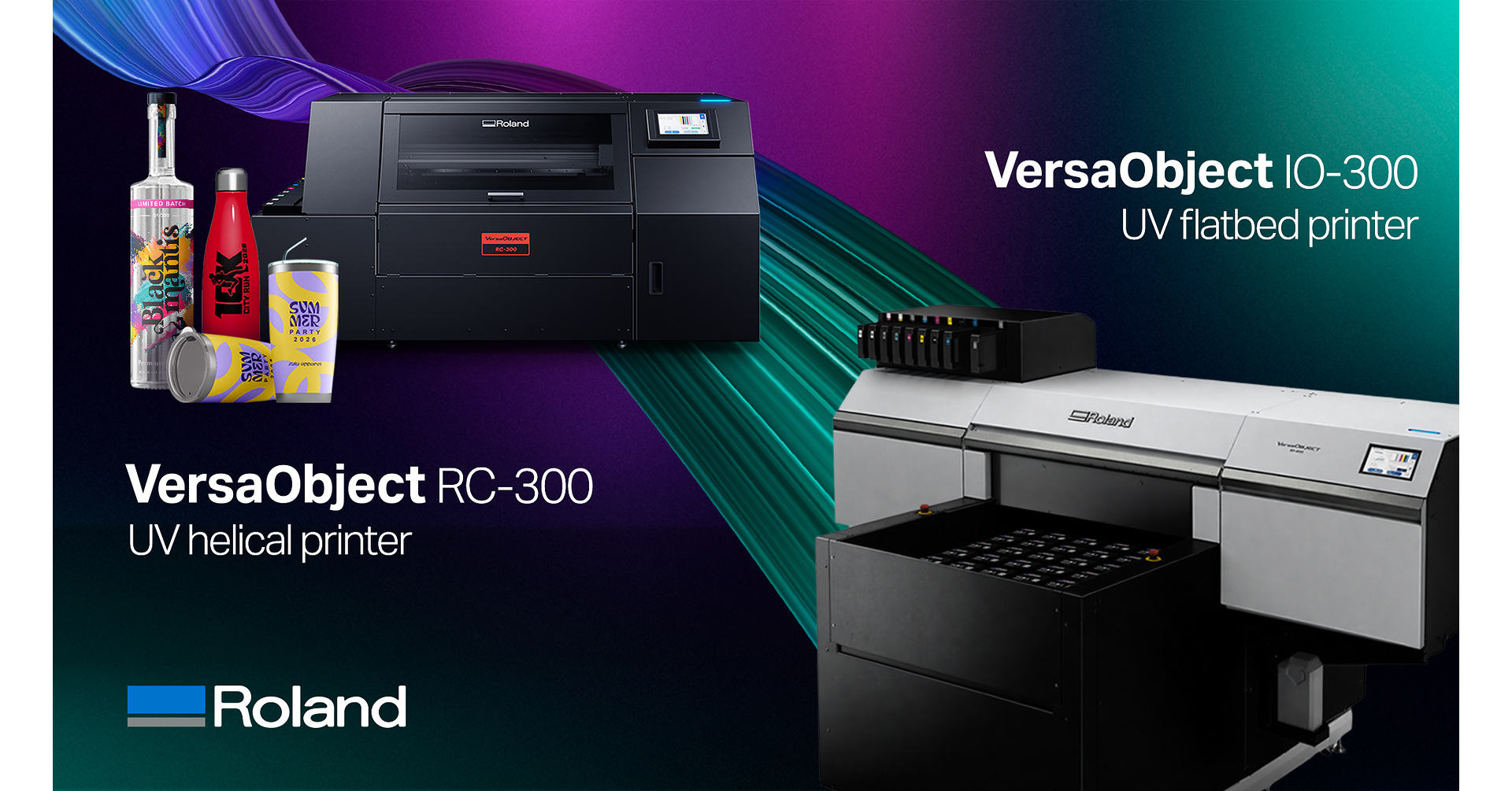
Roland DG launched the VersaObject IO-300 UV flatbed printer and VersaObject RC-300 cylindrical UV printer series aimed at high-mix, short-run on-demand production and decoration. The IO-300 targets industrial flatbed work with speeds up to 37.6 sq ft/hour (3.5 m²/h) and multi-layer printing, while the RC-300 series claims printing a 20-ounce tumbler in ~60 seconds for fast short-run customization. The news is product-focused with no financial guidance, likely limited to modest positive expectations for Roland’s industrial/direct-to-object printing franchise.
Analysis
This is more of a mix-shift and channel-signal event than an immediate earnings driver. The real monetization is not the box sale; it is the recurring pull-through on inks, maintenance, and software, so the first place to look is consumables attach rather than headline unit shipments. If adoption is meaningful, it should show up as better utilization at customers that already run short-run, high-SKU workflows, not as a broad industrial capex upcycle.
The competitive pressure lands on analog decorators, screen printers, and low-end outsourced packaging shops that compete on setup cost and speed, not on design complexity. Brands in beverage, cosmetics, and premium promo goods gain optionality: more test launches, lower obsolescence, and less inventory waste. That can also push some production closer to the customer, which is mildly negative for third-party decorators but positive for local integrators and specialty UV ink / coating suppliers.
The main risk is that the addressable market is narrower than the marketing language suggests. These tools are economically compelling for premium, customized, short-run work, but they do not displace high-volume analog lines unless throughput and unit economics improve materially. Over 1-3 months this should trade mostly as sentiment; over 6-18 months the falsifier is a lack of consumables growth or no improvement in customer capex budgets, which would imply the launch is simply a product refresh rather than a demand inflection.
AllMind Terminal
AI-powered research, real-time alerts, and portfolio analytics for institutional investors.
Request TrialMarket Sentiment
Overall Sentiment
mildly positive
Sentiment Score
0.20
Key Decisions for Investors
- No standalone directional trade yet; treat this as a watch item until channel checks confirm backlog conversion and consumables pull-through over the next 1-2 quarters.
- If you want a relative-value expression, use a small short basket in commercial print / promotional customization services versus broader industrial-capex exposure; the thesis is share shift away from outsourced low-run decoration, but keep size modest because substitution may be gradual.
- Watch specialty UV ink, coatings, and service revenues for the first verified benefit; if those lines accelerate faster than hardware, it confirms the recurring-revenue lever and supports a higher-quality rerating.
- Fade any knee-jerk enthusiasm in analog print-service names if management commentary starts to mention setup-time compression or in-house migration, but use tight risk controls because the launch alone does not prove demand displacement.
- Falsifier / alert level: if 1-3 month distributor data show no change in order cadence or if next earnings guide mentions flat consumables despite the new product cycle, assume the launch is incremental, not transformative.
More News
- AI Capex, Gamble or Jackpot?: Market Snapshot
- ‘I told you so’: China’s chip sector is making breakthroughs—and U.S. export controls are the reasons why
- CoreWeave credit default swaps hit distress levels as investors sour on AI debt
- The IPO drought is driving private equity-owned companies to the debt market to pay investors
- Hybe shares jump 10% as K-pop sensation BTS' tour lifts earnings hopes
- Giant Taiwanese chipmaker TSMC confirms it’s in talks with Elon Musk to join ‘Terafab’ complex in Texas: ‘The AI market continues to be very strong’
From AllMind Research
- Anthropic IPO Preview: Valuation, Timing, and What to Watch
- Shein After the IPO: Venue, Valuation, and What Must Be Proved
- What AI Research Tools Should a Small Hedge Fund Buy First?
- AI Research Tools for Pension Funds and Allocators
- AllMind's Data Standardization Methodology: Our Approach to Fundamentals