
CookieYes erhält das „Built for Shopify"-Siegel für seine Cookie-Einwilligungs-App.
Source: PR Newswire
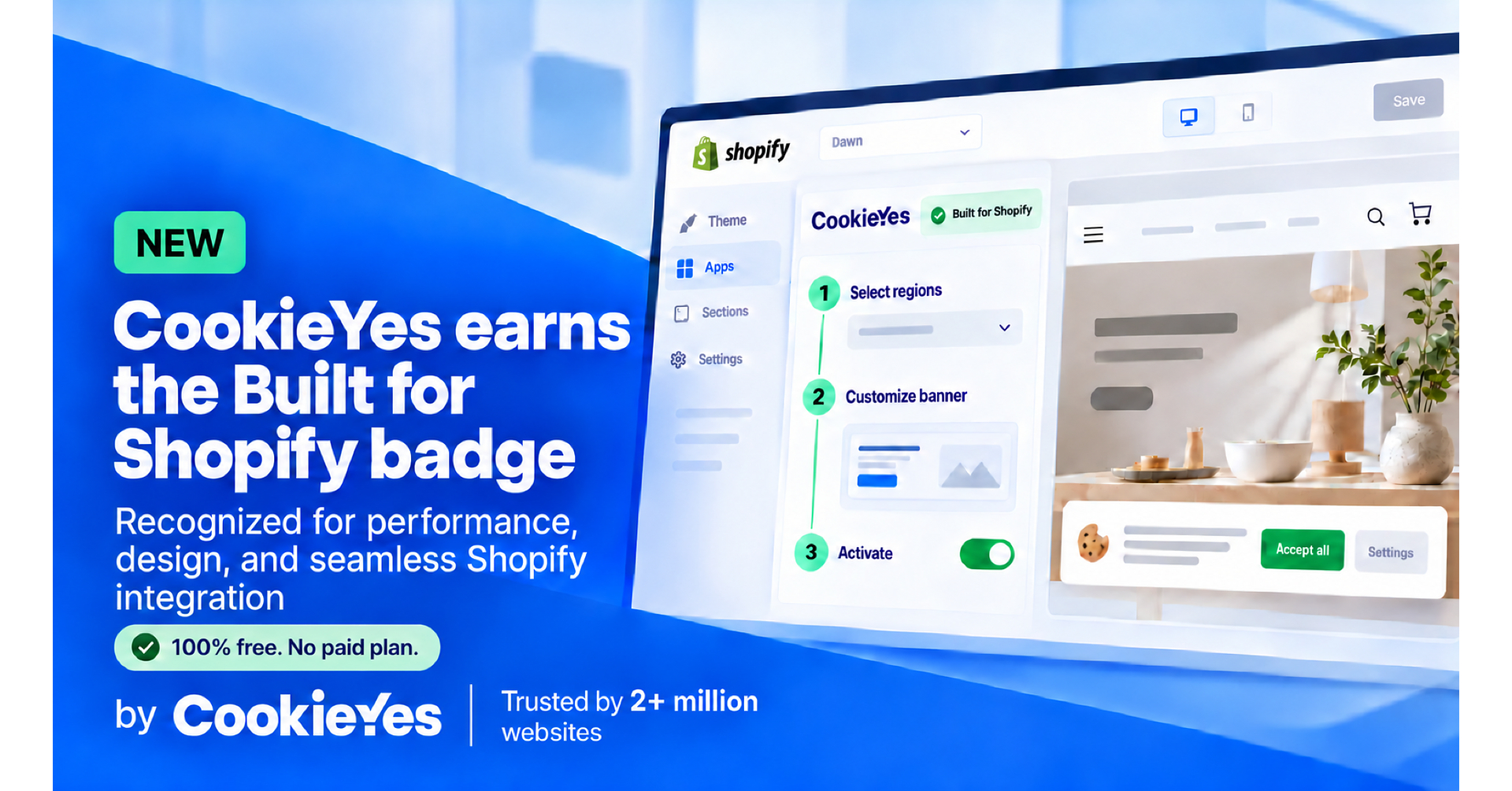
CookieYes received Shopify’s “Built for Shopify” badge on October 9, 2026, recognizing its cookie-consent app for performance, design and integration standards. Daily installs rose 59% after the September 23 app update, and more than 8,600 Shopify stores have installed it. The company says all essential compliance features, including advanced features, are free for Shopify merchants within permitted usage.
Analysis
This is a small ecosystem-quality signal for Shopify, not evidence of a material near-term revenue driver. Better-integrated compliance tools can reduce setup friction for merchants and support platform retention, particularly for smaller sellers expanding internationally. The offset is that a free compliance app may improve merchant utility without creating meaningful incremental Shopify monetization; the release gives no paid-conversion, usage, or retention data. It also does not establish that Shopify endorses the app’s legal adequacy. In the near term, the reported install acceleration is a discovery signal, but the missing baseline, cohort retention, and active-use data make it weak evidence of durable demand. Over 1–3 months, verify whether installs translate into sustained active use and whether Shopify surfaces or promotes the app. Over 6–18 months, platform-level value depends on merchants continuing to rely on third-party tools rather than Shopify embedding comparable functions. A compliance failure, inaccurate geo-targeting, or script-blocking issue could create merchant harm and reputational spillover for the platform even if the app developer bears direct liability. No defensible SHOP earnings or valuation impact can be inferred from this announcement alone.
AllMind Terminal
AI-powered research, real-time alerts, and portfolio analytics for institutional investors.
Request TrialMarket Sentiment
Overall Sentiment
mildly positive
Sentiment Score
0.30
Ticker Sentiment
Key Decisions for Investors
- No standalone trade in SHOP on this release; the likely fundamental signal is immaterial absent evidence of improved merchant retention, app-driven monetization, or broader adoption.
- Watch Shopify app-store placement, install-to-active conversion, cohort retention, and any paid-plan conversion before treating the installation claim as durable demand.
- For the next 1–3 months, monitor merchant complaints, app removals, and regulatory or privacy incidents. A material consent-management failure would reverse the modest ecosystem-quality read-through and could raise platform-trust concerns.
- Over 6–18 months, reassess if Shopify introduces native consent functionality or changes app-store rules; either could reduce third-party app value, while sustained international merchant growth could increase demand for compliant tooling.
More News
- Amazon warns against tokenmaxxing, telling engineers that using more AI doesn’t necessarily mean they’re doing better work
- Zocdoc CEO: will AI agents make your business more valuable or more vulnerable?
- What investors need to know about Alphabet's stock-busting earnings report
- Our next steps for Alphabet stock after earnings disappoint at nearly every turn
- Wendy's shares jump 15% as Nelson Peltz's Trian offers $1.4 billion to buy burger chain
- GE Vernova shares slip despite a beat-and-raise. What the sellers are getting wrong