
DUVA prezentuje DUVA ONE na targach IFA 2026: spersonalizowane słuchawki do snu reagujące w czasie rzeczywistym
Source: PR Newswire
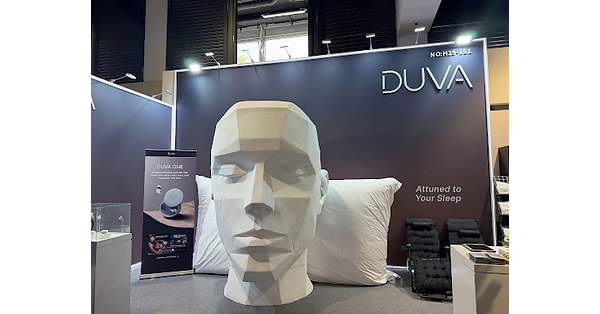
DUVA, a Fitnexa brand, unveiled DUVA ONE AI-powered sleep earbuds at IFA Berlin 2026, with commercial launch planned for October 2026 at a $349.99 target retail price. The device uses PPG and motion sensors plus environmental data to adapt sound and ANC in real time, offering up to 42 dB noise reduction and 9.5 hours of playback with ANC enabled. The product will be sold across the U.S., Canada, UK, EU and Australia, but the announcement provides no sales, revenue, or profitability outlook.
Analysis
This is not yet investable for public markets: Fitnexa/DUVA appears private, the launch is company-sourced, and there is no evidence of distribution commitments, unit economics, clinical validation, or early retention. At a premium price point, the relevant question is whether consumers view the device as a substitute for earbuds, a sleep tracker, or a medical-adjacent wellness product; each category has very different willingness-to-pay and return-rate profiles.
The more relevant competitive read-through is that sleep is becoming a convergence category spanning audio, wearables and digital health. Apple (AAPL), Samsung Electronics (005930 KS), Garmin (GRMN) and Oura’s private platform have installed bases and health-data ecosystems that could bundle adjacent sleep interventions at lower customer-acquisition cost. Bose’s prior exit from sleepbuds also highlights the core execution risk: side-sleeper comfort, battery durability, fit-related returns and perceived sleep benefit matter more than feature density.
Over the next 1-3 months, IFA visibility is unlikely to move listed hardware valuations. The useful catalyst is October availability followed by independent reviews, retailer placement and evidence that real-world battery life with noise cancellation matches claimed use; failure on any of these would reinforce that premium sleep-audio remains a niche. Over 6-18 months, successful adoption would modestly increase pressure on wearable vendors to add closed-loop interventions rather than merely report sleep scores, but it is far too small today to alter earnings estimates.
Contrarian view: privacy-forward, on-device positioning may be commercially valuable in Europe, yet privacy alone does not create a moat if ambient sensing and personalization can be replicated by incumbents. The likely consensus error would be extrapolating AI branding into recurring revenue; absent a paid service, proprietary outcomes data, or demonstrably lower returns, this is a hardware feature cycle rather than a platform opportunity.
AllMind Terminal
AI-powered research, real-time alerts, and portfolio analytics for institutional investors.
Request TrialMarket Sentiment
Overall Sentiment
mildly positive
Sentiment Score
0.38
Key Decisions for Investors
- No directional trade on this announcement; treat it as a competitive-monitoring item rather than a catalyst for AAPL, GRMN or SONY. Reassess after launch-channel disclosure, independent testing and at least one quarter of sell-through data.
- Set an alert for disclosed retail partnerships with Amazon, Best Buy, major European electronics chains or sleep-clinic channels. Broad distribution plus sustained review evidence of comfort and all-night battery life would be the first indication of category traction.
- For AAPL/GRMN, monitor 2027 product-roadmap commentary for closed-loop sleep audio or sensor-driven interventions. A confirmed bundled feature would be incrementally positive for ecosystem retention but could pressure standalone sleep-device economics.
- Avoid extrapolating a sleep-audio read-through into broader consumer-electronics longs unless DUVA demonstrates repeatable demand at the premium price point; a high return rate, discounted inventory or missed delivery timing would falsify the category-expansion thesis.
More News
- Are global oil reserves sufficient to withstand renewed US-Iran war?
- OpenAI Trims Target Value & Volvo Cars Cuts 2,500 Jobs
- PG&E’s CEO says AI is ‘the best thing that could’ve ever happened to the grid’
- The mobile ambitions of SpaceX see telecom stocks get hit again. What the latest developments mean.
- Wake up! The long bond’s up two points!
- US tech stocks tumble as investors fret over AI spending