
Tampa General Hospital Secures Funding to Establish Center for Lymphatic Education and Research
Source: PR Newswire
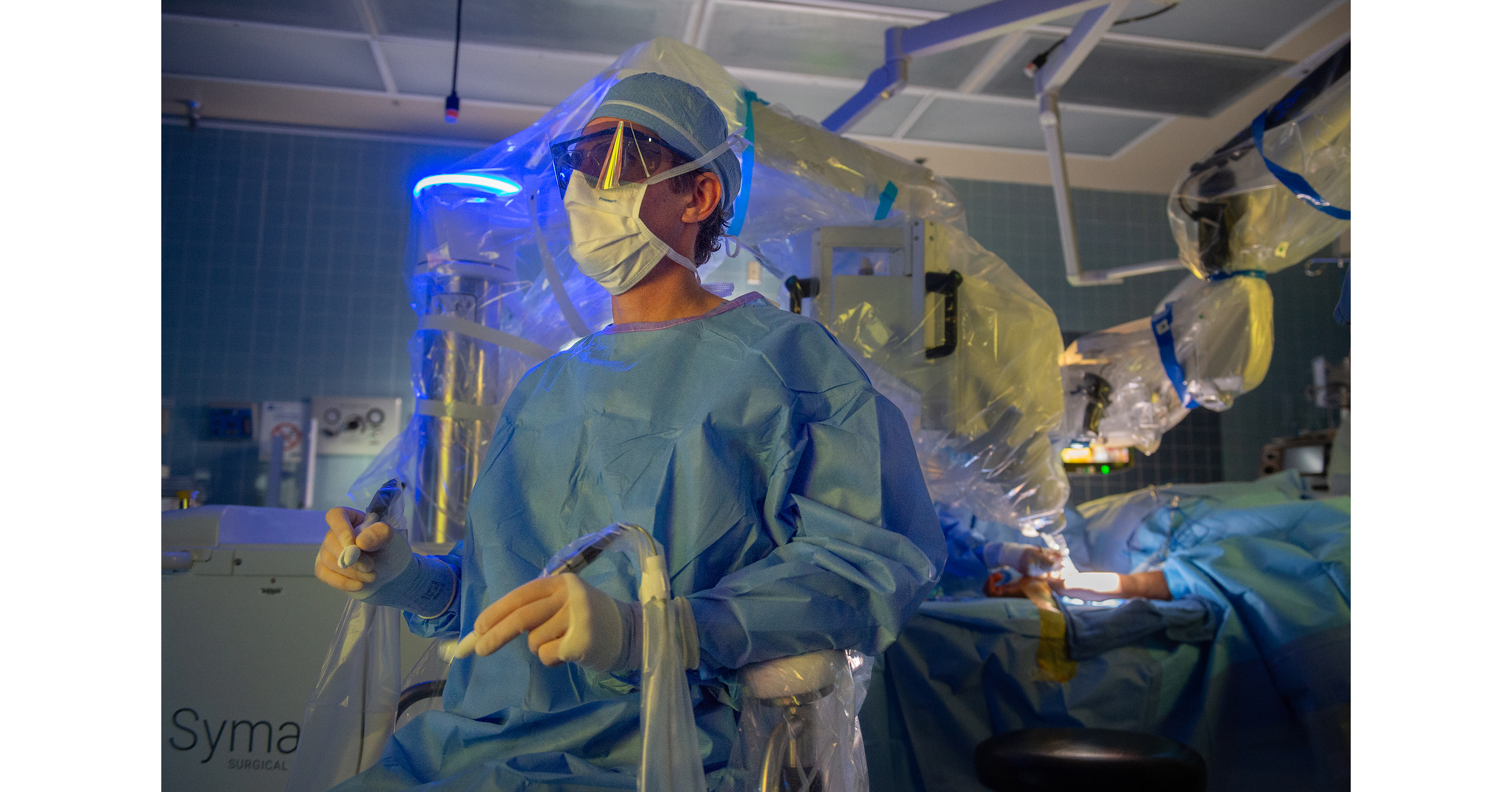
Tampa General Hospital secured a one-year $150,000 Interdisciplinary Center Preparation Grant to launch the Center for Lymphatic Education and Research (CLEAR) at USF Health. The initiative aims to accelerate lymphatic disease research, expand education, and improve patient care, with the longer-term goal of positioning the Tampa Bay region as a national hub for lymphatic science. CLEAR also sets up a pipeline for future NIH grant applications (including Program Project and T32 training grants), supported by Tampa General’s existing lymphedema expertise and expansion of translational and AI-enabled collaboration.
Analysis
This is a reputation-and-grant-funding event, not an earnings event. The economic translation is extremely weak near term: a $150k prep grant is immaterial to hospital margins, and the only real asset created is optionality for future NIH dollars, resident/fellow pipelines, and referral capture in a narrow procedure set. The most important mechanism is not revenue today but the possibility that one academic center becomes a regional moat for complex lymphatic surgery, which could slowly shift case concentration away from community hospitals that lack supermicrosurgical capability.
The second-order winners, if any, are device and imaging ecosystems that benefit from a longer research-to-practice cycle: robotic surgical platforms, microsurgical tools, advanced imaging, and AI-assisted diagnostics. But that adoption path is multi-year and highly dependent on whether clinical trials or reimbursement changes validate the economics; without those, this remains a specialty-center story with no broad public-equity read-through. For hospital operators, the signal is mildly supportive for academic differentiation, but not enough to change valuation or near-term volume assumptions.
Contrarian view: the market may over-interpret “center launch” headlines as evidence of scalable demand. Awareness growth does not equal reimbursed utilization, and lymphatic surgery remains constrained by surgeon training, case complexity, and payer scrutiny. The thesis would be falsified if the expected NIH follow-on funding does not materialize over the next 6-12 months or if no measurable increase shows up in procedure volumes, referral patterns, or published outcomes; absent that, this is mostly public-relations alpha, not fundamental alpha.
AllMind Terminal
AI-powered research, real-time alerts, and portfolio analytics for institutional investors.
Request TrialMarket Sentiment
Overall Sentiment
mildly positive
Sentiment Score
0.25
Key Decisions for Investors
- No trade in the listed tickers (CRMT, CYH, FTRK, GSIL, IUSDF, MDCE, PLCE, SCPAF): there is no direct revenue or margin linkage to this funding announcement.
- Watch list, 6-18 month horizon: ISRG as the cleanest public beneficiary if lymphatic microsurgery adoption broadens; only act if procedure volumes/outcomes data show repeatable growth, not on the press release alone.
- If you want a healthcare innovation basket, prefer a small long bias in hospital/robotics enablers over hospitals themselves; pair any speculative long against XLV or a hospital operator until reimbursement evidence appears.
- Set an alert for NIH follow-on awards or publication cadence from USF/TGH over the next 2-4 quarters; without those catalysts, fade any enthusiasm retrace in related healthcare innovation names.
- Do not chase the headline in small-cap healthcare proxies; the opportunity cost is high unless future data show a measurable referral or reimbursement inflection.
More News
- Musk says Terrafab chip factory could outperform rivals despite challenges
- Nvidia GPUs are everywhere. Here are the ways companies are accessing them
- Stocks saw new highs and big declines: How the volatile AI trade moved last week's market
- Will Warner Bros. kill Skydance — or will David Ellison kill Warner Bros?
- The world needs Ukraine’s grain. Its farmers are running out of reasons to plant
- Cerebras Is About as Big as Nvidia's Data Center Business Was Nearly a Decade Ago. The Similarities Mostly End There.