
Chonnam National University Study Explores Therapeutic Potential of Human Dental Pulp Stem Cell Secretome in Post-Stroke Functional Recovery
Source: PR Newswire
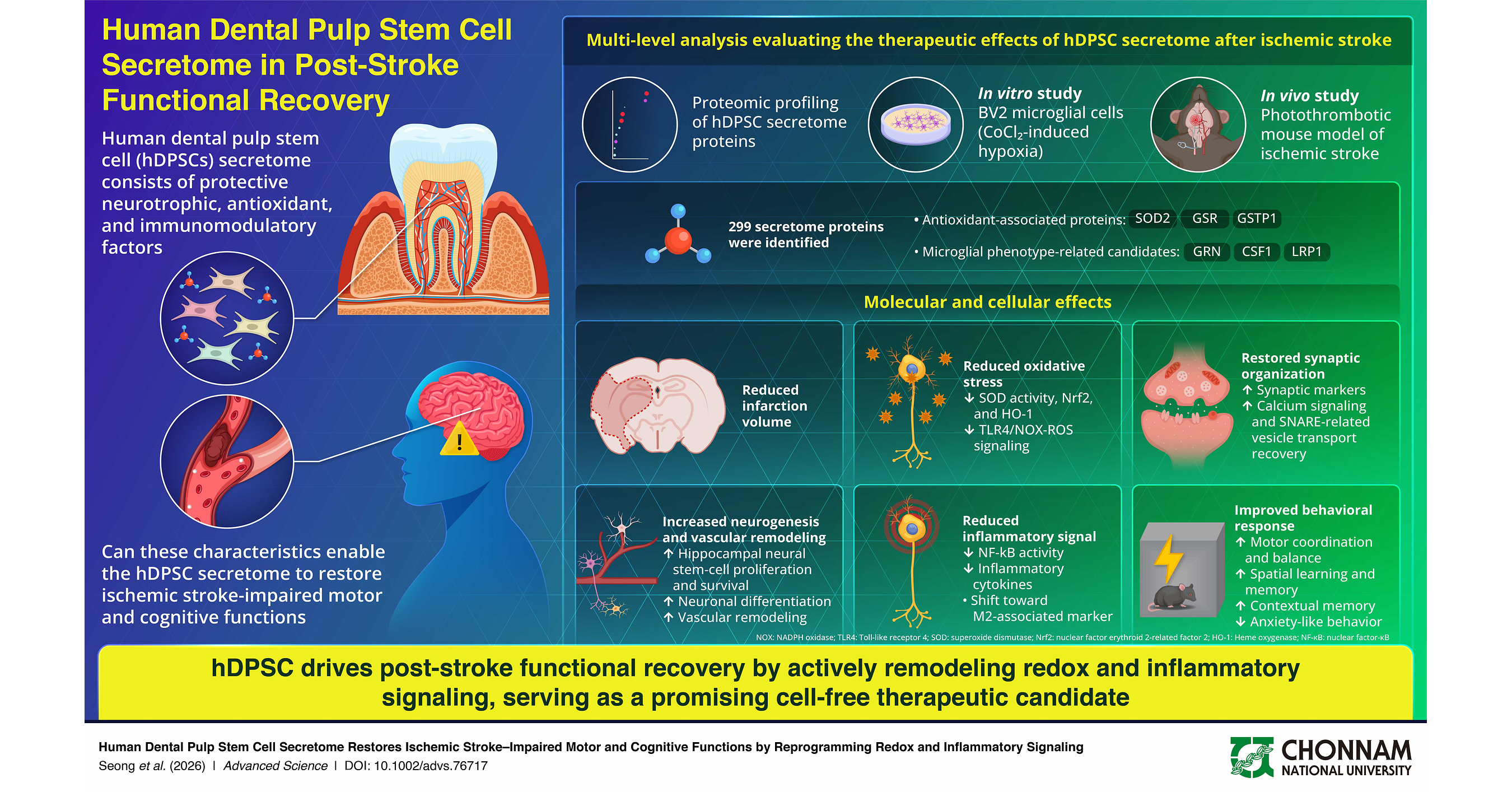
A Chonnam National University study found that human dental pulp stem cell secretome reduced infarct volume, neuronal apoptosis, oxidative stress, and inflammation in a photothrombotic mouse model. Treated mice also showed improved motor and sensory responses, memory, and anxiety-related outcomes; the findings are preclinical and do not establish efficacy in people. The researchers said standardizing the secretome’s active components could support development of a cell-free stroke treatment.
Analysis
The investable signal is translational optionality, not near-term earnings: this is preclinical evidence, with no identified commercial sponsor, clinical program, or near-term catalyst. The cell-free format could eventually avoid some cell-therapy complications, but it does not remove the hard problems—active-component identification, batch-to-batch potency, delivery to injured brain tissue, dose and treatment window, and scalable GMP production. Those are likely to determine whether the result becomes a product or remains a compelling mouse-model finding.
The mechanism is more plausibly an adjunct to reperfusion and rehabilitation than a replacement for acute stroke care. If human efficacy emerges, value could accrue to a licensed developer and biologics manufacturers with validated extracellular-vesicle or secretome analytics; existing stroke-drug and device businesses would face limited direct displacement unless the therapy materially changes post-acute outcomes or care costs. There is no basis to assign that value to a public company today.
Over the next 1–3 months, watch for independent replication, disclosed intellectual-property ownership, and a defined development path. Over 6–18 months, the key de-risking milestones would be reproducible manufacturing, relevant large-animal data, safety, and regulatory engagement. The main contrarian point: broad pathway claims and multiple behavioral endpoints can make animal results look more complete than the clinical effect will be; human stroke heterogeneity and timing may sharply dilute benefit. No trade is warranted on this item alone.
AllMind Terminal
AI-powered research, real-time alerts, and portfolio analytics for institutional investors.
Request TrialMarket Sentiment
Overall Sentiment
mildly positive
Sentiment Score
0.25
Key Decisions for Investors
- Do not trade broad biotech, neuro, or stroke-care exposure on this publication; the data are preclinical and no investable sponsor is identified.
- Put secretome/extracellular-vesicle developers and relevant biologics CDMOs on a watchlist, but require a named licensee or funded clinical program before attributing commercial value.
- Reassess only if follow-up establishes standardized potency and manufacturing, independent replication, and a credible human development timeline; verify IP ownership and regulatory status.
- Falsification watch: failure to reproduce functional benefit across models, inability to define a consistent active product or dose, or safety concerns in longer-duration studies would materially weaken the platform thesis.
More News
- Singapore's Temasek warns of the ‘biggest risk’ facing markets right now
- A 32% beat, a +6% jump: the IT solutions name our models picked in July
- What Marvell's rosy long-term guidance means for our AI chip stocks
- Malaysia 2027 budget to tackle living costs, fiscal risks as election looms
- Meta may ditch the idea of a cloud business for Muse. We think that’s a good trade
- Why is Telix Pharmaceuticals stock rallying today?