
American Packaging Corporation to Spotlight Breakthrough Flexible Packaging Innovations During PACK EXPO Week 2026
Source: PR Newswire
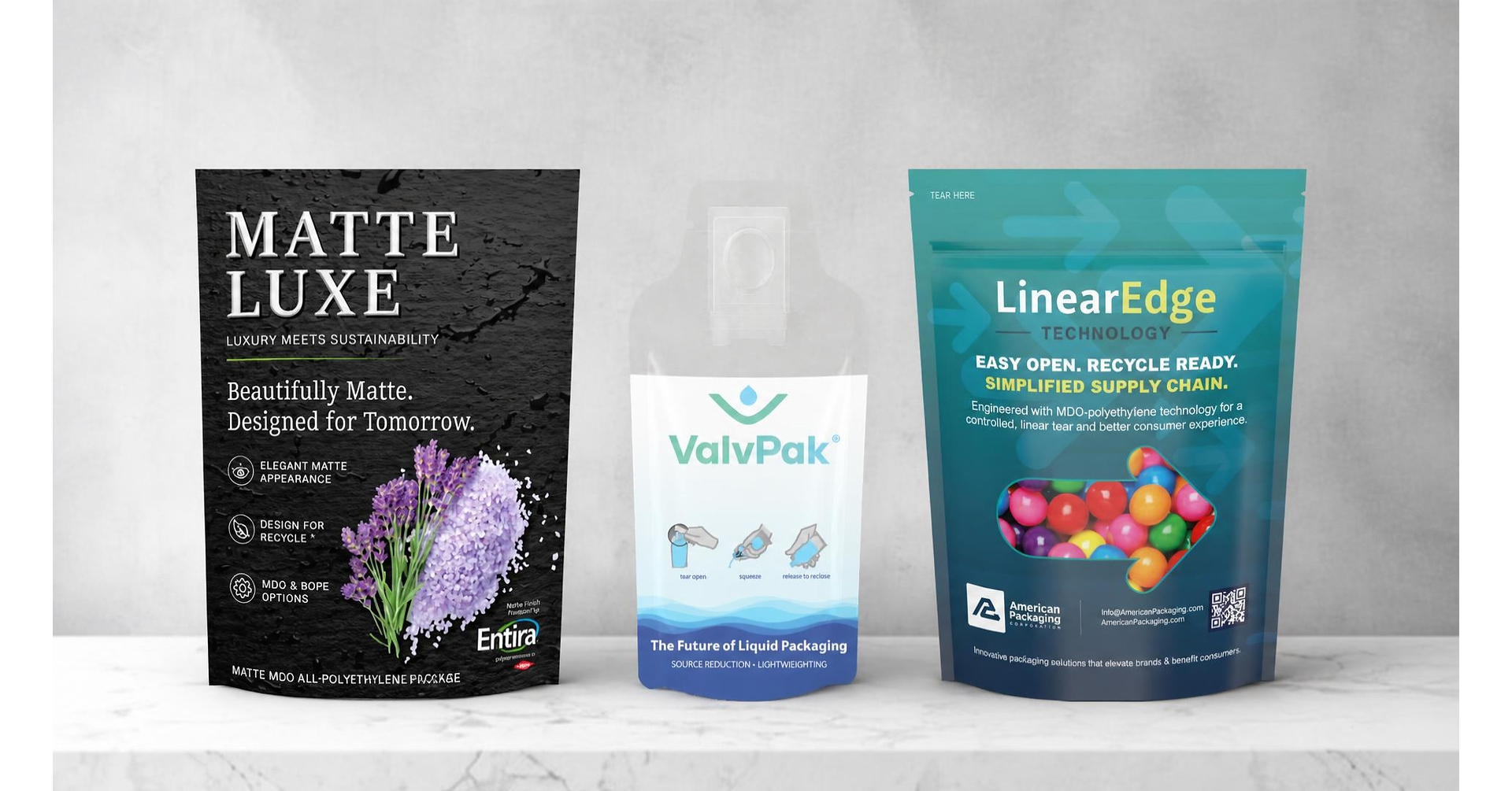
American Packaging Corporation will showcase three flexible-packaging technologies at PACK EXPO International 2026, including ValvPak®, Matte Luxe, and LinearEdge. The products emphasize lower plastic use, recycle-ready all-polyethylene structures, and improved dispensing or opening functionality, while APC’s educational sessions will address 2027 tariff and shipping risks and expanding U.S. EPR compliance requirements. The announcement is a promotional product and industry-event update with limited near-term market impact.
Analysis
This is not a standalone catalyst for listed packaging equities; it is vendor marketing around trends already embedded in procurement decisions. The investable read-through is that EPR fee schedules will increasingly reward mono-material, lower-weight formats, shifting competition from printed-film capacity toward proprietary converting, barrier-film, and dispensing capabilities. That favors scaled flexible-packaging operators with customer qualification depth—Amcor (AMCR), Sealed Air (SEE), and Berry Global (BERY)—but only where recyclability claims translate into accepted collection and processing pathways rather than merely “recycle-ready” specifications.
Over the next 1-3 months, watch state-level EPR rulemaking and brand-owner 2027 packaging RFPs rather than trade-show announcements. EPR creates a potential margin bifurcation: converters that can redesign structures without sacrificing shelf life can preserve volumes and capture engineering value, while smaller regional printers face higher compliance overhead and risk of customer loss. Resin volatility and tariffs are the nearer-term swing factors; domestic-oriented converters may gain share if imported finished packaging becomes less competitive, but polyethylene cost pass-through typically carries a lag that can pressure gross margin for one or two quarters.
The contrarian point is that lightweight pouches are not automatically economically advantaged under EPR. Fees may be assessed against actual recyclability and recovery outcomes, and flexible-film collection remains uneven; a tougher methodology could favor recyclable rigid PET/HDPE formats and benefit rigid-packaging exposure at Ball (BALL) or Crown (CCK) in selected food and household categories. The structural upside for flexible packaging therefore depends on state rules recognizing design-for-recycling attributes, not on supplier product claims.
For the 6-18 month horizon, consolidation remains the cleaner thesis: regulatory complexity raises fixed compliance, testing, and customer-service costs, increasing the value of scale. AMCR’s broad portfolio offers the most diversified exposure, while SEE has greater execution risk because sustainable-material innovation must offset its more challenged end-market volume base. Falsify the consolidation/scale thesis if EPR implementation is delayed materially, flexible-packaging volumes weaken despite redesign activity, or resin-price inflation cannot be recovered in quarterly pricing.
AllMind Terminal
AI-powered research, real-time alerts, and portfolio analytics for institutional investors.
Request TrialMarket Sentiment
Overall Sentiment
mildly positive
Sentiment Score
0.20
Key Decisions for Investors
- No event-driven position from this release; set a regulatory alert for finalized EPR fee methodologies in major states and for 2027 procurement commentary from large CPG customers.
- Maintain a 6-12 month relative-value bias long AMCR versus short SEE only after confirming AMCR packaging-volume stabilization and SEE’s price/cost spread deterioration; target a 10-15% relative return, with exit if SEE posts two consecutive quarters of improving protective-packaging volumes and margin.
- Watch BER Y corporate-action disclosures and EPR-related customer wins as a higher-beta consolidation proxy; do not initiate solely on sustainability messaging. A sustained increase in recycled-content/recyclable-format mix accompanied by margin expansion would be the required confirmation.
- For a contrarian hedge against unfavorable flexible-film EPR treatment, monitor rigid beverage/food packaging demand and consider tactical long BALL or CCK only if state rules explicitly penalize flexible-film recovery outcomes; this is a 12-18 month policy trade, not a near-term catalyst.
More News
- Wall Street’s Nasdaq hits all-time high as AI frenzy gathers pace
- Data-Center Bet Makes ESDS One of India’s Best New Listings
- Asia stocks ride tech wave higher, oil stays subdued
- South Korean solar stocks jump as curbs on Chinese sector expected to remain in place
- ‘I have a big decision to make’: Trump had a ‘good meeting’ with Iranian officials warning he may ‘annihilate the Islamic Republic’
- Bank of America says Brent crude oil could top $150 a barrel if Iran war disruptions persist
From AllMind Research
- Anthropic IPO Preview: Valuation, Timing, and What to Watch
- Shein After the IPO: Venue, Valuation, and What Must Be Proved
- What AI Research Tools Should a Small Hedge Fund Buy First?
- Automating Financial Model Updates: A Source-Controlled Workflow
- Weekly Update: Live Event Center, In-App Documents, and Faster Transcripts