
Comcast At Book Value: Separation Could End Conglomerate Discount
Source: seekingalpha.com
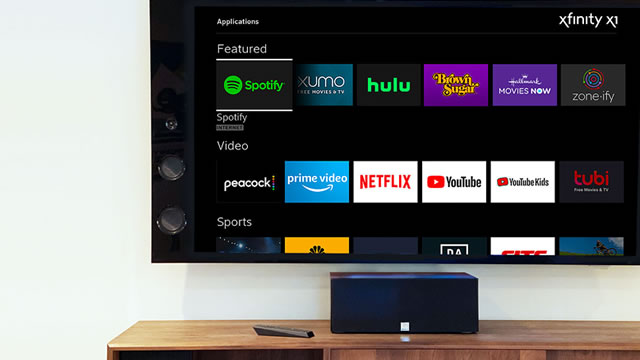
Article argues Comcast’s valuation is unduly punitive for its underperforming Connectivity & Platforms unit, but notes that this business still faces ongoing revenue and EBITDA declines. It claims that offsetting factors—wireless growth and moderating core declines—reduce “doomsday” expectations and that a separation could unlock value, reframing Comcast as strong in its Experiences segment. Net takeaway is cautious, with limited direct implications absent new financial figures.
Analysis
The key market mistake is treating this as one blended multiple when the economics are really two very different duration assets. The declining connectivity franchise is the obvious drag, but the less appreciated asset is a scarcity-value experiential business that would likely deserve a materially higher multiple if separated and marketed on its own cash-generation profile. That gap creates a classic sum-of-the-parts setup: value is not being destroyed so much as trapped behind a capital-allocation structure that lets the slow-bleed business dominate sentiment.
Second-order, a break-up would not just help the surviving asset; it would also change how the sector is priced. Pure-play cable names would lose the “diversified” excuse and likely trade more like shrinking utilities with higher leverage to subscriber churn, while theme-park/experience comps could see multiple support if investors re-anchor on scarcity and pricing power. The main risk is timing: board action, tax structuring, and debt allocation can push the catalyst from weeks into 6-18 months, and until then the stock can remain a value trap if broadband deterioration outpaces wireless offsets.
The contrarian view is that the move may be under-owned, not over-owned: the market may be discounting a separation probability near zero when even a partial strategic review can force re-rating. What would falsify the thesis is continued acceleration in broadband losses or evidence that experiential margins are peaking just as the separation debate heats up. If management uses free cash flow to defend the status quo rather than improve capital structure, the multiple can stay compressed despite asset quality.
AllMind Terminal
AI-powered research, real-time alerts, and portfolio analytics for institutional investors.
Request TrialMarket Sentiment
Overall Sentiment
mildly negative
Sentiment Score
-0.15
Ticker Sentiment
Key Decisions for Investors
- Initiate a tactical long CMCSA position only on weakness, sized for a 6-12 month catalyst window; thesis is re-rating from sum-of-parts rather than near-term fundamentals. Risk/reward improves if the market starts pricing separation optionality.
- Prefer CMCSA 6-12 month call spreads over stock if the goal is to capture restructuring upside with defined downside; the position works only if management/board signals strategic review within the next 1-2 quarters.
- Watch for a board-level catalyst: if no separation language appears by the next earnings/Investor Day, reduce exposure; the thesis loses force if capital returns are used to mask underlying declines.
- Relative-value alert: long CMCSA vs short a more levered cable proxy such as CHTR if broadband deterioration remains the dominant sector narrative; CMCSA has the cleaner optionality to offset cable decay.
- Set a falsifier on operating trends: if wireless growth fails to offset core decline over the next 2 reporting periods, the stock should trade back to a pure melting-ice-cube multiple and the long should be exited.
More News
- Justice Department opens antitrust probe as White House press-access fight escalates
- DOJ says it's investigating whether White House TV pool's coverage halt violated antitrust law
- ‘If nothing is done, it’s almost inevitable’: Ukraine’s Yuriy Ryzhenkov on why steelmaking is on the brink of collapse as Russian bombing intensifies
- Why is LG Innotek stock plunging today?
- RBI Tightens Rupee Defense as Pricey Crude, Foreign Outflows Bite: USD/INR
- TotalEnergies, KKR expand U.S. solar venture with 700 MW addition
From AllMind Research
- Anthropic IPO Preview: Valuation, Timing, and What to Watch
- Shein After the IPO: Venue, Valuation, and What Must Be Proved
- What AI Research Tools Should a Small Hedge Fund Buy First?
- Best AI Stock Research Tools for Professional Investors
- Weekly Update: Adding Live MBO Level 3 Data - Liquidity Heatmap, OFI Charts, and More