
Tuya Smart bringt auf der IFA 2026 Full-Stack-KI in den Alltag
Source: PR Newswire
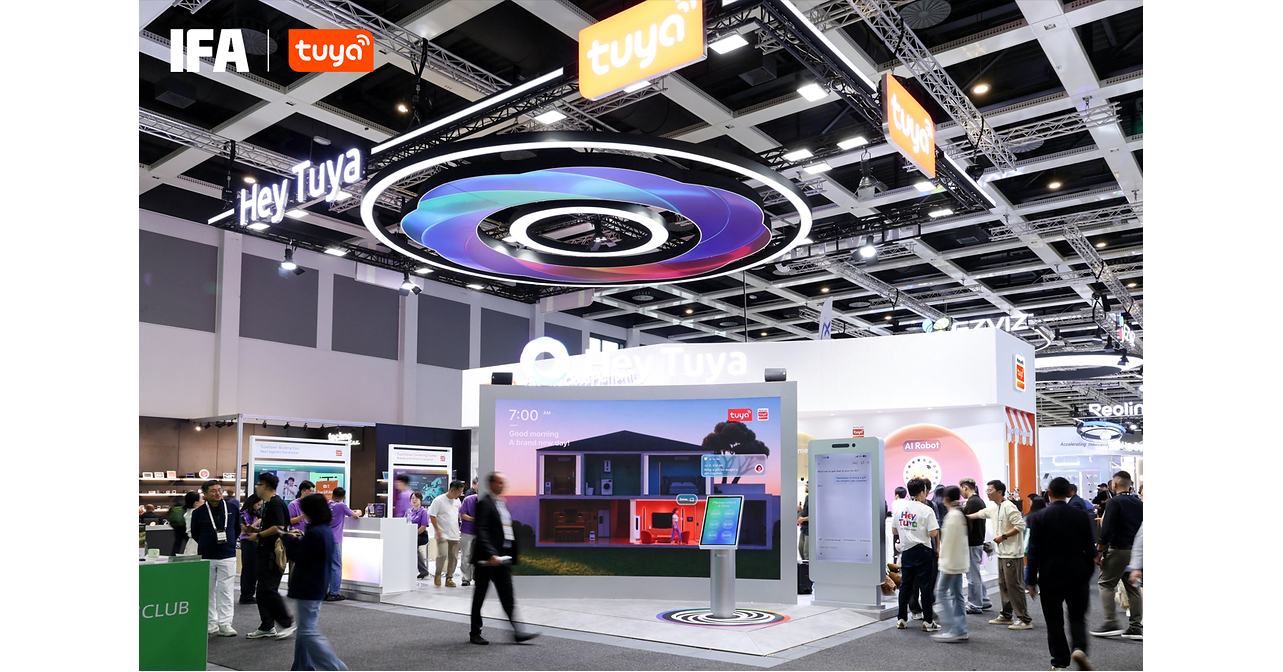
Tuya Smart unveiled its full-stack physical-AI portfolio at IFA 2026, led by the global debut of Doova, a home companion robot for independently living seniors, and the European launches of AI Home, AI Robot and AI Energy. Its AI Energy platform connects home solar, storage, smart metering and EV charging, using real-time and dynamic tariff data from more than 800 electricity providers and over 1,000 dynamic-tariff providers across Europe to optimize household energy use. The company also introduced expanded Matter interoperability, the multi-agent Hey Tuya smart-home interface, and AI hardware-development tools; Tuya's platform had more than 2.092 million registered AI developers as of June 30, 2026.
Analysis
This is strategically more relevant to TUYA's attach-rate and recurring-revenue optionality than to near-term revenue. A unified Matter-to-cloud-to-agent stack can reduce OEM integration time and make Tuya harder to displace once a customer deploys multiple device categories; the economic proof point is not developer registrations, but whether active OEMs increase cloud ARPU, device-management usage, and paid AI-service penetration over the next 2-4 quarters.
The most investable adjacency is European residential energy management. Dynamic-tariff optimization can create recurring software revenue only when tied to controllable loads—storage, EV charging, HVAC—not merely monitoring. That positions TUYA as an enabling layer for fragmented hardware vendors, while potentially pressuring standalone smart-home platforms with weaker interoperability; AMZN and GOOG have distribution advantages, but their strategic incentive is ecosystem retention rather than monetizing neutral OEM infrastructure.
Near term, treat the announcement as low-conviction narrative support: hardware demonstrations do not establish manufacturing economics, regulatory clearance, privacy compliance, or consumer willingness to pay. Over 1-3 months, watch for named European OEM wins, energy-partner integrations, and evidence that AI services are priced rather than bundled. Over 6-18 months, eldercare monitoring is potentially valuable but carries the largest downside: a safety incident, GDPR scrutiny, or medical-device classification could sharply raise support and compliance costs.
Contrarian view: the market may over-credit “physical AI” before verifying unit economics. TUYA's neutral platform model is attractive in a fragmented market, but AI inference, customer support, and cloud costs can dilute margins if OEMs demand AI features without accepting usage-based pricing. The thesis is falsified if disclosed customer/IoT-device growth fails to translate into cloud revenue growth and gross-margin expansion by the next two earnings reports.
AllMind Terminal
AI-powered research, real-time alerts, and portfolio analytics for institutional investors.
Request TrialMarket Sentiment
Overall Sentiment
moderately positive
Sentiment Score
0.42
Ticker Sentiment
Key Decisions for Investors
- Do not chase TUYA on the product-launch headline; establish a 1-3 month watch position only after confirmation of paid European AI Energy or Matter design wins. Scale if quarterly cloud revenue growth reaccelerates and gross margin holds or expands; exit if management frames AI primarily as a free OEM feature.
- For a 6-12 month thematic expression, prefer a small long TUYA / short broad smart-home hardware basket via XRT or selectively short-margin-exposed consumer-device names, rather than a directional AI-beta trade. The intended payoff is platform monetization versus commoditized device economics; cap risk because TUYA liquidity and China ADR multiple volatility can dominate fundamentals.
- Monitor AMZN and GOOG only as competitive-risk indicators, not direct beneficiaries. A material expansion of Alexa/Google Home OEM incentives, proprietary AI-device requirements, or subsidized cloud bundles would weaken TUYA's neutral-platform pricing power and should trigger a reduction in TUYA exposure.
- Set an earnings alert: require disclosed evidence of AI-service revenue, paid-device attach rates, or energy-management partner conversion within two reporting periods. Absent those metrics, keep exposure minimal; the likely outcome is multiple volatility without a durable earnings catalyst.
More News
- PG&E’s CEO says AI is ‘the best thing that could’ve ever happened to the grid’
- US tech stocks tumble as investors fret over AI spending
- Mark Zuckerberg owns 13% of Meta but controls 61% of its votes. California’s wealth tax would bill him on the 13%
- Nasdaq 100 Drops as Oil Rise Fuels Risk-Off Mood
- 8 Things to Know About the iPhone Duo
- Markets sell off worldwide as further conflict looms in the Middle East and Elon Musk cuts capex guidance
From AllMind Research
- Anthropic IPO Preview: Valuation, Timing, and What to Watch
- Shein After the IPO: Venue, Valuation, and What Must Be Proved
- What AI Research Tools Should a Small Hedge Fund Buy First?
- Weekly Update: Adding Live MBO Level 3 Data - Liquidity Heatmap, OFI Charts, and More
- Alternative Data Due Diligence for Institutional Investors