
NICE im Vereinigten Königreich empfiehlt in neuer Leitlinie routinemäßige NHS-Finanzierung für das VitaSmart™ Hypothermic Oxygenated Perfusion System von Bridge to Life
Source: PR Newswire
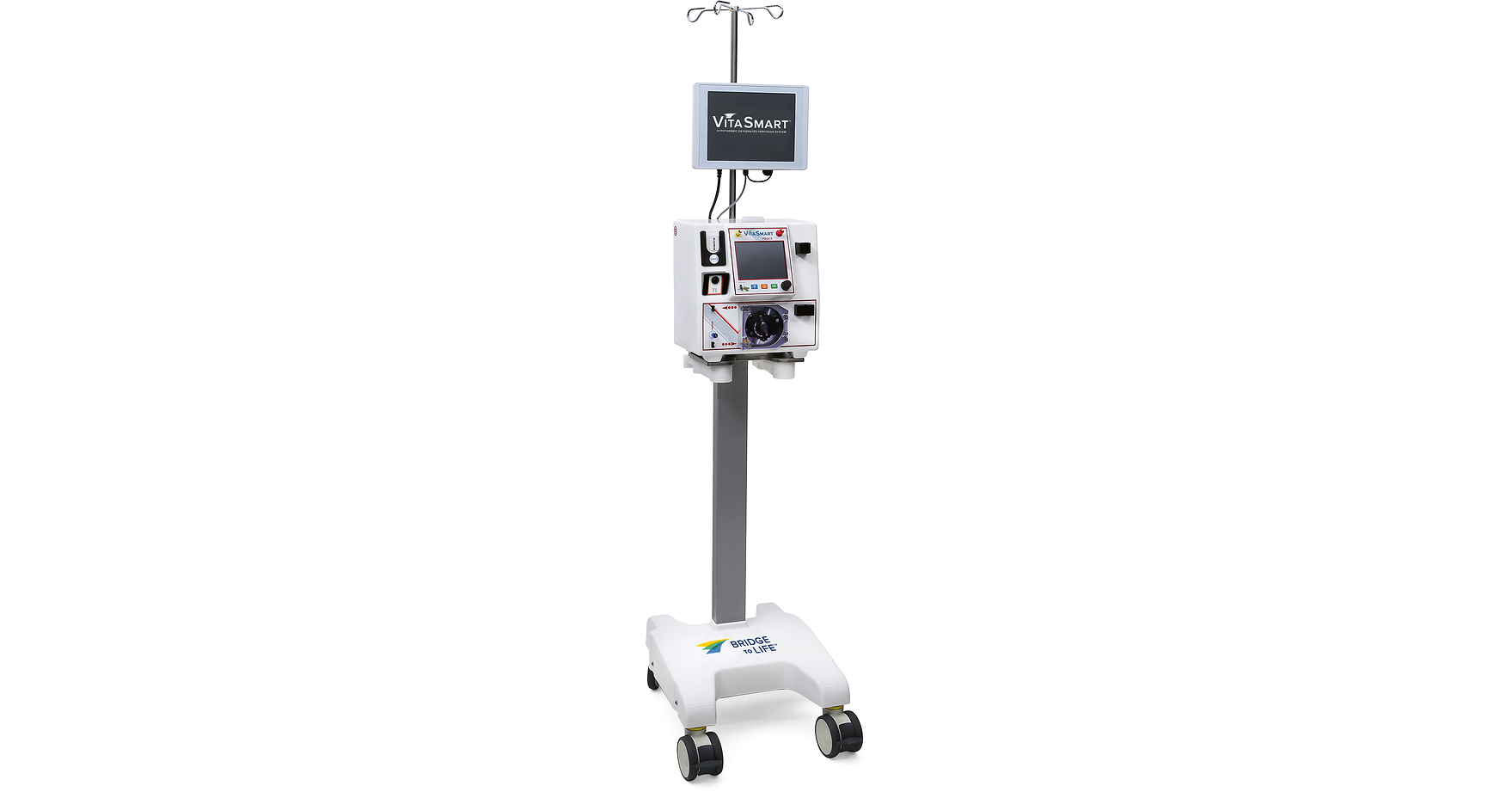
NICE (UK) issued HealthTech guidance (HTG780, published 20 Aug 2026) recommending routine NHS funding for ex-situ machine perfusion devices for liver transplants, including Bridge to Life’s VitaSmart™ HOPE system. The guideline concludes hypothermic oxygenated perfusion offers clear clinical and financial advantages versus static cold storage, with improved transplant survival and fewer biliary complications. For Bridge to Life, the NHS endorsement is positioned as a milestone for HOPE adoption as the standard of care, potentially supporting broader uptake alongside the company’s FDA De Novo activity in the US.
Analysis
This is more important as reimbursement validation than as a near-term revenue print. When a payer system shifts a technology from discretionary adoption to routine funding, the winner is usually the company with the simplest workflow and lowest total-cost-per-case, because procurement committees buy down operational friction rather than chase clinical novelty. That favors Bridge to Life’s positioning in Europe, but the monetization likely shows up first in recurring consumables and service pull-through, not a one-time device pop.
The more interesting second-order effect is competitive pressure on premium, more complex perfusion platforms. If UK hospitals can get reimbursed for a lower-friction HOPE workflow, that can cap pricing power across the category and force rivals to prove incremental economics, not just better organ metrics. In that sense, the broad category is helped, but the modal winner may be the cheaper, easier-to-deploy system rather than the most sophisticated one; that matters for public comps with transplant exposure such as TMDX if the market extrapolates this as blanket upside.
The tradeable horizon is not days; it is 1-3 quarters for procurement and 6-18 months for meaningful revenue translation. The main risk is that policy approval does not convert into budgeted volume, especially in the NHS where capital cycles, training, and center-level inertia can slow adoption. Consensus may be overstating immediacy: the catalyst is real, but the cash flow is conditional on actual purchase orders, utilization, and registry data showing fewer complications and better graft economics.
Contrarian view: the market may be underestimating how much this could compress expectations for premium machine-perfusion vendors in Europe while leaving the broad medtech basket largely unchanged. If the evidence base continues to favor simpler HOPE systems, the long-duration winner is not necessarily the incumbent with the loudest clinical story, but the supplier that can scale low-cost deployment across more centers.
AllMind Terminal
AI-powered research, real-time alerts, and portfolio analytics for institutional investors.
Request TrialMarket Sentiment
Overall Sentiment
mildly positive
Sentiment Score
0.40
Key Decisions for Investors
- No direct trade in Bridge to Life — treat this as a watch item until UK procurement/orders are disclosed. If no material NHS purchase volume appears within 2 quarters, assume the policy change was more symbolic than economic.
- If TMDX rallies >5% on read-through, use strength to trim or hedge rather than add. The risk/reward favors fading any multiple expansion that is not backed by documented UK or EU utilization gains over the next 1-2 quarters.
- For a small diversified expression, buy IHI on pullbacks as a basket long on reimbursement-positive medtech adoption, but size modestly; the event is supportive, not thesis-changing, so upside is likely mid-single-digit over 3-6 months rather than a rerating.
- Set an alert on UK center adoption and transplant-volume data over the next 90-180 days. A lack of volume inflection or flat complication rates would falsify the bullish reimbursement thesis and argue against any category follow-through.
More News
- ‘If nothing is done, it’s almost inevitable’: Ukraine’s Yuriy Ryzhenkov on why steelmaking is on the brink of collapse as Russian bombing intensifies
- Why is LG Innotek stock plunging today?
- TotalEnergies, KKR expand U.S. solar venture with 700 MW addition
- Why is SK Hynix stock sliding today?
- TSMC expected to report sixth straight quarter of record profit thanks to AI boom
- Vår Energi cuts 2026 output forecast; Q3 production at 369,000 boepd
From AllMind Research
- Anthropic IPO Preview: Valuation, Timing, and What to Watch
- Shein After the IPO: Venue, Valuation, and What Must Be Proved
- What AI Research Tools Should a Small Hedge Fund Buy First?
- Stop Treating AI Like a Chatbot: What Are Agents, SubAgents, MCP, and Skills, and How Do They Actually Work?
- Earnings-Triggered Research Automations: A Control Guide