
Five-Year Data Center Fight Offers a Playbook for Others
Source: Bloomberg
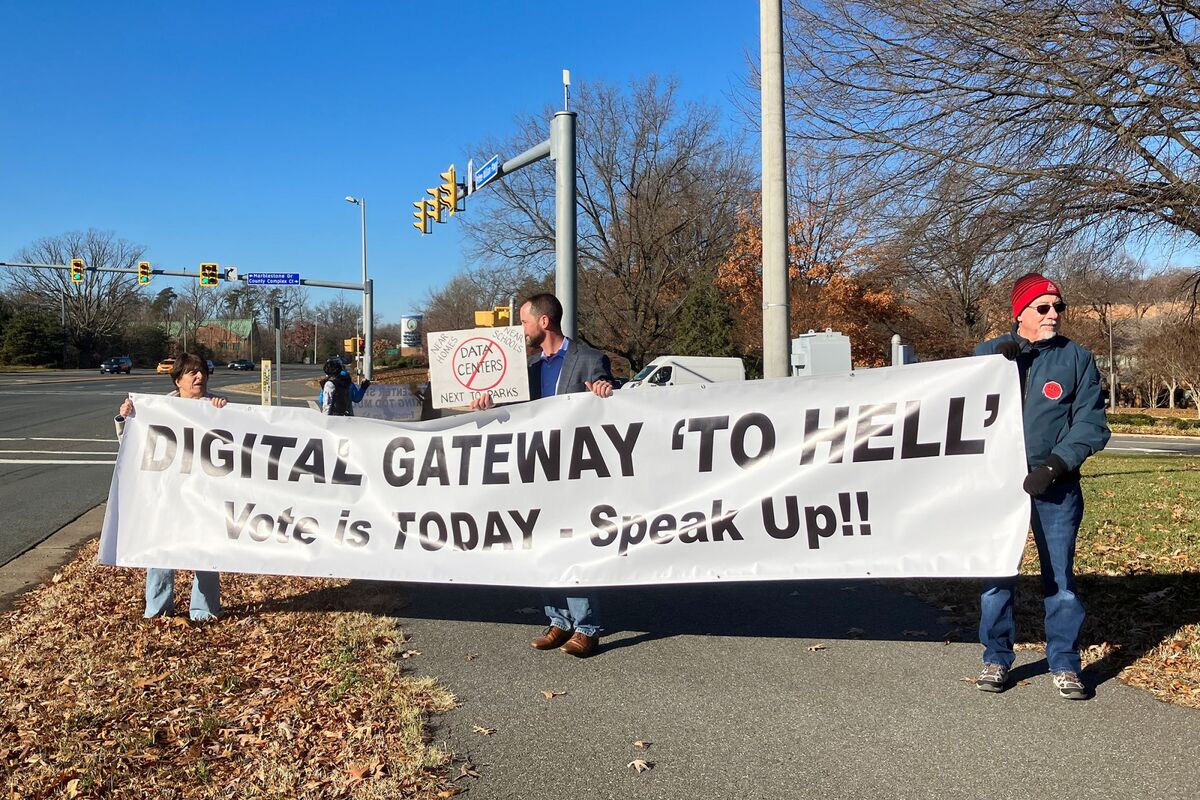
Bloomberg’s Real Estate Monitor highlights a five-year dispute over a proposed large data center near a Civil War battlefield, positioning it as a potential playbook for similar development conflicts. The newsletter also flags an emerging recovery in Lower Manhattan office demand, Fidelity’s new Boston headquarters, and fallout from an Australian developer collapse that is affecting private lenders.
Analysis
The investable read-through is less a broad real-estate beta signal than a widening dispersion between assets with credible power/entitlement pathways and those dependent on office-leasing narratives. A multi-year permitting process raises the embedded cost of data-center development, protecting incumbents such as Equinix (EQIX) and Digital Realty (DLR) in supply-constrained markets, but it can also delay their own capacity monetization; the key variable is contracted megawatts delivered, not announced pipeline. Over 6-18 months, constrained new supply supports pricing and utilization for operating assets, while merchant land banks without secured power should trade at a discount.
A downtown office recovery would matter most through leasing velocity, tenant-improvement concessions and refinancing availability rather than headline occupancy. SL Green (SLG) and Vornado (VNO) have the greatest public-market sensitivity to a lower-Manhattan improvement, but their upside requires transactions to establish higher asset values before near-term debt maturities force capital actions. For Boston exposure, BXP is a cleaner proxy, though a single headquarters commitment is not sufficient evidence of a durable return-to-office inflection; monitor net absorption, sublease availability and effective rents over the next two quarterly reporting cycles.
The private-lender stress angle is potentially more important than the office narrative if it exposes weak underwriting in construction and transitional real estate credit. Listed alternative managers (BX, KKR, ARES) may benefit from distressed-debt deployment and fundraising consolidation over 12-24 months, but initially face mark-risk if comparable collateral values reset. Consensus may overvalue the apparent scarcity premium in data centers: if power interconnection delays become systemic, development yields can compress despite strong demand because capital is tied up longer and customers may shift workloads to existing cloud regions rather than wait.
AllMind Terminal
AI-powered research, real-time alerts, and portfolio analytics for institutional investors.
Request TrialMarket Sentiment
Overall Sentiment
neutral
Sentiment Score
0.05
Key Decisions for Investors
- No directional trade on the article alone; establish a watchlist rather than chase office REITs. Upgrade SLG/VNO only if two consecutive quarters show positive net absorption and stable-to-improving effective rents; falsify on renewed concession growth or a dilutive equity/debt raise.
- Prefer a 6-12 month long EQIX or DLR versus a short broad office REIT basket (VNQ or selected SLG/VNO exposure) only after confirming improving booked-to-billed power capacity and stable development yields. The thesis fails if utilization weakens or construction/power delays push delivery schedules materially beyond guidance.
- For a higher-risk 12-24 month private-credit allocation, favor ARES/BX over smaller, real-estate-concentrated lenders, but wait for disclosed valuation marks and non-accrual trends. Avoid adding if commercial-real-estate loss provisions or redemption pressure accelerate; those metrics would signal that deployment upside is being overwhelmed by legacy-book losses.
- Set alerts around DLR/EQIX quarterly disclosures for signed megawatts, power availability and development capex. A sustained gap between leasing demand and delivered capacity is bullish incumbent pricing but bearish near-term FCF conversion, making it a timing signal rather than an automatic long.
More News
- Here’s the ‘core economic flaw’ in the AI bull case as stock and bond trades unravel, according to a top economist
- 5 big analyst AI moves: ’Uniquely catalyst-rich’ months ahead for SpaceX
- The experience economy keeps defying expectations. Maybe we’ve been looking at it all wrong
- Brookfield to open Qatar office as it expands Middle East operations
- The U.S. military and NASA have power problems. Nuclear microreactors might solve both
- Biotech stocks are surging. How investors can play the new drug innovation boom