
S&P 500 to Hit 9000 in 2027? ETFs in Focus
Source: zacks.com
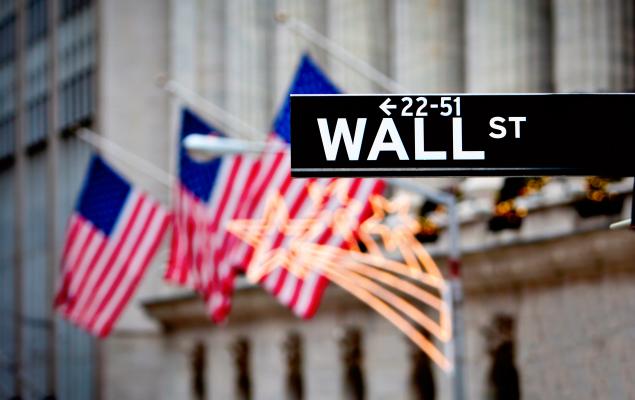
The Nasdaq Composite rose 2.3% to a record high on Sept. 21, 2026, while the S&P 500 gained 1.5% and the Dow added 0.8%, driven by renewed AI enthusiasm, oil falling below $100 per barrel and bitcoin surpassing $86,000. Consensus S&P 500 earnings growth for 2026 has increased to 29% from roughly 13% at the start of the year, with AI- and data-center-linked companies projected to grow earnings 60%. Strategists see the S&P 500 ending 2026 around 7,100-8,100, while Jefferies targets 9,000 by end-2027 on $450 EPS and 20.8% earnings growth.
Analysis
The relevant signal is not broad-equity upside but a renewed compression of macro and geopolitical risk premia into the same crowded AI complex. A lower energy-input backdrop supports consumer and non-energy margins, while reducing the near-term case for restrictive monetary policy; that is incrementally favorable to long-duration software/platform earnings. META is the cleanest large-cap beneficiary because lower energy/inflation risk can support advertising demand and valuation simultaneously, whereas AMD and INTC require subsequent evidence of order conversion and gross-margin delivery rather than another narrative-driven multiple expansion.
The prospective US-China AI engagement is a high-beta event catalyst but should be treated as optionality, not an earnings revision. Any easing in export-control rhetoric would disproportionately re-rate AMD and INTC because China revenue and addressable-market constraints matter more to their recovery cases; conversely, a security-focused outcome could unwind recent gains quickly. Watch semiconductor relative performance versus SOXX and changes in forward gross-margin guidance during the next earnings cycle; absent upward revisions, a double-digit one-day move is vulnerable to mean reversion over days to weeks.
Consensus appears to be extrapolating broad earnings acceleration while underweighting the concentration of incremental index profit in capex-intensive AI infrastructure. The 6-18 month risk is that hyperscaler capex remains robust but returns shift from chip vendors toward power, networking, cooling and cloud customers, producing a rotation rather than a sustained sector-wide rerating. Crypto-linked equities remain the least attractive expression of risk-on sentiment: COIN and MSTR carry operating/leverage beta to bitcoin after a sharp move, with downside amplified if ETF flows slow or liquidity conditions tighten.
Near term, falling crude and positive AI headlines can sustain momentum into quarter-end, favoring index exposure over stock-specific chase. Over 1-3 months, the decisive catalysts are inflation prints, Fed communication, export-control specifics, and hyperscaler capex commentary. A renewed oil spike above $100, higher-than-expected core inflation, or a material restriction on AI chip trade would falsify the benign-disinflation/risk-on setup.
AllMind Terminal
AI-powered research, real-time alerts, and portfolio analytics for institutional investors.
Request TrialMarket Sentiment
Overall Sentiment
moderately positive
Sentiment Score
0.68
Ticker Sentiment
Key Decisions for Investors
- Maintain a 1-3 month long META / short equal-dollar basket of AMD and INTC only after the latter two fail to hold their post-rally relative strength for 3-5 sessions. META has more visible monetization and less binary policy sensitivity; target 8-12% relative return, stop at 5% adverse relative performance or a material advertising-demand guide-down.
- Do not chase AMD or INTC outright on diplomatic headlines. Establish an alert for confirmed export-control relief or raised data-center revenue/gross-margin guidance; absent either, use a 5-7% pullback to assess tactical longs rather than paying for event-driven beta.
- Use SPY or S&P 500 futures for tactical quarter-end risk exposure rather than SPMO: momentum ETF ownership embeds more AI-factor crowding. Size for a 3-5% upside over 1-3 months, with risk reduced if crude rebounds above $100 or core inflation surprises upward.
- Avoid adding COIN and MSTR at current bitcoin-driven strength; consider a 1-2 month tactical short versus long SPY if bitcoin ETF net flows turn negative for a week or if COIN volume growth fails to confirm the token move. Cover on renewed flow acceleration, as crypto short squeezes can be violent.
- For 6-18 month AI exposure, screen for beneficiaries of sustained data-center buildout beyond compute semis—power equipment, electrical distribution and thermal-management suppliers—before rotating capital from crowded chip beta. Require backlog growth and margin conversion data; this is a watchlist, not yet a recommendation.
More News
- Wall Street’s Nasdaq hits all-time high as AI frenzy gathers pace
- Oil falls on increased Gulf supply and hopes for US-Iran talks
- Asia stocks ride tech wave higher, oil stays subdued
- South Korea’s Lee, Trump welcome progress in US strategic investment projects
- Sullivan: Wall Street admits it doesn't know where oil is headed. There's one stock they do agree on
- U.S. regulators rush to write crypto rulebook after Clarity Act stalls in Senate