
PhaseV Validates GLP-1 Adverse Event Model on MarketScan and Veradigm Real-World Patient Data
Source: PR Newswire
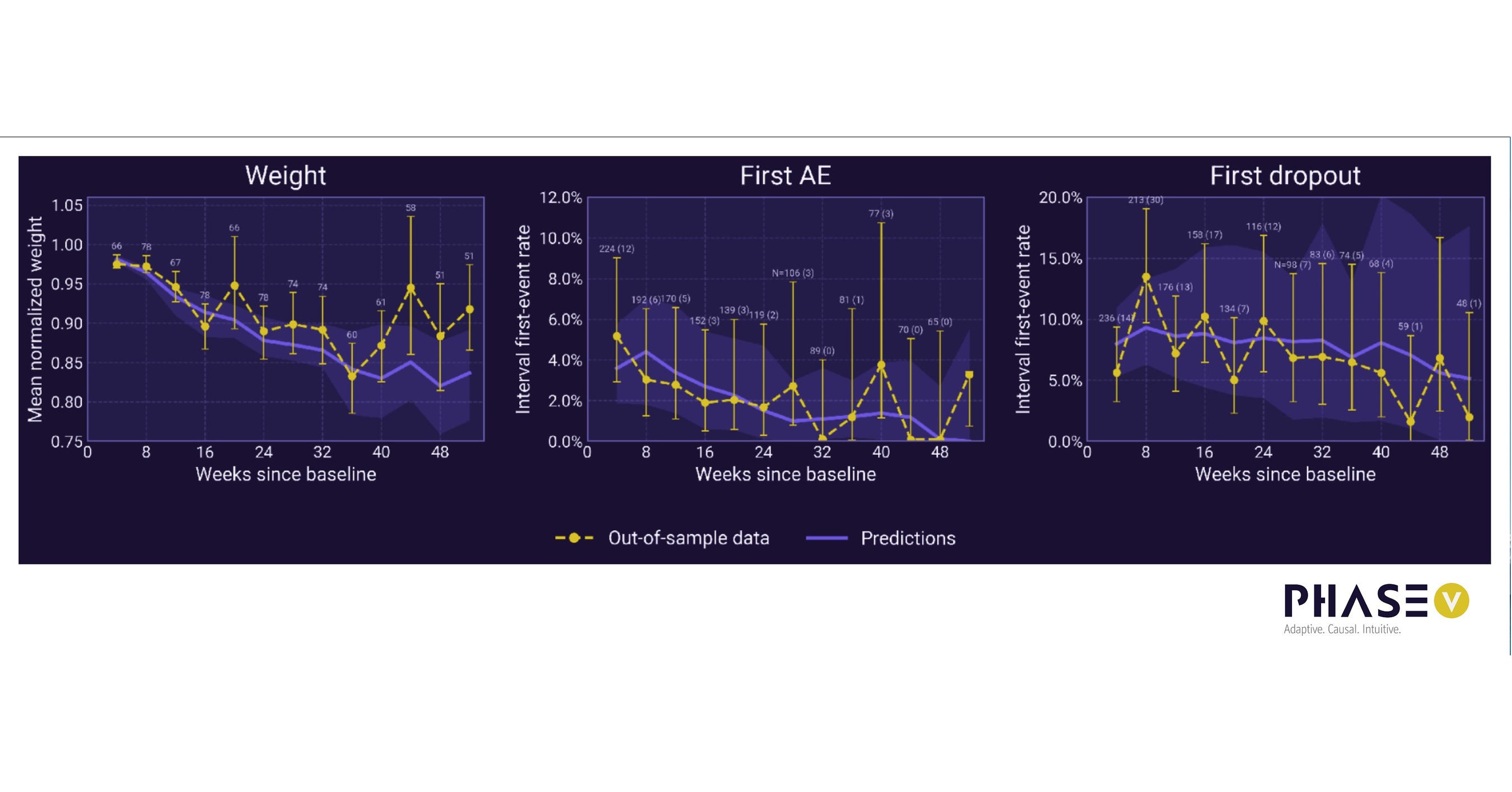
PhaseV says its model, validated against held-out real-world patient data, can estimate how GLP-1 titration strategies may affect adverse events and treatment dropout. The model uses longitudinal data, including newly licensed MarketScan and Veradigm data, to support dosing decisions before a clinical trial begins; the article reports no quantified clinical or financial results for this specific model.
Analysis
The investable signal is not evidence that GLP-1 tolerability has improved; it is a potentially useful trial-design tool whose value depends on whether sponsors can reproduce the reported results and change protocol decisions. If slower escalation meaningfully reduces discontinuation without sacrificing efficacy or extending trials enough to offset the benefit, sponsors could improve evaluability and reduce costly enrollment or replacement-patient needs. That would benefit trial sponsors and potentially CROs able to operationalize adaptive dosing, while increasing pressure on competing clinical-development analytics vendors to demonstrate comparable causal methods and longitudinal data access.
The key caveat is selection bias: dose changes respond to patients’ symptoms and weight response, so modeling those observed histories does not eliminate unmeasured confounding. Held-out prediction of observed outcomes is useful validation, but it is not proof that a hypothetical titration schedule would cause the predicted outcomes. MarketScan and Veradigm data breadth, representativeness, and completeness of dose/adverse-event records also matter. The article’s platform savings and success-rate figures are company claims, not independently established economics. PhaseV is not identified as a public company in the supplied data, so there is no direct listed-equity expression.
Near term, expect limited sector impact absent sponsor adoption or independent validation. Over 1–3 months, watch for named sponsor deployments, protocol changes, or peer-reviewed comparisons against randomized evidence. Over 6–18 months, broader use could favor analytics platforms with credible longitudinal data and causal validation; it could also expose sponsors to regulatory scrutiny if model-driven dosing assumptions fail in prospective trials. The thesis weakens if prospective studies show no retention benefit, efficacy is diluted by slower escalation, or regulators reject the evidence as insufficient for protocol decisions.
AllMind Terminal
AI-powered research, real-time alerts, and portfolio analytics for institutional investors.
Request TrialMarket Sentiment
Overall Sentiment
mildly positive
Sentiment Score
0.25
Key Decisions for Investors
- No direct trade on this announcement: PhaseV is not mapped to a listed ticker, and the article provides no independent commercial or financial impact data.
- Add clinical-trial analytics and CRO vendors to a watchlist rather than buying a broad AI or biotech basket; seek evidence of paid deployments, repeat usage, and measurable protocol changes before underwriting revenue upside.
- For GLP-1 sponsors, treat tolerability modeling as a potential trial-efficiency lever, not a drug-demand catalyst. Monitor discontinuation, dose intensity, and weight-loss efficacy together; improved retention alone would not establish better trial economics.
- Falsification/watch item: require prospective or randomized validation showing that an altered titration schedule lowers dropout while preserving efficacy and does not materially lengthen treatment or trial duration.
More News
- Anthropic's third-quarter revenue is said to hit $16.8 billion ahead of IPO
- Why is Samsung Electronics stock plunging today?
- SK Hynix plunges 8% amid Asia tech rout as Fed rate hike fears, AI funding worries mount
- Elon Musk says Trump is 'ultimately' responsible for any curbs on Ukraine's Starshield systems
- SK Hynix seeks U.S. chip equipment exports to China tied to new factory
- Dell stock plunges 11%, leading data center sell-off on concerns about 'enterprise AI timing'