
Watching Sports on YouTube Doesn't Mean You'll Get Off the Couch, New SEOULTECH Research Shows
Source: PR Newswire
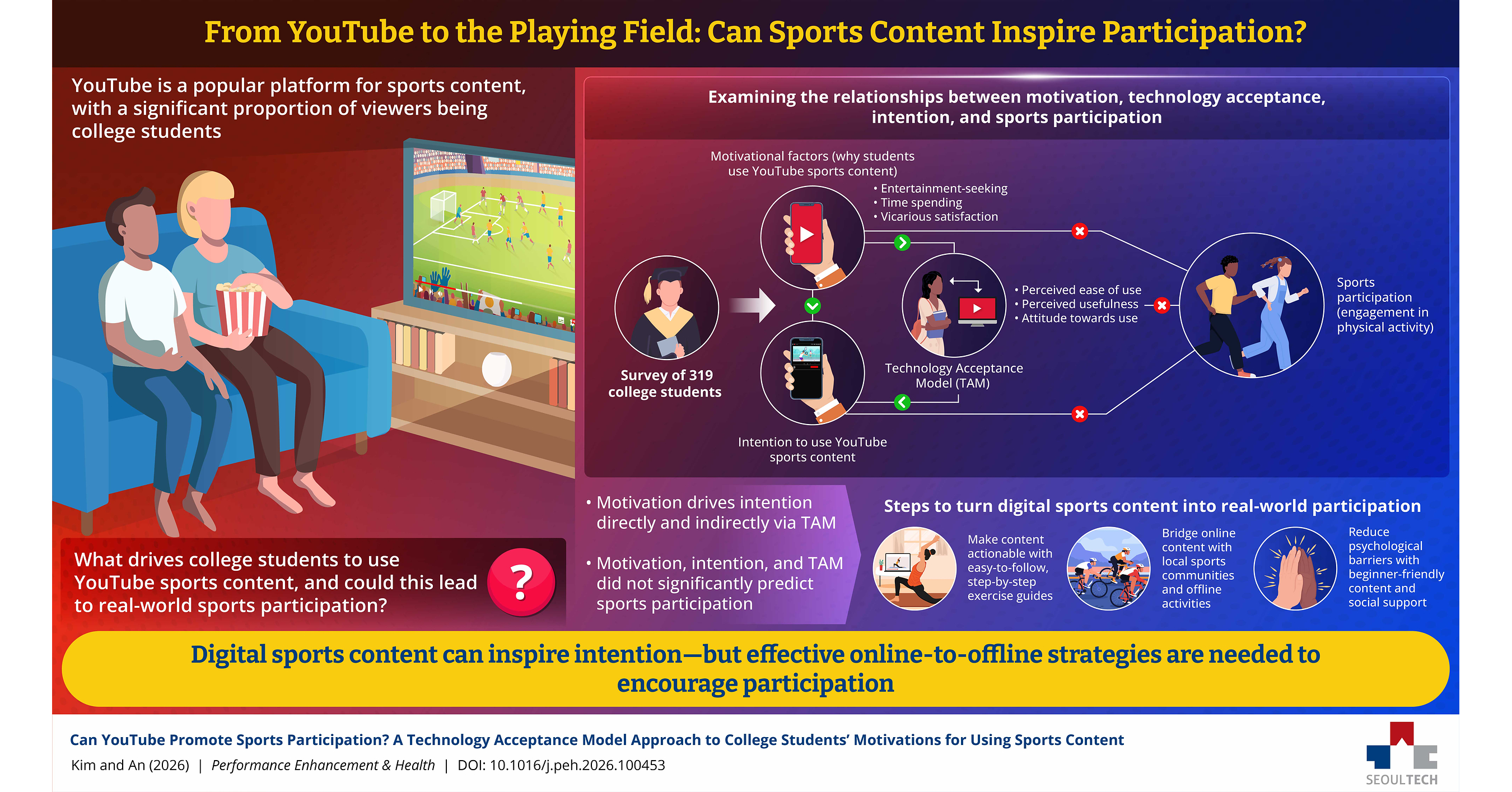
SEOULTECH research found that college students' motivation and intention to consume sports content on YouTube do not significantly translate into real-world sports participation. While perceived usefulness, ease of use and user motivation increase intent to use the platform, the study recommends exercise guides, local-facility links and social-support features to convert passive viewing into sustained activity. The findings are academic and unlikely to have material near-term market implications for YouTube or sports-content platforms.
Analysis
This is not a monetizable demand signal for GOOG. The more relevant implication is that sports-viewing engagement should be treated as entertainment inventory, not evidence of downstream conversion into fitness, equipment, gym memberships, or wellness spending. That weakens any thesis that YouTube sports-content engagement alone can support incremental demand forecasts for connected fitness, wearables, or sporting-goods names.
For Alphabet, the marginal read-through is modestly negative for commerce-ad attribution claims in fitness categories: passive consumption can raise watch time and ad impressions without producing high-intent transactions. The potential offset is favorable engagement economics—sports highlights and creator content are relatively low-cost versus premium rights—so a shift toward this format can support YouTube engagement and ad inventory even if it does not drive physical-product conversion. Financial impact is immaterial absent evidence that advertisers are repricing sports-ad inventory based on lower conversion.
Over the next 1-3 months, watch YouTube/Google advertising commentary from fitness, athletic-apparel and sporting-goods advertisers for changes in conversion rates or customer-acquisition costs. Over 6-18 months, the more important variable is whether platforms add location, community and transactional layers that close the intent-to-action gap; that would create a different revenue pool spanning local advertising, bookings and commerce rather than merely video advertising.
Contrarian view: the conclusion may overstate the absence of economic value because the measured outcome is exercise participation, not purchases, subscriptions or brand consideration. A viewer who remains inactive can still be a valuable advertiser audience; therefore, there is no basis for a directional GOOG trade without cohort-level watch-time, CPM, conversion and advertiser-retention data.
AllMind Terminal
AI-powered research, real-time alerts, and portfolio analytics for institutional investors.
Request TrialMarket Sentiment
Overall Sentiment
neutral
Sentiment Score
-0.05
Key Decisions for Investors
- No standalone GOOG position change: the reported relationship is academically interesting but lacks scale, advertiser-conversion data and evidence of a revenue or margin impact.
- Maintain a watch item on GOOG earnings: flag any disclosure of weaker YouTube direct-response performance in fitness, sporting goods or local-services verticals; a broad-based conversion deterioration, not viewing behavior, would be the thesis trigger.
- Avoid using YouTube sports-engagement metrics as a bullish demand input for connected-fitness or wearable equities over the next 1-3 quarters unless company data show paid-subscriber conversion, equipment sell-through or reduced CAC.
- If GOOG trades materially lower on concerns about passive-content monetization, reassess long exposure only after confirmation that YouTube engagement growth remains intact and ad CPM/fill-rate trends do not weaken; the key falsifier is a guidance cut tied to YouTube advertising rather than isolated category conversion.
More News
- Factbox-How AI leaders and world governments react to ’AI doom’ fears
- Is Amazon Stock a Buy After Its Best Quarter in Years?
- Push for AI regulation mounts as talk of AI’s ‘existential’ risks go mainstream. But Trump resists calls for a slowdown
- New York proposes $1 million per megawatt community investment for data centers
- What must happen for AI’s trillion-dollar gamble to pay off
- Musk urges top AI labs, Chinese companies to test each other's models amid calls for slowdown