
Au salon All Energy 2026, CATL lance à l'échelle mondiale un système de stockage d'énergie à très haute capacité et signe trois protocoles d'accord de partenariat en Australie
Source: PR Newswire
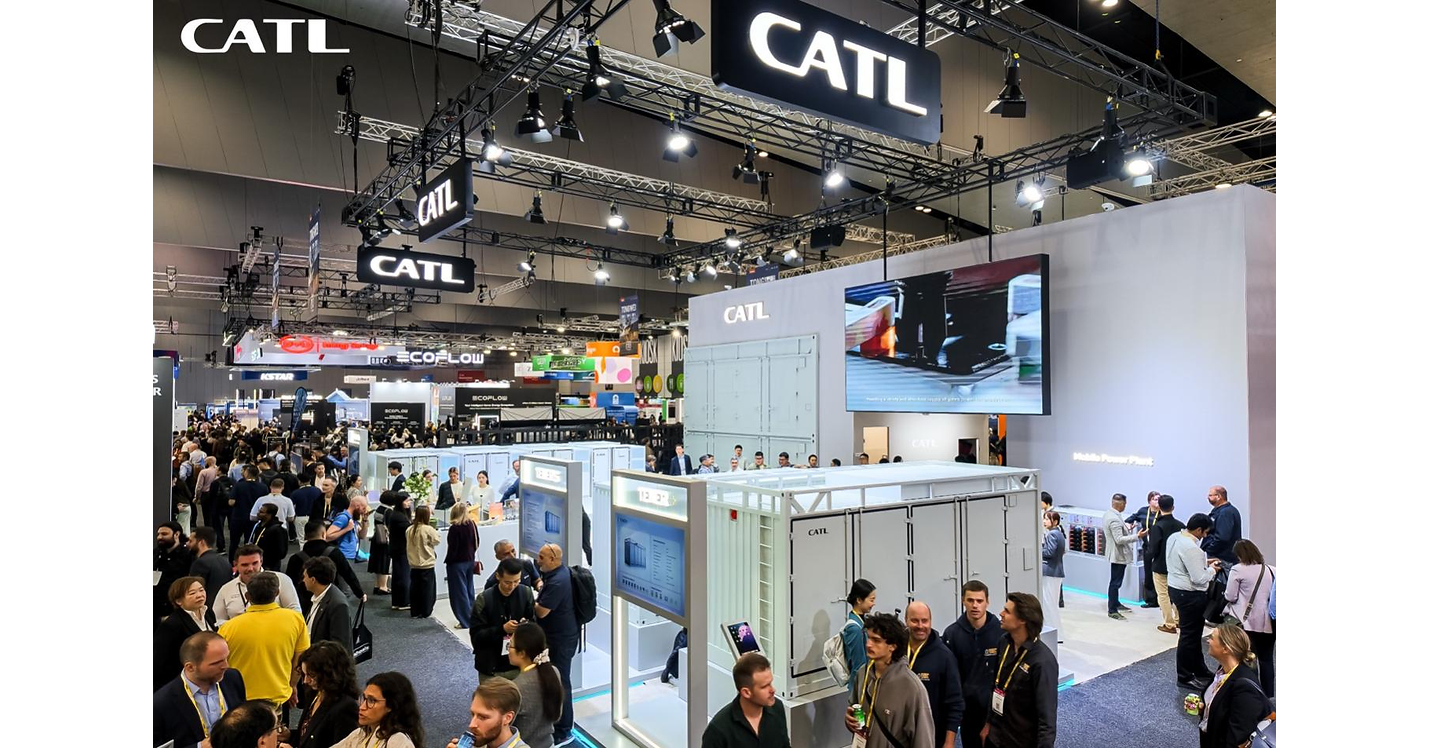
CATL launched its 9 MWh TENER+ storage system globally and introduced TENER Sodium, a modular sodium-ion system offering more than 30 MWh, up to 55°C operation, over 10,000 cycles at 45°C, 95% round-trip efficiency and a service life exceeding 20 years. CATL also signed three Australian partnership MoUs; TENER+ can reduce container count by up to 40% and project footprint by 12%. The announcement supports CATL’s Australian grid-storage expansion amid record renewable generation of 44.3% in Q3 2026; the company says it held 30.4% of the global energy-storage battery market in 2025 and has more than 17 GWh of installed project capacity in Australia.
Analysis
The investable signal is not the launch itself; it is CATL trying to reduce the integration and financing friction that can block otherwise attractive Australian BESS projects. A standardized battery-plus-conversion offer with local validation could improve bid competitiveness and repeat-project execution, pressuring standalone integrators and less differentiated suppliers. However, the agreements are MOUs, not disclosed orders: they do not establish revenue, pricing, project awards, or a durable advantage over Tesla, Fluence, Wärtsilä, or BYD.
For developers, compactness and claimed longevity may improve land-constrained project economics, but bankability depends on independently verified degradation, warranty terms, availability, and delivered cost—not headline cycle-life claims. Sodium-ion potentially diversifies sourcing and fits stationary storage, but needs commercial-scale operating evidence and cost data before it can be treated as a lithium substitute. More battery capacity can also cannibalize evening price spreads; grid-forming and ancillary-service capability may matter more than nameplate MWh as penetration rises.
Near term, expect limited fundamental impact absent contract disclosures. Over 1–3 months, watch Australian project awards, connection approvals, and financing terms. Over 6–18 months, execution and realized merchant revenues will determine whether the local-partner strategy converts into share gains. The contrarian risk is that investors capitalize the storage buildout while overlooking spread compression and grid-connection bottlenecks.
AllMind Terminal
AI-powered research, real-time alerts, and portfolio analytics for institutional investors.
Request TrialMarket Sentiment
Overall Sentiment
moderately positive
Sentiment Score
0.65
Key Decisions for Investors
- No launch-driven position: treat the announcement as strategic positioning, not an earnings catalyst, until CATL or partners disclose binding orders, pricing, or an awarded project pipeline.
- Watch Australian BESS developers and integrators for relative performance. A credible CATL-Hitachi Energy reference project could pressure competing integrators; falsify that thesis if deployments remain delayed or project awards continue to favor established alternatives.
- Set an alert for independently verified TENER Sodium cost, degradation, warranty, and field-availability data. Do not price in lithium substitution before those metrics and repeat orders are disclosed.
- Monitor Australian evening wholesale spreads, ancillary-service revenues, and connection queues over the next 1–3 months. Persistent spread compression or connection delays would weaken the economics of the storage buildout even if equipment adoption accelerates.
More News
- Stocks slump, bonds leap as AI giants’ spending spooks investors
- DoorDash offers $17 billion for Instacart: ‘the largest companies are only eating more and more of the pie’
- Alphabet Erases $500 Billion as ChatGPT, Google AI Cut into Search
- Alphabet just had its worst day as a public company. BofA now values Google search at a lower multiple than fossil fuel stocks
- Christine Lagarde, Boris Vujčić: Monetary policy statement
- Alphabet’s stock has worst day in over 20 years, dragging the S&P 500 to first loss in four days