
Next Africa: China Leans on Allies in Squeeze on Taiwan
Source: Bloomberg
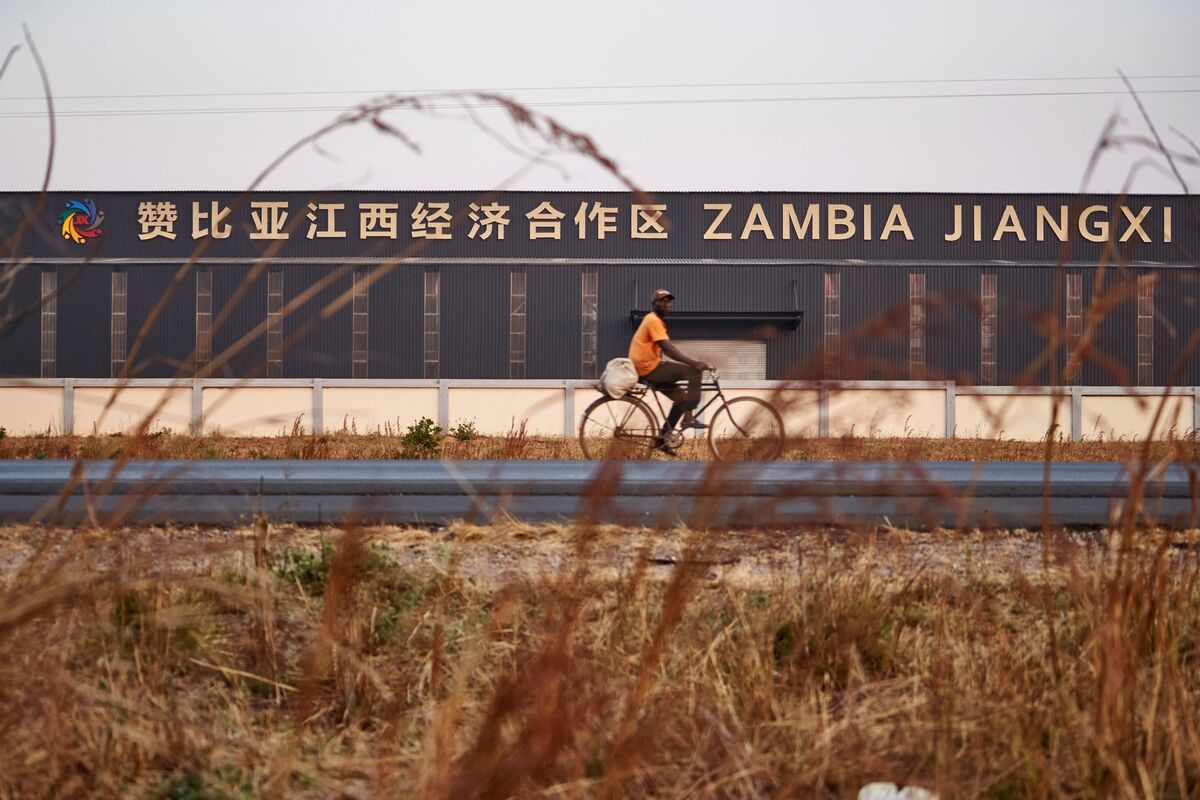
The article says China is enlisting African partners to increase pressure on Taiwan, intensifying Taipei’s diplomatic isolation on the continent. It also highlights that African states are finding that deeper trade and investment links with China can come with political strings attached—raising geopolitical risk around Taiwan without providing specific financial figures.
Analysis
This is less a direct earnings event than a signal that Beijing is willing to convert commercial leverage into diplomatic pressure. The market implication is a small but real increase in Taiwan-related geopolitical tail risk: not because of immediate trade disruption, but because any erosion in external support raises the option value of future coercion and can keep a floor under defense spending expectations. In the near term, that is more relevant for defense primes and intelligence/cyber contractors than for semis, which tend to reprice only when the Strait risk becomes operational rather than rhetorical.
Second-order effects likely show up in African sovereign and infrastructure markets. Countries leaning more heavily on Chinese financing may gain short-term capital access, but the hidden cost is higher policy dependence and more volatile Western funding sentiment, especially if U.S./EU policymakers interpret the region as a battleground for bloc alignment. That creates a subtle winner/loser split: Chinese state-linked contractors and commodity chains can benefit from influence expansion, while multilateral lenders and Western EM allocators may demand a higher political risk premium on African credits and projects tied to Beijing.
The contrarian view is that the market may be overpricing the signaling and underpricing the execution risk: many diplomatic wins in smaller states do not translate into meaningful shifts in Taiwan’s real security position unless they cascade into votes, recognition changes, or logistics access. If that does not happen over the next 1-3 months, the trade fades. The real 6-18 month catalyst would be evidence that this is part of a broader campaign paired with military, cyber, or trade coercion; absent that, it remains a geopolitical watch item more than a standalone macro catalyst.
AllMind Terminal
AI-powered research, real-time alerts, and portfolio analytics for institutional investors.
Request TrialMarket Sentiment
Overall Sentiment
mildly negative
Sentiment Score
-0.20
Key Decisions for Investors
- Keep this as a risk-monitor rather than an outright macro trade for now; do not chase Taiwan semis on the headline alone unless there is follow-through in diplomatic recognition or Strait-related military activity over the next 1-3 months.
- For a low-conviction hedge, buy 3-6 month call spreads on ITA or XAR against a broad market book; defense tends to outperform when geopolitical signaling increases, with limited carry if the issue fades.
- If the theme escalates into broader U.S.-China friction, pair long ITA / short EEM as a cleaner expression than shorting Taiwan names directly; the upside is a modest relative outperformance trade, not a crisis bet.
- Set an alert on TSM and EWT only if there is evidence of real diplomatic loss of support or Strait escalation; otherwise avoid paying up for implied volatility because the current signal is too weak to justify directional premium.
- Watch African sovereign spreads and China-linked project announcements for confirmation; if no spread widening or policy shift appears within 4-8 weeks, fade any geopolitical hedges entered on this news.
More News
- Why is US turning to Russia for diesel despite sanctions?
- Trump's Russian Diesel Deal Draws Ukraine Criticism
- Stocks were up this week. Here are the names that are now overbought
- How U.S. know-how is fracking Australia into a gas boom, from Texas oilmen to Trump’s energy secretary
- Trump struck a diesel deal with Putin just weeks after signing Russia sanctions. Zelenskyy calls it ‘a weak decision’
- The world needs Ukraine’s grain. Its farmers are running out of reasons to plant