
Energy Storage Gains Momentum in Italy as Sungrow Brings C&I Market Together at Power Connect Day in Monza
Source: PR Newswire
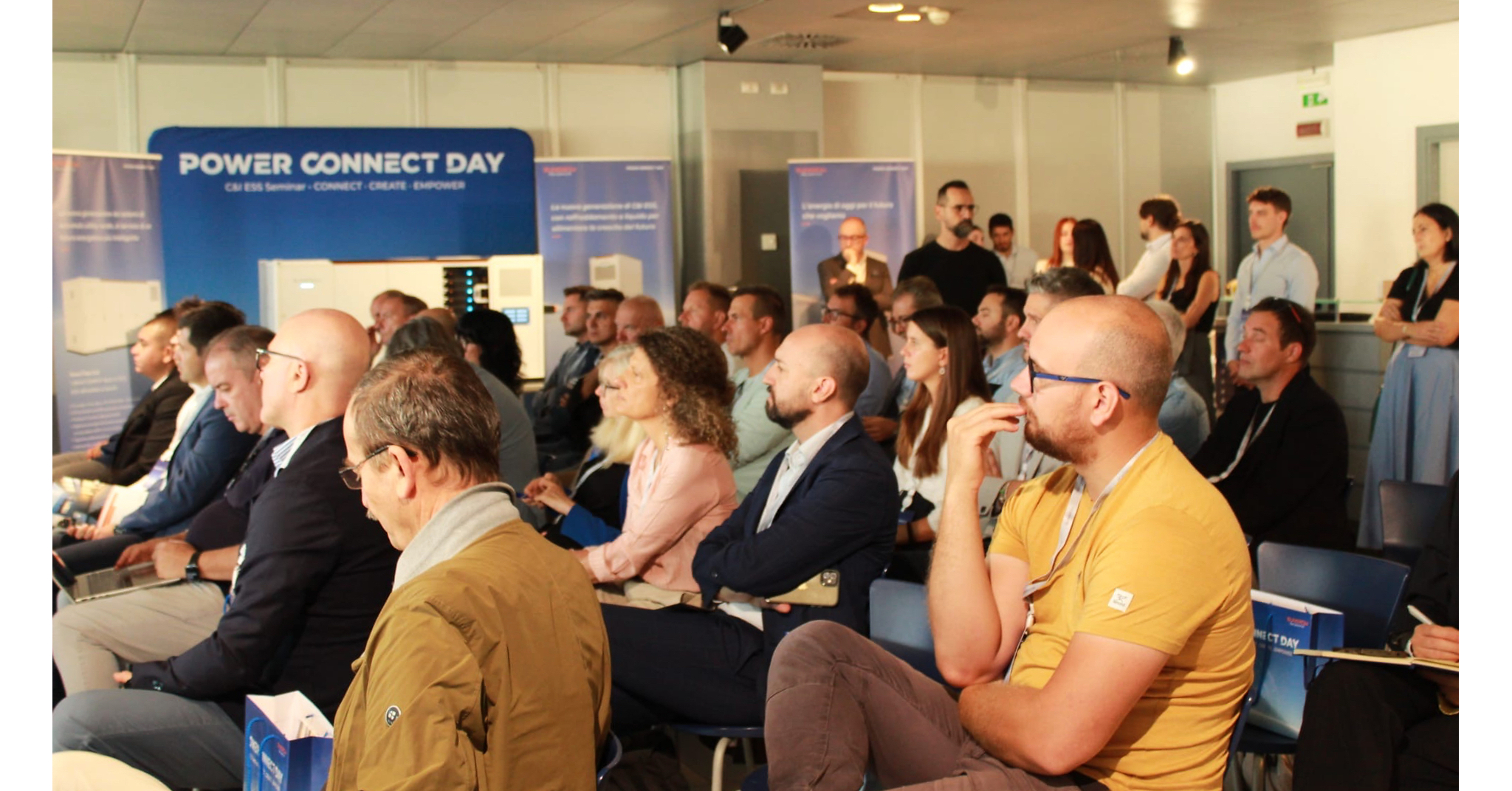
Italy added 2.61 GW of solar capacity in H1 2026, lifting total installed PV to 46.8 GW, while electrochemical storage capacity neared 12 GWh. Sungrow highlighted BESS deployments targeting utility-scale and commercial-and-industrial demand, including a 764 kW solar plant paired with 3.2 MWh of storage and a 4.15 MWp PV/4.60 MWh BESS project along the A4 motorway. The company positions storage as a key tool for improving self-consumption, energy sharing and resilience as Italy's decentralized renewable-energy market expands.
Analysis
The investable implication is less about a single vendor win and more about Italy’s accelerating shift from volumetric power sales toward flexibility economics. Higher midday solar penetration should widen intraday price spreads and raise curtailment risk, improving the value proposition for behind-the-meter storage, aggregation software and grid reinforcement. ENEL and ERG benefit selectively through storage-equipped renewable portfolios, while Terna (TRN) is the cleaner regulated beneficiary if congestion and balancing needs translate into accelerated transmission and ancillary-services investment.
Sungrow’s installer engagement is strategically relevant to European incumbents because integrated inverter-plus-storage packages can compress hardware pricing and shift differentiation toward bankability, local service and EMS capability. This is a margin risk for European equipment and EPC participants with limited proprietary software, but a potential volume tailwind for electrical-component suppliers such as Prysmian (PRY) if storage deployment drives interconnection and distribution-grid upgrades. The cited projects are reference installations, not evidence of order-book conversion; procurement awards, warranty terms and project-finance acceptance remain the key verification points.
Over the next 1-3 months, the relevant catalyst is evidence that Italian day-ahead peak/off-peak spreads and ancillary-market revenues remain sufficient to support C&I storage paybacks without exceptional subsidies. Over 6-18 months, a sustained buildout could pressure merchant solar capture rates for unhedged generators, making hybrid PV-storage portfolios relatively more valuable. The contrarian view is that the market may over-credit battery demand before connection queues, permitting and local grid constraints are resolved; rapid hardware price deflation can expand unit shipments while eroding vendor gross margins.
TRN is not a direct beneficiary of one supplier’s commercial activity, but incremental distributed-storage penetration increases the probability of higher regulated capex and system-services complexity. Conversely, a regulatory move that lowers compensation for distributed flexibility, or a sharp narrowing of Italian intraday spreads, would impair storage economics faster than it would impair solar installation volumes.
AllMind Terminal
AI-powered research, real-time alerts, and portfolio analytics for institutional investors.
Request TrialMarket Sentiment
Overall Sentiment
mildly positive
Sentiment Score
0.38
Ticker Sentiment
Key Decisions for Investors
- Maintain a 6-18 month overweight in Terna (TRN) versus Italian merchant renewable exposure: regulated grid investment offers cleaner earnings visibility as flexibility needs rise. Reassess if Italy’s regulated asset-base/capex guidance fails to increase or if grid-connection reform materially reduces congestion-driven investment needs.
- Watch-list a relative-value long ENEL / short unhedged European renewable operators with greater merchant capture-price exposure, sized only after confirming portfolio-level storage additions and Italian forward power spreads. Thesis horizon is 6-18 months; invalidate if solar capture rates hold despite rising penetration or ENEL’s storage capex returns deteriorate.
- Do not initiate a directional trade in ESPE absent confirmation of a liquid public listing, backlog, project margin and working-capital data. Treat any claimed project selection as an operational reference rather than a revenue catalyst until independently verifiable order conversion emerges.
- For PRY, use storage-related order intake and Italian distribution-grid tender activity as a 3-12 month add trigger rather than buying on battery headlines. The upside is cable and interconnection intensity; the key risk is that behind-the-meter systems deploy without material grid-upgrade spend.
More News
- Asian stocks dip, bonds in focus after torrid September
- September Ends on a Grim Market Note: Evening Briefing Americas
- Tencent leases 100,000 chips from Oracle for $7 bln- FT
- California Gov. Gavin Newsom bans AI 'robo bosses' in landmark state law, reversing his earlier veto
- Stocks Jump on inflation Surprise, Apple's Smart-Home Push
- RAM supply set to worsen, says Micron, as CEO celebrates ‘much higher’ prices
From AllMind Research
- Anthropic IPO Preview: Valuation, Timing, and What to Watch
- Shein After the IPO: Venue, Valuation, and What Must Be Proved
- What AI Research Tools Should a Small Hedge Fund Buy First?
- AI Research Tools for Pension Funds and Allocators
- AllMind's Data Standardization Methodology: Our Approach to Fundamentals