
DJI lanza el modo de datos locales para ROMO y refuerza su sistema de protección de privacidad de varios niveles
Source: PR Newswire
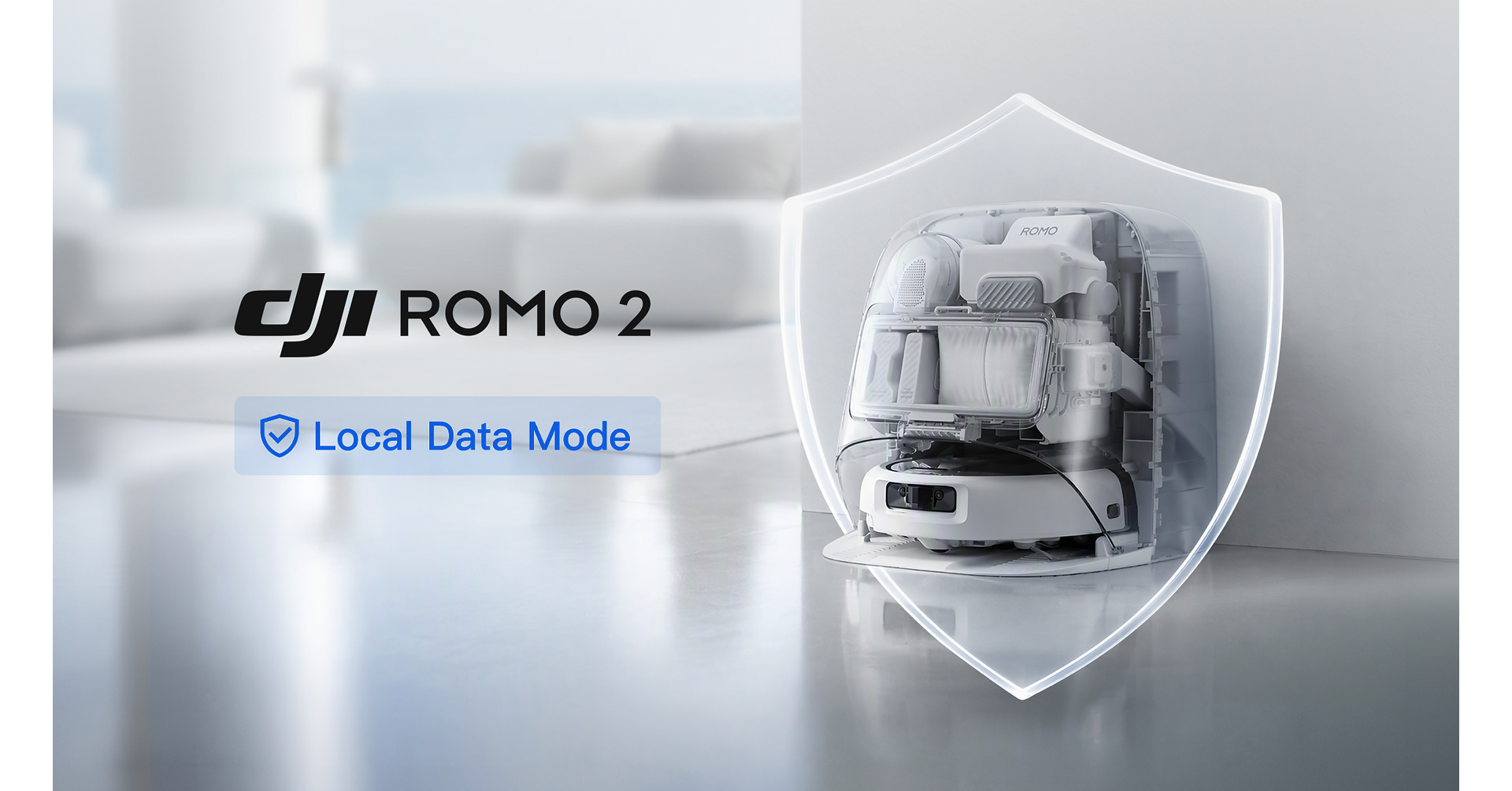
DJI lanzó el modo de datos locales para su robot aspirador ROMO 2: tras la configuración inicial con internet, mapas, imágenes y otros datos de navegación se almacenan y procesan en el dispositivo, y las funciones principales siguen operando sin conexión. La actualización también destaca controles de consentimiento, cifrado y eliminación automática de fotos de más de 14 días, junto con certificaciones de seguridad y compatibilidad con Matter. DJI indicó que la función llegará a futuros modelos ROMO; el comunicado no reportó impacto en acciones ni cifras financieras.
Analysis
The investable signal is less “privacy feature” than a possible shift in the basis of competition: if buyers increasingly treat indoor camera and floor-plan data as a purchase constraint, local processing could help DJI win share without competing only on cleaning performance or price. That is a conditional thesis, not evidence of demand or a material revenue contribution; the announcement provides no sales, pricing, or adoption data, and DJI has no directly mapped public equity exposure here.
The second-order tension is that local processing may reduce cloud dependence and privacy objections while also limiting remote functions or telemetry DJI can use to improve the product. Matter compatibility could broaden ROMO’s reach, but makes the smart-home layer more interchangeable and may strengthen Apple, Google, Amazon, and Samsung’s control of the user interface rather than DJI’s ecosystem. Competitors including iRobot, SharkNinja, and Roborock may respond with comparable privacy controls; the feature alone is unlikely to establish a durable moat.
Near term, treat this as product positioning, not an earnings catalyst. Over 1–3 months, watch independent reviews for setup friction, offline feature parity, and whether rivals match the claim. Over 6–18 months, the thesis strengthens only if privacy-conscious adoption supports share or pricing without sacrificing usability. Company-described certifications and a penetration test are useful signals, not proof of zero security risk; a material vulnerability or data-handling controversy would reverse the trust benefit.
AllMind Terminal
AI-powered research, real-time alerts, and portfolio analytics for institutional investors.
Request TrialMarket Sentiment
Overall Sentiment
mildly positive
Sentiment Score
0.30
Key Decisions for Investors
- No direct trade on the announcement: DJI has no mapped public ticker, and the release provides no evidence to size the commercial impact.
- Set an alert for competitor product announcements and independent ROMO 2 reviews. A credible, easy-to-use local mode adopted by rivals would make privacy a category baseline, not a DJI differentiator.
- For any future listed-company exposure, verify product-level sales, realized pricing, and customer reviews before treating privacy as a share-gain or margin catalyst; watch for evidence that offline operation removes useful features or increases support friction.
- Falsify the adoption thesis if reviews show cumbersome initial setup, materially degraded offline functionality, or a security incident that undermines trust; strengthen it only with sustained evidence of share gains or pricing resilience.
More News
- Analysts react as Binance freezes assets after $6.3 billion security breach
- Stocks slump, bonds leap as AI giants’ spending spooks investors
- PC chip plunge wipes out a quarter of Intel’s value
- Intel plunges on a major guidance miss. What went wrong — and how to proceed
- Circle, Tether freeze funds impacted by potential Binance 'security issue'
- Japan’s Nikkei slumps 3% as tech stocks tumble on AI worries