
Upcoming Valley North Project Open Houses Will Showcase Potential Routes
Source: PR Newswire
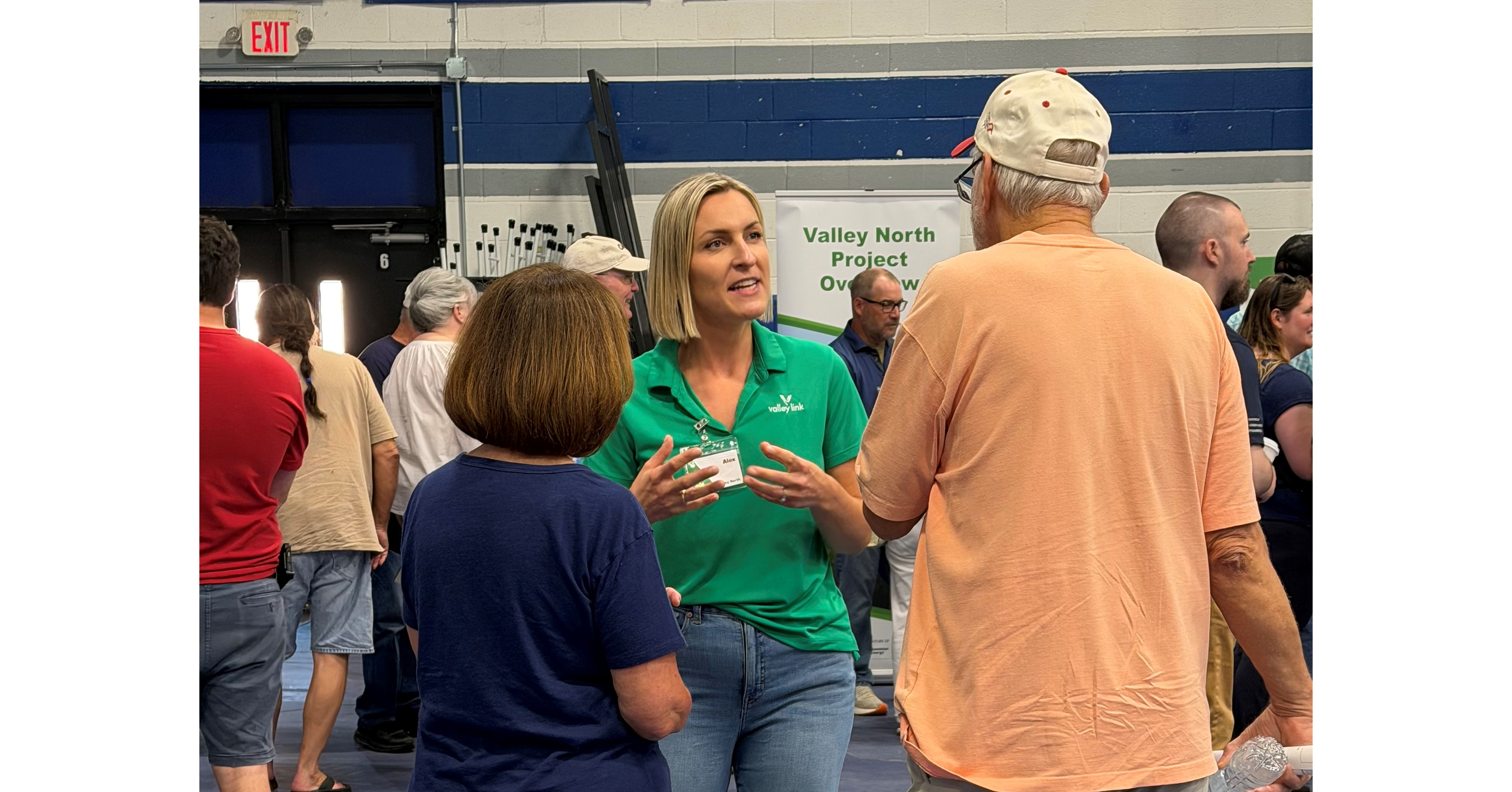
Valley Link is holding a second round of open houses in November to gather feedback on potential routes for its approximately 260-mile, 765-kV Valley North transmission project spanning West Virginia, Maryland and Virginia. More than 6,500 people participated in the first outreach round; route options are still being evaluated, and recommendations have not been finalized. PJM selected the project as part of long-term regional planning to strengthen transmission reliability and support future energy needs.
Analysis
This is a permitting and execution signal, not a near-term earnings catalyst. Route refinement can reduce local opposition and rework risk, but the unusually large first-round turnout is not evidence of consent; the next phase may expose concentrated landowner or environmental objections that are more consequential than aggregate participation. For a 260-mile high-voltage build, route changes can cascade into engineering redesign, easement negotiations and schedule slippage, potentially raising costs before any transmission-capacity benefit is realized. Whether those costs ultimately burden the developer or are recoverable through PJM-related mechanisms is not established here.
Over the next few weeks, the open houses are information-gathering events, with no formal presentation or route decision; expect limited price relevance absent a new regulatory or cost disclosure. Over 1–3 months, watch for the recommended route, permitting milestones and evidence that feedback narrows rather than expands route alternatives. Over 6–18 months, successful execution could support demand for transmission engineering, electrical equipment and construction capacity, while delays could redirect or defer that work. Quanta Services and major grid-equipment suppliers are plausible sector beneficiaries only if the project advances; the article does not identify awarded contracts or suppliers.
Contrarian angle: outreach volume can be mistaken for project momentum. The more material signal is whether route refinement resolves objections without materially lengthening the schedule. No actionable public-equity trade is supported yet: project ownership, capex, cost recovery, contract awards and timeline are missing.
AllMind Terminal
AI-powered research, real-time alerts, and portfolio analytics for institutional investors.
Request TrialMarket Sentiment
Overall Sentiment
mildly positive
Sentiment Score
0.10
Key Decisions for Investors
- No directional trade on this announcement; treat it as a low-impact process update rather than evidence of incremental contracted revenue.
- Place Valley Link’s recommended route, permitting schedule, project capex, ownership and cost-recovery arrangements on the diligence list before underwriting exposure to the project.
- Monitor Quanta Services and grid-equipment suppliers for disclosed awards or order commentary; consider a sector exposure only after contracts and timing are verified.
- Falsify the constructive execution thesis if route revisions trigger material redesign, permitting delays, or an adverse cost-recovery decision; stronger evidence would be a finalized route and on-schedule approvals.
More News
- US fines Bank of America $1.2bn for money laundering, sanctions violations
- Taiwan agrees to buy 30% of gas from Alaska LNG project, Trump says
- Oil rises amid growing Mideast tensions between Iran-backed Houthis and Saudi Arabia
- Houthis Hit Saudi Aramco Headquarters in Missile Attack
- Applied Materials’ $5 billion AI lab aims to cut chip development time in half—and restore Silicon Valley’s edge
- Bank of America hit with more than $1.2 billion in penalties over money-laundering violations
From AllMind Research
- Anthropic IPO Preview: Valuation, Timing, and What to Watch
- Shein After the IPO: Venue, Valuation, and What Must Be Proved
- What AI Research Tools Should a Small Hedge Fund Buy First?
- Weekly Update: AI-Powered Report Editing, Investor Relations, and Enhanced Search
- Automating Financial Model Updates: A Source-Controlled Workflow