
GA-ASI Mojave First UAS To Complete Battlefield Short Field Ops
Source: Newswire
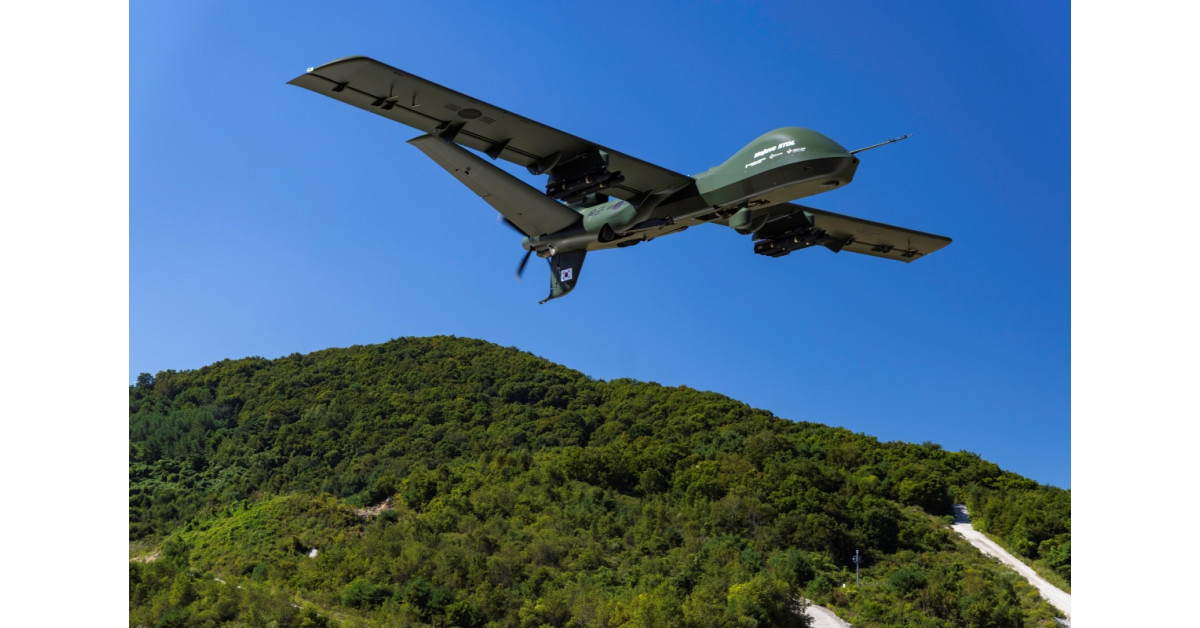
GA-ASI and Hanwha Aerospace completed the first simulated-battlefield short takeoff and landing operations by a medium-altitude, long-endurance UAS, with Mojave STOL landing and relaunching from a rough tank-and-artillery maneuver trail in South Korea. The demonstration validates austere-field operations for ISR, weapons delivery, resupply and counter-UAS missions, supporting the partners' planned global co-development and production program. A production-design critical review is expected in November 2026, followed by first flight in 2027.
Analysis
The investable read-through is primarily to Hanwha Aerospace (012450 KS), not General Atomics, which remains private. A production partnership can deepen Hanwha's role from platform integrator to export-channel and sustainment participant; the latter is more valuable than an initial airframe sale because spares, munitions integration, training and depot support create recurring revenue. The capability also fits South Korea's broader push toward locally supported, survivable systems, potentially improving Hanwha's competitive position in future Asian and Middle Eastern tenders against Turkish drone suppliers and US primes.
The technical event does not yet establish a revenue event: the key valuation catalyst is whether the November design review converts into funded development, procurement quantities, and a defined Korean content split. Investors should distinguish a demonstrator from an operational system that has proven reliability, autonomous mission management, secure datalinks, expeditionary refueling/rearming, and weapons certification. A failure to disclose a funded launch customer or first production-lot economics by the 2027 flight milestone would imply that the program remains strategically interesting but financially immaterial.
Second-order beneficiaries could include Korean propulsion, sensors, datalink, and precision-munitions suppliers once a domestic bill of materials is disclosed; absent that disclosure, broad defense exposure is preferable to supplier speculation. The contrarian view is that distributed operations are increasingly necessary under missile threat, but runway-independent drones also face a harder operational burden: dispersed ground crews and communications nodes expand the target set and may reduce the apparent survivability advantage. Near-term sentiment may be overextended if it prices an export franchise before procurement authority and interoperability certification are visible.
AllMind Terminal
AI-powered research, real-time alerts, and portfolio analytics for institutional investors.
Request TrialMarket Sentiment
Overall Sentiment
strongly positive
Sentiment Score
0.55
Key Decisions for Investors
- Maintain a watch-list long bias in Hanwha Aerospace (012450 KS) into the November design-review catalyst, but do not initiate solely on the demonstration; require confirmation of funded development, Korean Ministry of National Defense procurement intent, or disclosed production economics. Reassess if management characterizes the program as R&D-only or gives no customer/timing visibility.
- For liquid US defense exposure, prefer a small basket position in ITA over a single-name drone trade for the next 1-3 months; the news is not sufficient to underwrite a material earnings revision for AVAV or KTOS, neither of which has disclosed program participation.
- Set an event-driven alert for announced launch orders, named export customers, or supplier awards at Hanwha's Industry Day and subsequent design-review communications. A credible order with local-content detail would justify evaluating long 012450 KS versus a short broad Korean industrials proxy, targeting defense-specific multiple expansion; lack of an order by the 2027 first flight is the thesis falsifier.
- Avoid shorting incumbent US unmanned-system primes on this development. Procurement cycles, qualification requirements, and sovereign sourcing preferences make competitive displacement a multi-year question, while a successful allied program can expand the overall distributed-UAS budget rather than merely reallocate it.
More News
- 'Hostile act': Trump threatens EU with tariffs over Canada associate-membership proposal
- US military claims Strait of Hormuz remains open amid ongoing blockade
- US official says upcoming spectrum auctions could generate more than $100 billion
- Investors react to Fed hike and market sell-off: Brace for 'higher for longer' rates
- Yemeni forces target Houthis and a Saudi base as US rules out direct role
- AI Buildout Hits Inflation as Fed Hikes Rates
From AllMind Research
- Anthropic IPO Preview: Valuation, Timing, and What to Watch
- Shein After the IPO: Venue, Valuation, and What Must Be Proved
- What AI Research Tools Should a Small Hedge Fund Buy First?
- What a Concept From Nature Tells Us About How C-Suite Executives Actually Think About AI
- How to Track Earnings Call Sentiment Across Companies