
Boot Barn's E-Commerce Strength Boosts Comparable Sales Growth
Source: zacks.com
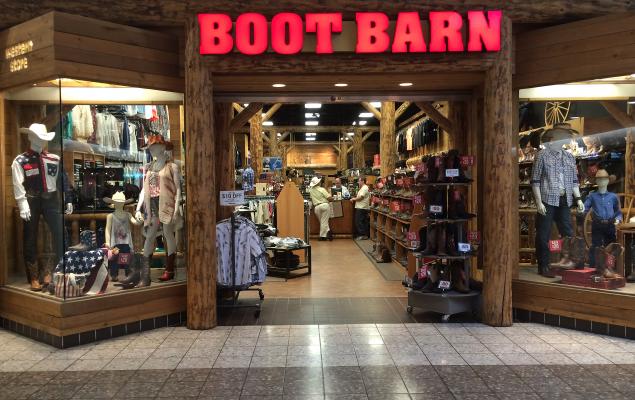
Boot Barn's fiscal Q1 2027 net sales rose 17.7% year over year to $593.5 million, supported by 13.4% e-commerce comparable-sales growth, 3.8% store comps and 27 new store openings. Management forecasts fiscal 2027 e-commerce comps of 11-13%, total sales of $2.58-$2.63 billion and consolidated comps of 2-4%, though July consolidated comps were approximately flat while e-commerce growth moderated to 10.7%. Consensus fiscal 2027 EPS is projected to increase 22.6%, with estimates raised $0.05 over the past 60 days, despite BOOT shares declining 22.5% over three months.
Analysis
BOOT's key debate is no longer whether digital can grow faster than stores, but whether its store-led fulfillment model can expand contribution margin while the chain continues opening units aggressively. If online orders are increasingly fulfilled locally, reduced parcel-zone expense and improved inventory visibility can support gross-margin resilience even in a softer discretionary backdrop; the offset is that a larger store base raises fixed occupancy and labor deleverage risk if traffic remains weak. The relevant next-quarter KPI is not digital growth alone, but consolidated comp conversion into merchandise margin, SG&A leverage and inventory turns.
The near-term deceleration in aggregate demand makes the bullish earnings path vulnerable to even modest markdown pressure. A flat store-comp environment can be masked temporarily by new-unit sales, but it cannot sustain a premium multiple if store productivity and four-wall returns deteriorate over the next 1-3 quarters. Western/workwear demand is also more exposed than broad footwear to regional employment, commodity-linked incomes and event traffic; monitor Texas and energy-state demand commentary, unemployment claims, and promotional intensity at Tractor Supply (TSCO), Academy (ASO) and Cavender's private-channel footprint.
Contrarian view: the selloff may have already priced a broad specialty-retail slowdown while overlooking BOOT's potential share gains from independent western retailers with weaker omnichannel inventory access. That said, management's outlook is a company claim rather than proof of incremental profitability. The better risk-adjusted expression is a relative long versus lower-growth footwear retailers, conditional on evidence that digital growth is additive rather than merely shifting store transactions online.
Over 6-18 months, a successful store-as-node model could make each incremental location both a retail unit and a logistics asset, lowering the capital intensity of nationwide digital expansion. The structural downside is saturation: fulfillment benefits diminish once coverage is broad, while cannibalization and lease commitments remain. A material inventory build, gross-margin miss, or a second consecutive quarter of flat-to-negative consolidated comps would falsify the share-gain thesis.
AllMind Terminal
AI-powered research, real-time alerts, and portfolio analytics for institutional investors.
Request TrialMarket Sentiment
Overall Sentiment
moderately positive
Sentiment Score
0.42
Ticker Sentiment
Key Decisions for Investors
- Initiate a 1-3 month starter long BOOT only after the next earnings release confirms positive consolidated comps, stable-to-higher gross margin, and controlled inventory growth; target 15-20% upside on renewed earnings-confidence versus 8-10% downside if traffic weakness persists.
- Express the relative thesis as long BOOT / short DBI in equal dollar amounts over 3-6 months. BOOT has a clearer unit-growth and omnichannel-margin pathway, while DBI remains more dependent on a discretionary footwear recovery; exit if BOOT's consolidated comps turn negative or DBI shows sustained positive same-store-sales acceleration.
- Do not buy the cited peer ideas GCO or FIGS solely on this signal: their consumer drivers are not sufficiently correlated with western/workwear demand. Use TSCO and ASO earnings commentary as read-through alerts for regional discretionary demand and promotional pressure.
- Set a downside trigger on BOOT for a gross-margin decline of more than 150 bps alongside flat/negative comps, or inventory growth materially above sales growth; either outcome would indicate that fulfillment scale is not offsetting markdown and fixed-cost risk.
More News
- Japan’s corporate leaders sound alarm over weak yen — even dollar-earners are voicing concerns
- Hong Kong Leader Unveils Five-Year Plan
- Why is Weichai Power stock rallying today?
- Fed hikes again - an AI-Picked insurer is still cashing in
- What to know about US Federal Reserve’s first interest rate hike in 3 years
- Investors react to Fed hike and market sell-off: Brace for 'higher for longer' rates
From AllMind Research
- Anthropic IPO Preview: Valuation, Timing, and What to Watch
- Shein After the IPO: Venue, Valuation, and What Must Be Proved
- What AI Research Tools Should a Small Hedge Fund Buy First?
- Introducing AllMind: A New Data & AI Workspace for Institutional Investors
- AI Tools for Private Equity Due Diligence: A Buyer Workflow