
Sécurité axée sur le renseignement pour Macao : CTM et Huawei s'associent pour renforcer la sécurité des réseaux à l'ère de l'IA.
Source: PR Newswire
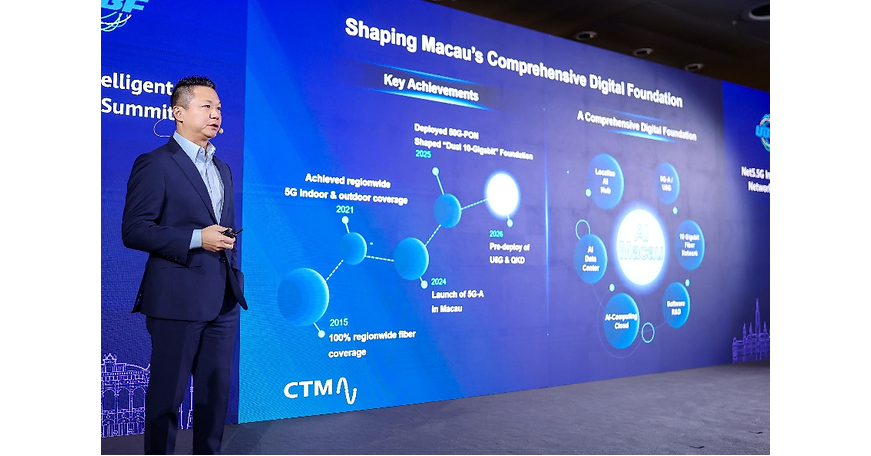
Lors de Network X 2026, CTM a présenté avec Huawei une feuille de route visant à intégrer intelligence artificielle et sécurité aux réseaux de Macao. CTM prévoit d’utiliser AGW 2.0 et l’analyse par IA pour automatiser l’optimisation du réseau, tandis que les pistes de sécurité incluent des services à la demande contre les attaques et une architecture IP intégrant la communication QKD. L’article ne fournit aucun chiffre de performance, calendrier de déploiement ni réaction de marché.
Analysis
The investable signal is not “AI networking” itself; it is whether CTM can turn network functions into recurring enterprise-security revenue rather than merely fund a more capable network. On-demand DDoS/IPS services could improve monetization of existing infrastructure, but the release provides no evidence of customer uptake, pricing, margins, or deployment scale. Treat the revenue claim as a roadmap, not an earnings catalyst.
Near term (days to weeks), the announcement is unlikely to support a standalone trade: it is a vendor-led, single-operator announcement with no disclosed contract value. Over 1–3 months, look for paid-service launches, enterprise/government wins, and evidence that AI traffic steering reduces international bandwidth expense without degrading service. Over 6–18 months, broader adoption could benefit network vendors able to bundle orchestration and security software; it could also shift value from standalone security appliances toward operator-delivered services, pressuring appliance vendors if customers substitute rather than add services. Huawei’s geopolitical and procurement constraints may limit replication outside markets where it can supply equipment, leaving Nokia and Ericsson better positioned in restricted markets—though this announcement alone does not establish a competitive win or loss.
QKD is the least bankable component: it is a validation and planning path, not evidence of near-term commercial demand. If post-quantum cryptography (PQC) satisfies buyers’ requirements more cheaply, QKD-specific network investment could be delayed. The thesis strengthens only with verifiable deployments and recurring revenue; it weakens if adoption remains pilot-stage or security services add operating complexity without measurable cost savings.
AllMind Terminal
AI-powered research, real-time alerts, and portfolio analytics for institutional investors.
Request TrialMarket Sentiment
Overall Sentiment
mildly positive
Sentiment Score
0.20
Key Decisions for Investors
- No event-driven position is warranted from this announcement alone; CTM has no supplied ticker mapping, and there is no disclosed contract value or earnings contribution.
- Set a 1–3 month alert for CTM disclosures of paid security-service customers, service attach rates, pricing, and international bandwidth-cost savings. Treat these as the necessary proof points for monetization.
- For telecom-equipment exposure, compare evidence of commercial deployments across Huawei, Nokia, and Ericsson before expressing a relative-value view; geopolitical access is a key constraint, not a demonstrated outcome here.
- Track QKD validation milestones against customer adoption of PQC. A shift toward PQC without material QKD deployments would falsify the near-term QKD investment thesis.
More News
- Why did CoreWeave stock get crushed this week? Look to this corner of the debt market for clues
- AI stock sell-off ramps up over debt-fueled data center spending fears: ‘Full-blown crisis of confidence'
- Dow falls 189 points as AI stocks slide and oil prices surge
- Wall Street Anxiety Spreads as AI Rout Meets $110 Oil Shock
- Wall Street's fear gauge is ripping. Traders see it going even higher
- All the news about the iPhone Duo
From AllMind Research
- Anthropic IPO Preview: Valuation, Timing, and What to Watch
- Shein After the IPO: Venue, Valuation, and What Must Be Proved
- What AI Research Tools Should a Small Hedge Fund Buy First?
- AI Research Systems for Hedge Funds: A Pilot Design
- Weekly Update: New Reporting Features, UI Improvements, and Chat Optimizations