
State Grid's Public Welfare Brands for Biodiversity Conservation Debut at UN Biodiversity Conference (COP17)
Source: PR Newswire
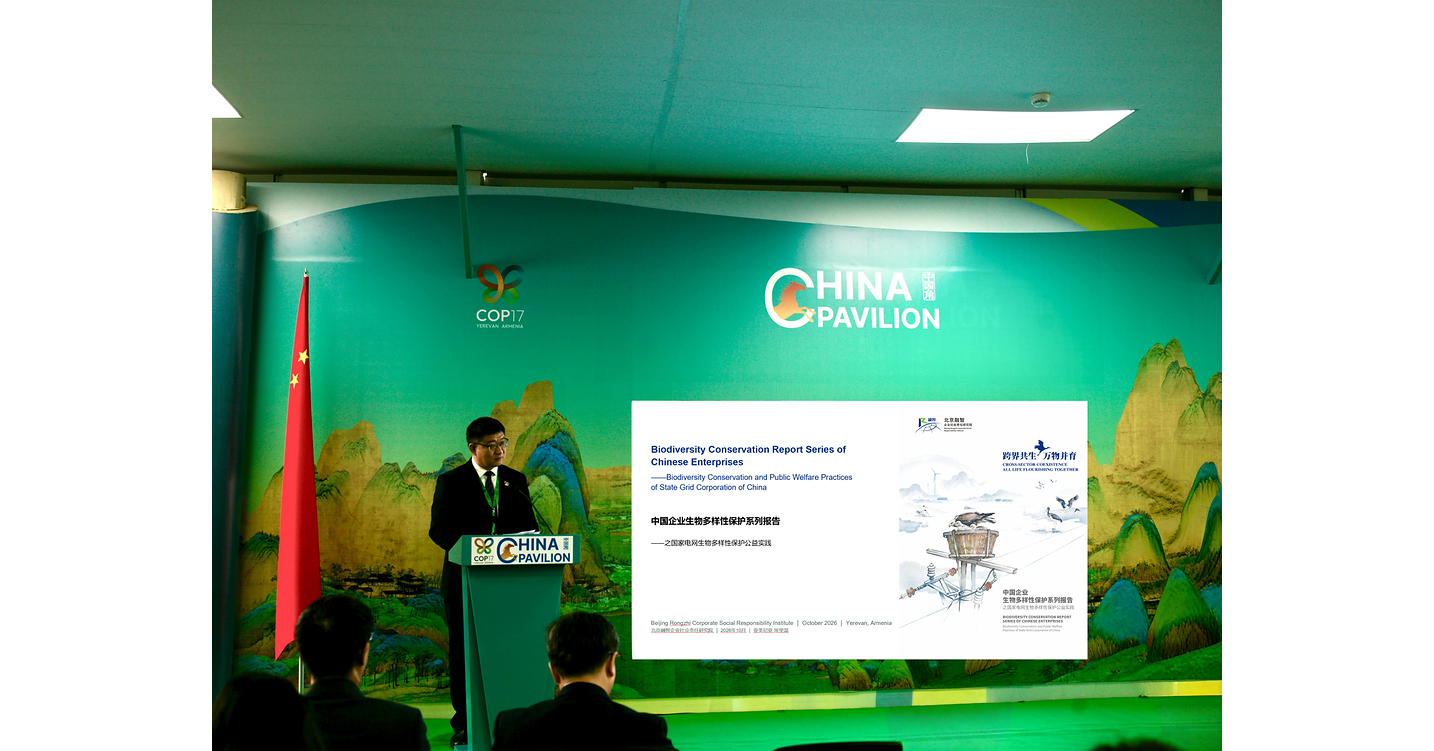
At COP17, State Grid's biodiversity programs were cited in two reports as examples of integrating conservation with power-grid development. Its three programs span 24 provinces, more than 40 migratory-bird habitats and 17 national-level protected areas; the company also reported rescuing and protecting more than 16,000 birds. The announcement highlights conservation initiatives but provides no material financial or market-moving information.
Analysis
The investable signal is not the publicity itself but whether biodiversity safeguards become enforceable grid-planning and procurement requirements. If they do, grid operators may face modest near-term design, monitoring and supplier-compliance costs, offset over time by lower permitting friction, fewer construction delays and reduced habitat-related operating risk. That favors vendors able to document lower-impact siting, monitoring and resilient remote-power solutions; it could disadvantage contractors whose bids omit those costs. The potential benefit is conditional: the article provides no contract awards, capex, avoided-loss data or evidence that the programs change State Grid’s procurement at scale.
Near term, expect little earnings read-through; the announcement is promotional and should not be treated as proof of incremental revenue or consolidated-company economics. Over 1–3 months, watch for procurement rules, tenders and measurable implementation disclosures. Over 6–18 months, the structural opportunity is broader if China translates biodiversity commitments into grid approval standards or financing conditions. A reversal would be evidence that programs remain voluntary pilots, or that compliance costs rise without faster approvals or lower disruption.
Contrarian angle: the market may overvalue the positive ESG signal while overlooking that standardized requirements can raise project costs and concentrate awards among compliant suppliers. There is no high-conviction directional trade from this item alone.
AllMind Terminal
AI-powered research, real-time alerts, and portfolio analytics for institutional investors.
Request TrialMarket Sentiment
Overall Sentiment
mildly positive
Sentiment Score
0.25
Key Decisions for Investors
- No standalone position on the announcement. Treat it as a watch item for China grid-equipment and engineering suppliers; seek tender documents, award data and evidence of biodiversity criteria affecting order volumes or pricing before adding exposure.
- Over the next 1–3 months, monitor State Grid and regional utility procurement disclosures, environmental approval timelines, and whether biodiversity safeguards appear in binding technical standards. Confirmation would strengthen the case for suppliers with verifiable monitoring, low-impact construction and remote microgrid capabilities.
- For utilities and infrastructure portfolios, assess biodiversity permitting exposure as a potential schedule and execution risk—not just an ESG score. Favor operators that disclose measurable project-level controls; do not assume the reported programs apply uniformly across all projects or entities.
- Falsify the constructive thesis if subsequent disclosures show no binding procurement or approval changes, or if compliance costs rise without evidence of fewer delays, lower remediation expense or improved project execution.
More News
- ‘Whenever I want it to end’: U.S. tells Middle East allies to prepare for possible new strikes on Iran after the midterms
- Spanish PM, facing reelection, says it’s ‘unacceptable’ to suffer two high-speed rail accidents in one year as at least 68 die in collision
- AI’s insatiable appetite for chips helps Samsung rake in a record $80.5 billion in quarterly profit
- Marvell Is Taking an Audacious $80+ Billion Run at Lumentum
- Linde delivers a good quarter and puts in a fix for an overhang on the stock
- Gen Z’s obsession with secondhand clothes is paying off for eBay as its fashion sales with Depop hit $9 billion over the past year