
Ten-Year Treasury Yield Rises to Highest in Nearly Two Decades
Source: Bloomberg
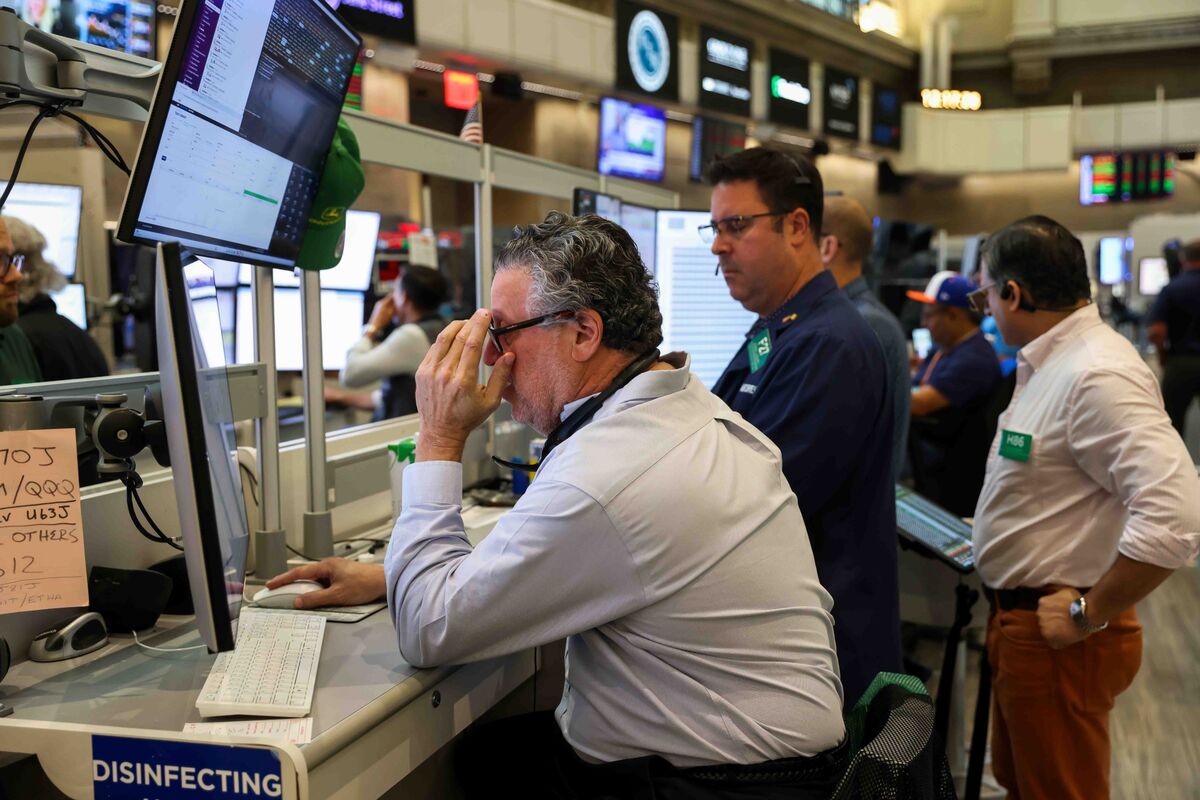
The 10-year U.S. Treasury yield rose to its highest level in nearly two decades as bond prices extended their decline. The move signals continued upward pressure on borrowing costs and poses a potential headwind for rate-sensitive assets.
Analysis
The key transmission is not the headline yield level but the persistence of a higher real-rate regime: equity duration compresses first, then refinancing risk migrates from small caps and private credit into broadly owned cyclicals. REITs, homebuilders, utilities and unprofitable software are most exposed over the next 1-3 months because their valuations and project economics require lower discount rates; regional banks face a less obvious two-sided risk from both unrealized securities losses and delayed commercial-real-estate repricing.
A sustained term-premium shock is more damaging to leveraged issuers than to cash-rich mega-cap technology. Long-duration Treasury yields raise the hurdle rate for buybacks, M&A and private-equity exits, potentially reducing fee pools for KKR, APO and BX over 6-18 months while widening distressed-credit opportunity sets. Conversely, insurers with investable float—BRK.B, CB and PGR—benefit as new-money portfolio yields reset higher, although equity-market drawdowns can offset that benefit near term.
The contrarian point is that an abrupt yield spike can become disinflationary through tighter financial conditions, eventually creating a rally in quality duration. Do not treat a round-number yield level alone as a short signal: the thesis is falsified if credit spreads remain contained, payroll/inflation data soften, and long-end yields retreat without an accompanying recession-risk repricing. The immediate catalyst path is Treasury supply/auction demand and inflation data over days to weeks; the more consequential 1-3 month signal is whether high-yield spreads break materially wider.
AllMind Terminal
AI-powered research, real-time alerts, and portfolio analytics for institutional investors.
Request TrialMarket Sentiment
Overall Sentiment
mildly negative
Sentiment Score
-0.30
Key Decisions for Investors
- Maintain a 1-3 month defensive pair: long BRK.B or CB versus short IYR. Insurers reinvest float at higher yields while REIT cash flows face higher cap rates and refinancing costs; reassess if the 10-year yield declines 50bp or commercial-property transaction cap rates stabilize.
- Underweight rate-sensitive small caps through short IWM versus long QQQ for the next 1-3 months. The relative trade isolates balance-sheet/refinancing pressure from profitable large-cap growth; stop if high-yield spreads remain below recent ranges and IWM outperforms QQQ by 5% on improving earnings revisions.
- Avoid adding broad private-credit managers KKR, APO and BX until quarterly fundraising, realization and fee-related-earnings guidance confirm that higher financing costs are not delaying exits. This is an alert rather than a short: their asset-gathering franchises can remain resilient despite weaker realization activity.
- For portfolios requiring duration hedging, favor a modest TLT put spread rather than outright Treasury shorts over the next 4-8 weeks. It protects against further term-premium expansion while capping loss if softer inflation or weak auction demand triggers a sharp bond rally.
More News
- BOJ expected to hike rates by 25 basis points to fresh three-decade high: CNBC survey
- BOJ set to raise interest rates to 31-year high as inflation risks loom
- Asian markets make nervous start ahead of Fed decision
- Oil prices dip as U.S. inventory build offsets M.East supply jitters
- Three Big Central Bank Decisions Loom: Evening Briefing Americas
- Treasury Yields Stay Elevated as Stocks Fall Before Fed