
Singapur y Malasia encabezan la mayor clasificación AppliedEdu de ASEAN hasta la fecha
Source: PR Newswire
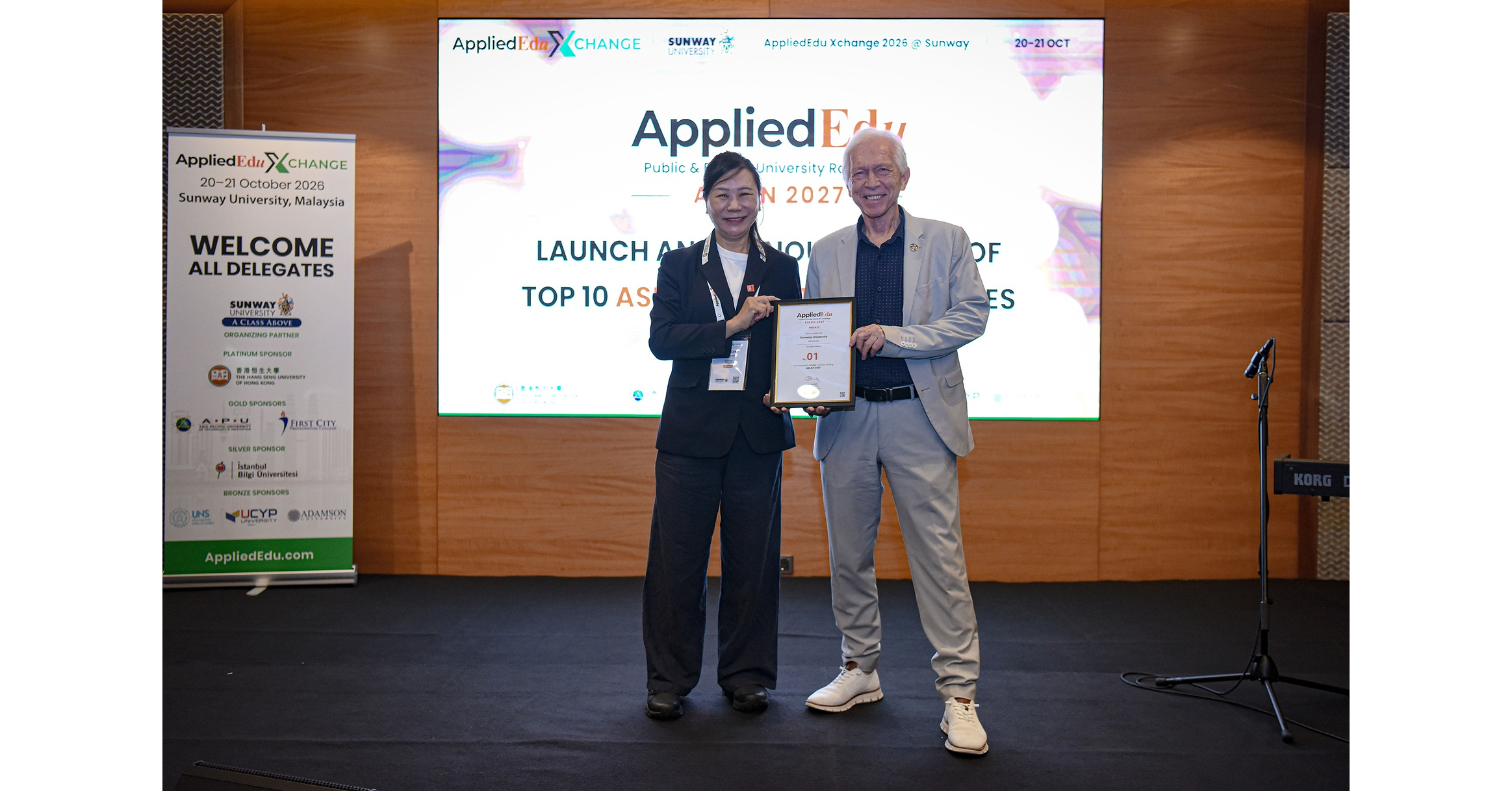
AppliedEdu ranked 316 universities across nine ASEAN countries for its 2027 regional tables, up from 237 institutions the prior year, using more than 100,000 validated student-survey responses alongside peer nominations and verified institutional data. NUS retained the top public-university position for a third consecutive year, while Malaysia’s Sunway University remained the top private university for a fourth consecutive year; Malaysian institutions held seven of the top 10 private and five of the top 10 public places.
Analysis
The ranking is a weak standalone earnings signal: it measures reputation and student perceptions, not enrollment, tuition pricing, margins, or cash conversion. Its investable relevance is as a marketing input for university operators competing for domestic and cross-border students. If rankings convert into applications and yield, higher-ranked Malaysian private institutions could gain share; the second-order risk is more aggressive recruitment spending, scholarships, and campus investment across regional peers, limiting any enrollment upside from becoming margin upside.
The methodology’s heavy emphasis on teaching and employability may encourage spending on faculty, facilities, and career services. That could support longer-term student outcomes, but near-term costs arrive before any enrollment or pricing benefit. The expanded ranking sample also raises comparability and participation questions; ranking movement alone should not be treated as evidence of improved operating performance.
Near term, expect limited broad-market impact. Over 1–3 months, the Asia-wide ranking on November 30 is a visibility catalyst, not an earnings catalyst. Over 6–18 months, the thesis matters only if institutions translate recognition into international-student applications, enrollment growth, retention, and stable net tuition per student. The contrarian point: investors may overread prestige gains as pricing power, while the more likely first response is greater competition for students and higher recruitment costs. No direct trade is supported without verified listed-company exposure and enrollment/financial data.
AllMind Terminal
AI-powered research, real-time alerts, and portfolio analytics for institutional investors.
Request TrialMarket Sentiment
Overall Sentiment
neutral
Sentiment Score
0.10
Key Decisions for Investors
- No trade on the ranking alone. Before attributing value to Sunway University or other institutions, verify ownership links to investable entities and the relevant segment’s revenue contribution; no company identities or tickers were supplied.
- Use the November 30 Asia-wide ranking as a watch catalyst. Track applications, international-student mix, enrollment yield, retention, net tuition per student, scholarships, and student-acquisition costs in subsequent disclosures.
- Treat rank gains as falsified financially if enrollment or net tuition per student fails to improve, or if recruitment and student-service spending rises faster than revenue over the next 1–3 reporting periods.
- Monitor regional private-university competition, especially in Malaysia: sustained gains in student share by Sunway, Asia Pacific University, Taylor’s, or BINUS would matter more than rank changes alone; broad-based share gains without pricing pressure would strengthen the sector thesis.
More News
- ‘They are trying to intimidate us’: Indonesia’s Prabowo remains defiant in the face of an MSCI double downgrade
- US tech stocks tumble as investors fret over AI spending
- Asian shares wobble as tech rout boosts bonds, dents rate hike bets
- Asia stocks fall as AI rout batters S.Korea; Japan spooked by strong CPI
- AI debt and French bonds face a stress test — why it may not be over
- Ready for a French test?: Five questions for the ECB