
In HelloNation, Personal Injury Attorney Steve Caya Highlights What Evidence Matters in a Truck Accident Case
Source: PR Newswire
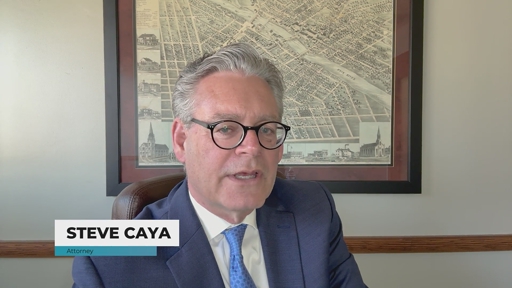
HelloNation published an informational article on evidence used in Janesville truck-accident litigation, emphasizing preservation of driver logs, maintenance records, black-box data and company safety policies. The article explains that violations of federal trucking rules on hours of service, load limits and maintenance can support negligence claims and potentially extend liability from drivers to trucking companies. This is general legal-information content with no company-specific financial development or material market implication.
Analysis
This is promotional legal content rather than evidence of a regulatory enforcement shift, claims-frequency inflection, or carrier-specific liability event; it should not independently move listed transportation or insurance equities. The investable signal is limited to a standing diligence theme: electronic logging devices and telematics make post-accident discovery more auditable, potentially raising severity for carriers with weak safety controls, but this is already embedded in underwriting and fleet-risk processes.
Over 6-18 months, plaintiff access to granular vehicle data can widen the dispersion between disciplined fleets and smaller operators with thinner compliance infrastructure. Public truckload names such as KNX, SNDR and WERN generally have greater scale to absorb compliance, insurance, and legal costs than fragmented owner-operator capacity; however, the relevant financial variable is adverse-loss development and insurance reserve additions, not media attention. For insurers, commercial-auto reserve development at CB, TRV, ALL and BRK.B is the transmission channel, though none is implicated here.
The contrarian point is that better telemetry can also defend carriers by disproving alleged speeding, fatigue, or braking failures, reducing opportunistic settlement pressure where data exonerates the driver. Without evidence of a court ruling, FMCSA rule change, insurer repricing, or an observable increase in nuclear-verdict frequency, there is no catalyst for a directional position. Monitor quarterly disclosures for self-insurance reserve increases, accident-cost-per-mile deterioration, and elevated legal contingencies; those would convert this background issue into a tradable relative-value signal.
AllMind Terminal
AI-powered research, real-time alerts, and portfolio analytics for institutional investors.
Request TrialMarket Sentiment
Overall Sentiment
neutral
Sentiment Score
0.00
Key Decisions for Investors
- No immediate trade: treat this as non-price-sensitive promotional content, with no named issuer, verified loss event, or regulatory action.
- Add an earnings watch item for KNX, SNDR, WERN and HTLD over the next 1-3 reporting cycles: investigate any year-over-year increase in claims expense, captive-insurance funding, or adverse reserve development. A confirmed cost-per-mile inflection would favor short exposure to the affected carrier versus long a lower-liability peer.
- Monitor CB, TRV, ALL and BRK.B commercial-auto reserve commentary over the next 6-12 months. Consider a defensive underweight only if multiple carriers disclose reserve strengthening tied to trucking severity; isolated reserve moves are more likely company-specific underwriting noise.
- For structural exposure, prefer larger compliance-capable truckload operators over small-cap/fragmented trucking proxies only after freight fundamentals stabilize; the thesis is lower liability-cost volatility, but it is insufficient to overcome a weak freight-rate cycle.
More News
- Mark Ruffalo says Paramount’s $111 billion Warner Bros. deal ‘Will stifle creativity, weaken free speech, and cost people their jobs’
- States, cities sue U.S. agencies over weaker vehicle fuel economy rules
- Trump vs Europe as US presses for release of emergency diesel stocks
- Anthropic warns government attitudes may hurt customer ties, IPO prospectus shows: Reuters
- Paramount and Warner Bros Discovery to become Skydance
- FAA says Boeing 737 Max software glitch not a flight-safety issue
From AllMind Research
- Anthropic IPO Preview: Valuation, Timing, and What to Watch
- Shein After the IPO: Venue, Valuation, and What Must Be Proved
- What AI Research Tools Should a Small Hedge Fund Buy First?
- Choosing an AI Copilot for Equity Research
- Weekly Update: Advanced Search Filters, Redesigned Ticker Dashboard, and Improved Search Experience