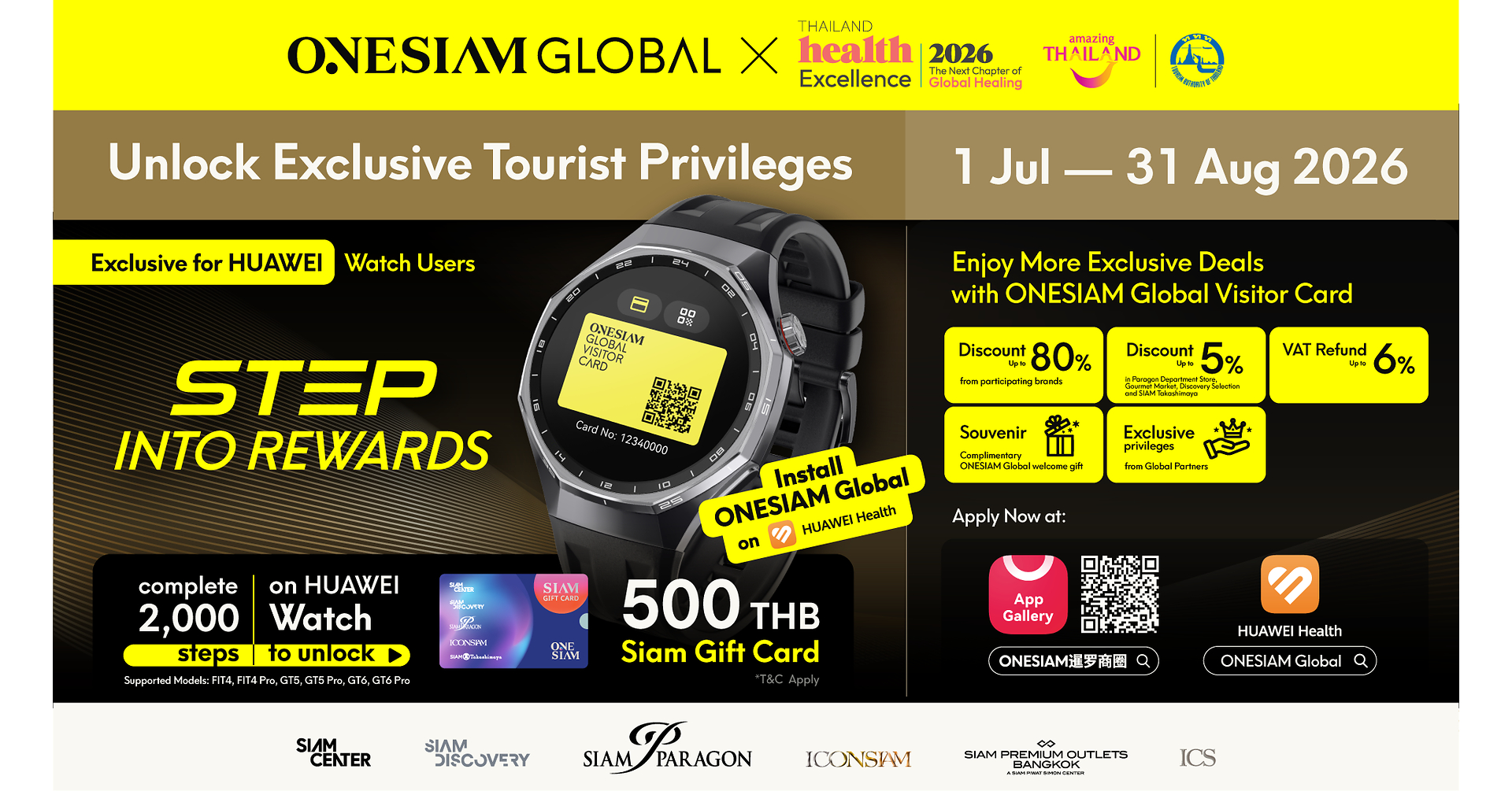
Thailand’s Tourism Authority of Thailand (TAT) launched the “Thailand Health Excellence 2026” campaign (July 1–Aug 15, 2026) in collaboration with Siam Piwat and Huawei HarmonyOS to offer exclusive health and wellness privileges to medical tourists and ONESIAM Global members via Huawei Watch QR-code redemptions. The packages cover dental care, aesthetic treatments, longevity/biohacking programs, and immune health screening, aiming to boost Thailand’s positioning as a global health-and-wellness destination. The news is more partnership/consumer-offer oriented than financially material, with limited expected near-term impact on public markets.
This reads more like a customer-acquisition and cross-sell experiment than a true demand shock. The economic value is in reducing friction for high-margin wellness packages and increasing conversion among already-intent travelers; that favors integrated hospital groups and premium mixed-use operators more than generic tourism proxies. For listed Thai names, the clearest second-order beneficiaries are BDMS and BH on international patient mix, and AOT/CENTEL/CPN only if the program lifts companion nights, premium room rates, and mall spend rather than just redirecting existing demand.
The market should be careful not to capitalize this as a structural step-change. A smartwatch QR flow is a thin distribution layer; if adoption is limited to a narrow, affluent subset of travelers, the revenue impact will be marginal and mostly limited to marketing efficiency. The near-term catalyst window is days to a few weeks for sentiment, but the real test is 1-3 months of booking conversion data and 6-18 months of whether the program becomes a repeatable funnel through airlines, insurers, or hospital referral networks.
Contrarian view: consensus may overrate the "digital health tourism" narrative and underweight execution risk. Thailand's medical-tourism thesis still depends far more on clinical reputation, visa friction, flight capacity, and FX than on app-layer partnerships. The underappreciated upside is data ownership: if Siam Piwat can track high-spend wellness consumers and their companions, retail monetization could improve, but that is not yet enough to justify a broad re-rating of the tourism complex. Falsifiers would be weak inbound arrivals, flat international patient volumes, or management commentary showing negligible attach rates.
AI-powered research, real-time alerts, and portfolio analytics for institutional investors.
Request TrialOverall Sentiment
mildly positive
Sentiment Score
0.12
