
Pakistan Denies Entry to Taiwan Airlines Citing One-China Policy
Source: Bloomberg
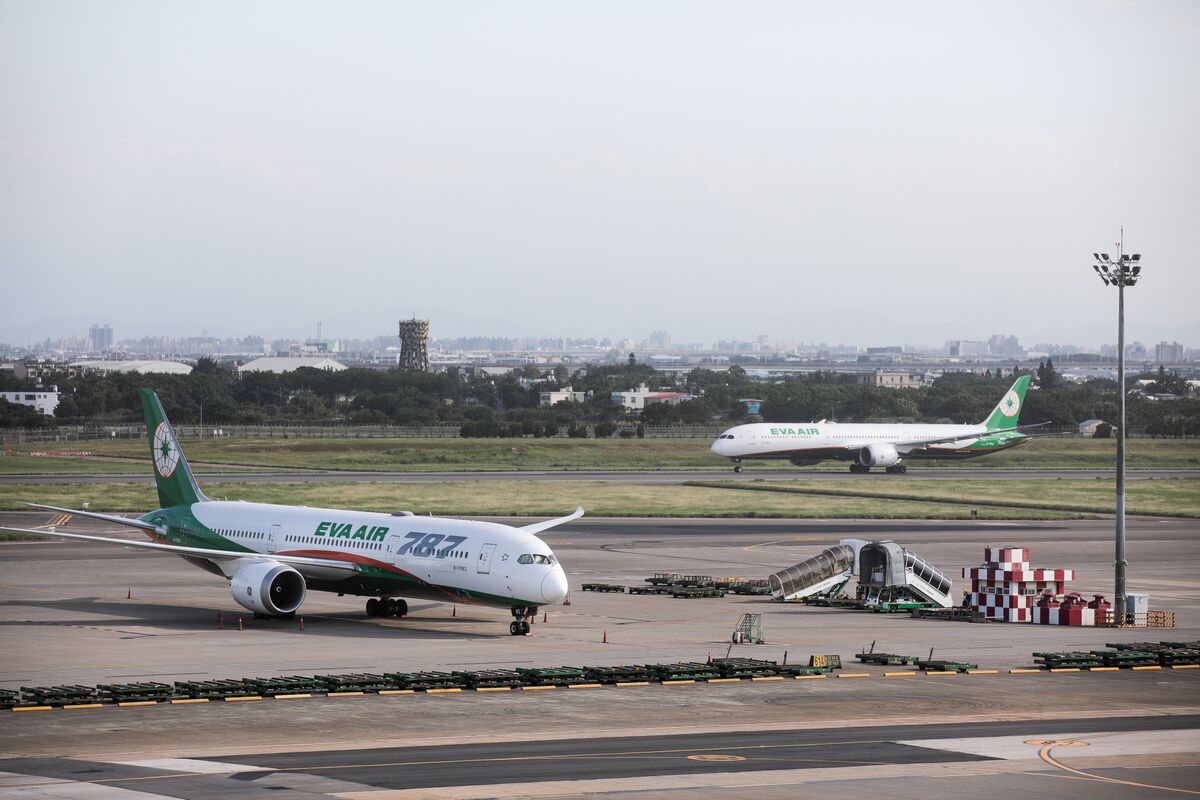
Pakistan barred Taiwanese airlines from its airspace, saying its aviation policy permits only mainland Chinese airlines to fly over the country. Defense Minister Khawaja Asif said the decision supports Beijing’s One-China policy; the article describes it as the first move of its kind by any country.
Analysis
The market mechanism is operational, not immediate demand destruction: if Taiwan carriers currently use Pakistani airspace on commercially meaningful routes, detours could add fuel burn and block time, constrain aircraft utilization, and complicate cargo schedules. The impact is highly route-specific; without flight-plan and city-pair data, a material earnings effect cannot be established. A broader risk is precedent: airspace access becoming an explicit geopolitical lever could raise the perceived disruption premium for Asia-Pacific aviation and logistics, especially if reciprocal restrictions follow. That is a months-long tail risk, not yet a basis for repricing the sector. Potential beneficiaries among carriers with unaffected routings or permitted access are likely marginal absent evidence of traffic substitution; do not assume passengers transfer to mainland Chinese airlines. Contrarian view: the political signal may be larger than the near-term cash-flow effect, and extrapolating this episode into a generalized regional closure risk could overstate the threat. The thesis changes if schedule data show meaningful exposure, block times or fuel costs rise, or additional governments impose reciprocal access restrictions.
AllMind Terminal
AI-powered research, real-time alerts, and portfolio analytics for institutional investors.
Request TrialMarket Sentiment
Overall Sentiment
neutral
Sentiment Score
-0.10
Key Decisions for Investors
- No immediate sector position on this report alone. First verify affected Taiwan carrier routes, Pakistani-airspace usage, alternative routings, and incremental flight time and fuel costs.
- Set an alert on Taiwan carriers’ schedule changes, operating-cost commentary, and cargo service reliability over the next 1–3 months; treat measurable route disruption or guidance impact as the trigger for reassessment.
- Watch for reciprocal overflight restrictions or broader diplomatic escalation. Those would shift the thesis from a route-level cost issue to a regional aviation-risk premium; absent such follow-through, avoid extrapolating the event.
- If exposure is confirmed, compare the affected carrier with regional peers whose routes do not rely on the same airspace rather than making a broad airline-sector short; falsify the trade if schedules show negligible exposure or costs are absorbed without guidance changes.
More News
- Burnham’s government unveils its first UK budget: What to expect
- FedEx's soft holiday-quarter outlook doesn't change our view on the stock
- Alphabet Disappoints as Microsoft’s Cloud Brightens
- Wall Street looks past Fed pause to tech earnings and AI rebound
- Fed's Warsh on Why He Watches Korea's Economy Closely
- Here are five key takeaways from the Fed rate decision and Warsh news conference