
Windward Expands into Maritime Visual Intelligence with Acquisition of Azimut.ai
Source: PR Newswire
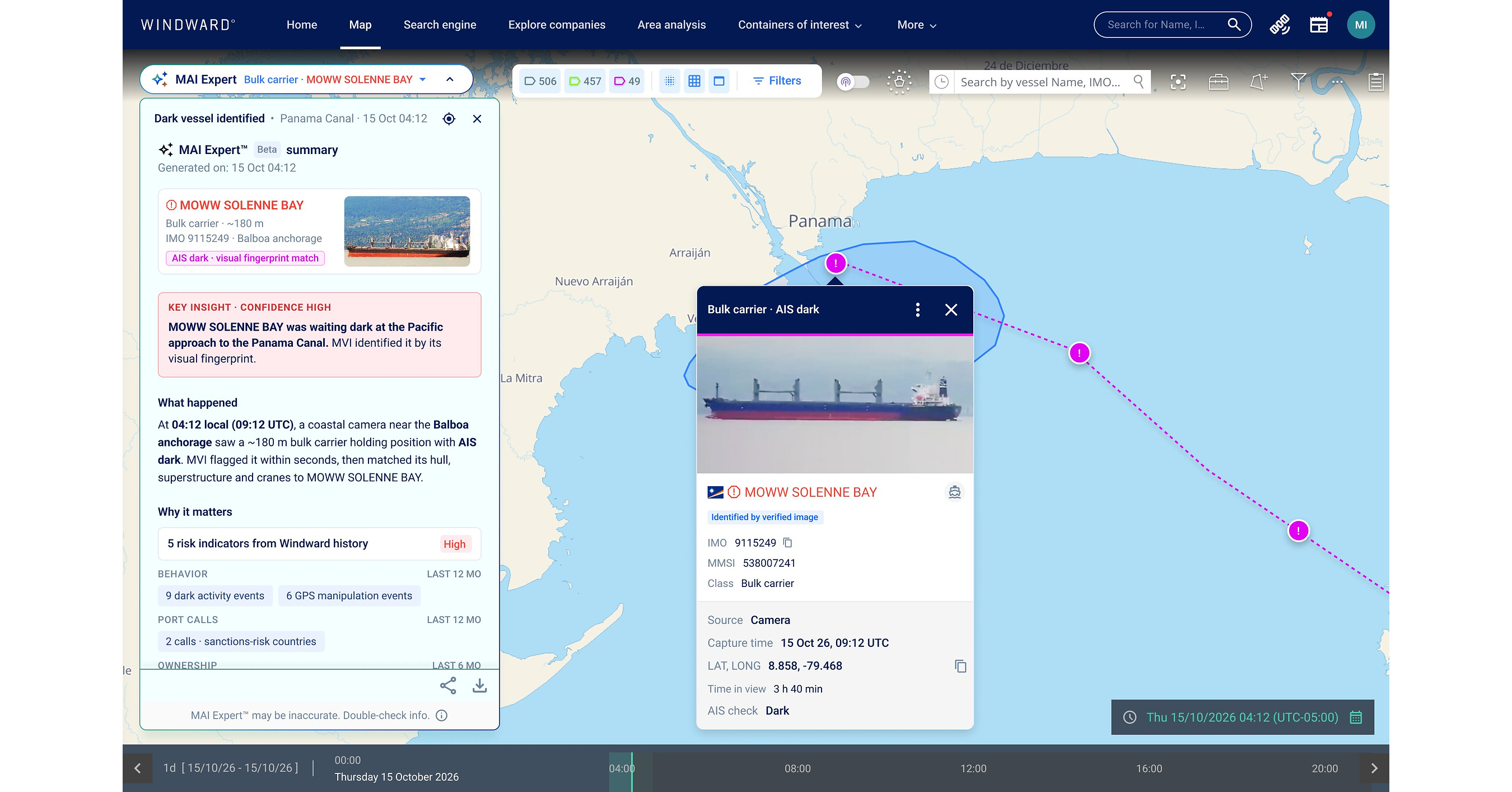
Windward acquired maritime visual intelligence company Azimut.ai, adding camera-based vessel detection at ports and maritime chokepoints to its existing multi-source intelligence platform. Windward says the added visual layer can help identify vessels that are not transmitting or whose signals are obscured or jammed, with vessel sightings integrated alongside ownership, sanctions, cargo, and behavioral data. The announcement did not disclose financial terms.
Analysis
The strategic value is less “more data” than reduced dependence on signals a vessel can disable. If visual detections can be reliably matched to vessel identity and behavior, Windward may improve the usefulness—and potentially retention—of its existing analytics without needing a proportional increase in satellite or AIS coverage. That is a conditional moat: chokepoint cameras provide local corroboration, not continuous global visibility, and rivals could seek access through port or sensor partnerships.
The key economic test is whether deployments scale beyond a few high-value sites at attractive cost. Hardware installation, permissions, maintenance, and site-partner incentives could make the data layer operationally intensive; the announcement gives no acquisition price, rollout economics, customer commitments, or independently verified accuracy. Privacy assurances may reduce adoption friction, but do not eliminate sovereignty, procurement, or data-governance review.
Near term, expect limited public-market read-through: Windward is not mapped to a listed ticker in the supplied data, and the deal alone does not establish material revenue for sensor, satellite, or defense-technology vendors. Over 1–3 months, watch for named deployments, renewal/upsell evidence, and procurement wins. Over 6–18 months, repeatable site economics and measurable improvement in vessel verification would support a stronger data-platform moat; slow permissions or false-positive rates would undermine it. The contrarian point: “full visibility” is a marketing claim, while the likely initial product is geographically concentrated coverage.
AllMind Terminal
AI-powered research, real-time alerts, and portfolio analytics for institutional investors.
Request TrialMarket Sentiment
Overall Sentiment
mildly positive
Sentiment Score
0.30
Key Decisions for Investors
- No direct single-name trade: the acquired company is not linked to a listed ticker in the supplied identities, and no financial terms or revenue contribution are disclosed.
- Add a watch item for deployment economics: seek site count, coverage density, installation and operating costs, customer conversion or upsell, and independently validated identification accuracy before treating this as a durable moat.
- Avoid extrapolating the announcement into a broad satellite-imagery or AI-sector trade. Reassess only if subsequent contracts show repeatable demand or if comparable providers report lost business tied specifically to visual corroboration.
- Thesis-falsifier: limited rollout, extended permitting or procurement timelines, weak customer adoption, or evidence that visual detections fail to improve verification enough to justify the incremental cost.
More News
- AMD stock jumps 7% on earnings as data center revenue nearly doubles
- Marvell-Lumentum Deal Puts Optical Networking at the Center of the AI Boom
- Marvell Technology could plunge on latest multibillion-dollar acquisition
- Disney Plans Thousands of Layoffs Companywide
- AI Inference Startup Fal Raises Capital at $16 Billion Valuation
- AMD rides data center riches to ‘largest and most profitable’ quarter in history