
Vale Matcha Announces Vale Farms, With Plans to Grow One Million Tea Plants on Whidbey Island
Source: PR Newswire
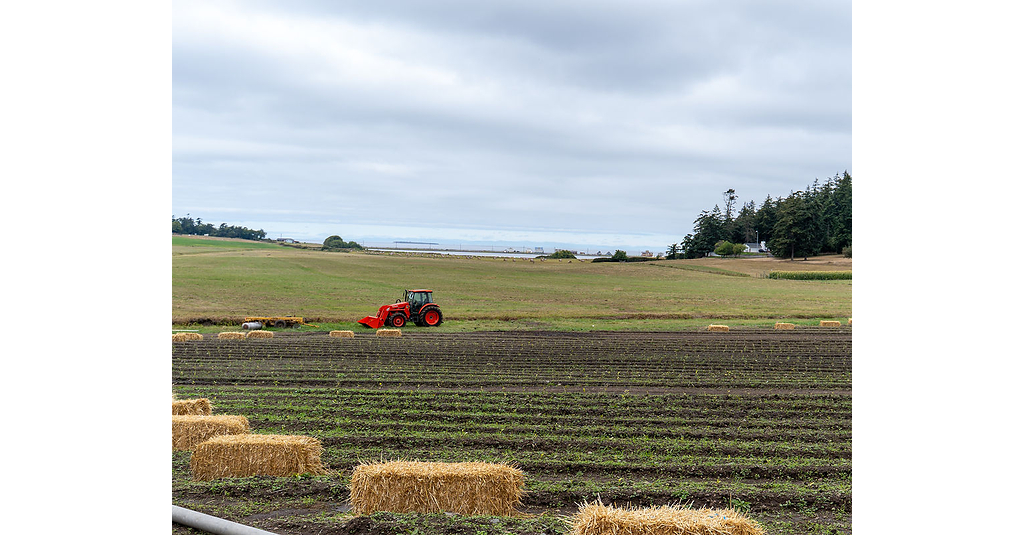
Vale Matcha began planting its first 12,000 tea plants on a newly acquired 365-acre Whidbey Island property (Vale Farms), as it plans to cultivate ~200 acres (about 1 million plants) over the long term. The company is also building a 30,000-square-foot tea production facility in Oak Harbor to process future harvests into tencha and then matcha. While not a public-market earnings catalyst, the initiative meaningfully expands U.S. matcha supply capacity and reduces reliance on Japanese sourcing over time.
Analysis
This is a category-optionality story more than an earnings event. The economic value is not the first acreage; it is the potential to de-risk a premium ingredient bottleneck and create a differentiated provenance moat that supports higher gross margins and pricing power if the crop scales over 6-18 months. In the near term, the market should discount most of the spend as pre-revenue capex, so any equity reaction is likely to fade unless there is third-party evidence of agronomic success or commercial yields.
The main second-order effect is on the imported supply chain: if domestic tencha production becomes credible, Japanese suppliers lose some bargaining power on scarce, high-grade product, while U.S. specialty beverage brands gain optionality on sourcing and inventory. That said, the true winners are likely adjacent service providers — agricultural inputs, processing equipment, and logistics — rather than the farm itself, because tea is slow, climate-sensitive, and operationally unforgiving. Any valuation uplift depends on whether the company can convert the brand story into durable unit economics rather than simply narrative capex.
Contrarian view: the consensus may be overestimating the speed of import substitution. Matcha is not a commodity crop that can be nationalized on a short cycle; quality, shading discipline, milling consistency, and labor intensity will likely keep domestic volumes de minimis for years. The upside case is not replacing Japan — it is establishing a small but valuable premium lane that supports scarcity pricing and supply resilience. The thesis breaks if winter kill, yield, or processing losses show that Pacific Northwest production is structurally uneconomic versus imported supply.
AllMind Terminal
AI-powered research, real-time alerts, and portfolio analytics for institutional investors.
Request TrialMarket Sentiment
Overall Sentiment
mildly positive
Sentiment Score
0.12
Ticker Sentiment
Key Decisions for Investors
- No immediate public-equity trade; treat this as a long-duration optionality story and wait for verifiable agronomic KPIs (survival rates, per-acre yield, processing losses) before underwriting any revenue impact.
- Watch VALE only if it is investable: speculative long on a 12-24 month horizon, but only after evidence that cultivation economics are real; otherwise the setup is a capex sink with low near-term upside.
- Set an alert on Starbucks (SBUX) and Dutch Bros (BROS) if management commentary shows matcha mix expansion; domestic supply success would modestly improve margin durability on premium beverages over 1-3 years.
- Avoid shorting Japanese tea-linked supply chains on this news alone; the substitution thesis is too early and the more likely outcome is incremental supply diversification, not demand destruction.
- If using options, prefer waiting for a catalyst: buy small call-spread exposure only after the market can observe field-performance data or processing commissioning milestones, not on the announcement itself.
More News
- CoreWeave credit default swaps hit distress levels as investors sour on AI debt
- Penske Automotive agrees to be taken private by Penske, Mitsui
- Faraday Copper completes acquisition of BHP’s San Manuel project
- Supermicro promised a new CFO in December 2024. A $2.5 billion smuggling case and a co-founder’s arrest later, it has one
- Blackstone President Jon Gray Bets Big on AI Boom
- Ukraine to resume strikes on Russian refineries, shattering hopes of an 'energy ceasefire'