
Fortuna Mining: Deep Value With 60% Production Growth
Source: seekingalpha.com
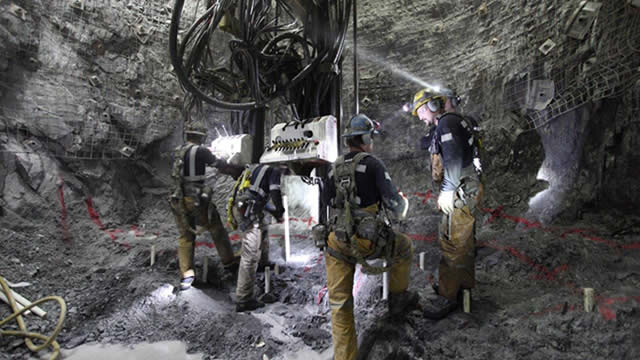
Fortuna Mining is rated Buy despite a Q2 earnings miss and elevated all-in sustaining costs of $2,157/oz, with the recent share-price pullback viewed as a value opportunity at roughly 8x earnings. The company is pursuing a fully funded 60% production ramp through the Séguéla expansion and Diamba Sud project, targeting output above 500,000 ounces annually by 2028. Management expects costs to decline as Diamba Sud begins production, with projected AISC of $1,056/oz.
Analysis
The investment case is less about the reported quarter than whether Fortuna can convert its project pipeline into a lower-cost, multi-asset production profile without equity dilution. If the expected cost mix materializes, the company’s earnings sensitivity to gold should rise disproportionately: a $100/oz increase in realized gold price on roughly 500koz of output is approximately $50m of annual pre-tax revenue before royalties and taxes. That creates scope for both FCF acceleration and multiple re-rating versus higher-cost intermediate producers, but only after investors gain confidence in the operating ramp.
The primary discount is execution and jurisdictional rather than spot-gold exposure. New West African ounces can command a lower valuation than North American production because permitting, fiscal-regime changes, security disruptions and commissioning delays can turn modeled low-cost output into capital overruns; a one-year delay would materially defer the deleveraging and re-rating case. Near term, higher all-in costs leave FVI/FSM more exposed than low-cost peers to a gold pullback, while sustaining elevated costs would undermine the premise that the current valuation is optically cheap.
Consensus may be underweight the portfolio effect: successful lower-cost production would reduce the company’s blended cost base and could shift it from a high-beta gold trade into a credible intermediate-producer consolidator over 12-18 months. Conversely, the market may already be pricing much of the growth narrative; the key catalyst is not further project promotion but sequential evidence of declining unit costs, commissioning milestones, and FCF conversion. Treat management cost targets as unverified until quarterly realized costs and sustaining-capex discipline confirm them.
AllMind Terminal
AI-powered research, real-time alerts, and portfolio analytics for institutional investors.
Request TrialMarket Sentiment
Overall Sentiment
moderately positive
Sentiment Score
0.42
Ticker Sentiment
Key Decisions for Investors
- Accumulate FVI (TSX) / FSM (NYSE) only in tranches over the next 1-3 months, preferably after the next operating update confirms sequential all-in-cost improvement. Size as a high-beta gold allocation rather than a core holding; thesis fails if costs remain above roughly $2,000/oz for two consecutive quarters absent a clear temporary explanation.
- Express the company-specific thesis as long FVI/FSM versus short GDX, or versus a higher-quality low-cost gold producer, rather than outright beta. The pair should outperform over 6-12 months only if project execution lowers the cost profile; unwind on a material schedule or capex revision, since broad gold-price weakness can otherwise dominate.
- Use the next 2-3 quarterly reports as binary catalyst windows: add on evidence of lower costs and intact development spending, but avoid chasing pre-milestone strength. A credible commissioning delay, revised capital estimate, or adverse West African fiscal/security development should trigger a reduction regardless of spot gold.
- For portfolios requiring defined downside, consider 6-12 month FVI/FSM call spreads rather than uncovered upside exposure. This retains participation in a production-ramp re-rating while limiting loss if gold retraces or the expansion timeline slips; option liquidity and implied volatility should be checked before implementation.
More News
- Asian stocks dip, bonds in focus after torrid September
- Greer urges G20 to back Trump tariff agenda, takes aim at China
- Tencent leases 100,000 chips from Oracle for $7 bln- FT
- Stocks Jump on inflation Surprise, Apple's Smart-Home Push
- RAM supply set to worsen, says Micron, as CEO celebrates ‘much higher’ prices
- Why is Nidec stock plunging today?
From AllMind Research
- Anthropic IPO Preview: Valuation, Timing, and What to Watch
- Shein After the IPO: Venue, Valuation, and What Must Be Proved
- What AI Research Tools Should a Small Hedge Fund Buy First?
- How to Evaluate Consensus Estimates Platforms With AI
- Weekly Update: Adding Live MBO Level 3 Data - Liquidity Heatmap, OFI Charts, and More