
Can Google's Nuclear Deal Strengthen Constellation Energy's Growth Outlook?
Source: zacks.com
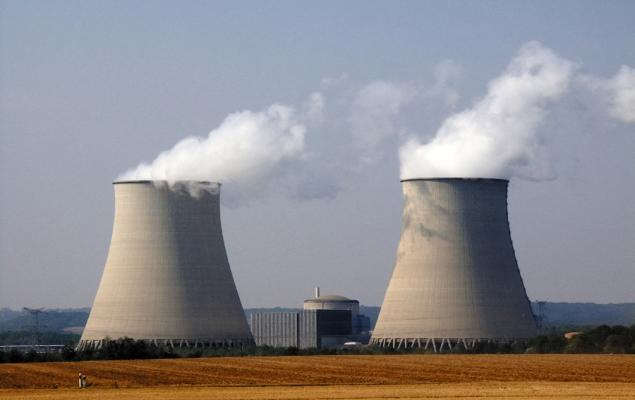
Constellation Energy signed a 20-year Google PPA for 890 MW of new nuclear capacity on the PJM grid, supporting more than $4.3 billion in upgrades to 11 nuclear units, with the first uprate expected in 2028. The agreement also includes a 15-year supply deal for 2,700 MW of existing generation; CEG expects capital expenditures of nearly $5.7 billion in 2026 and $4.7 billion in 2027. The article also cites estimated EPS growth of 29.82% in 2026 and 8.76% in 2027, and a 23.2% share gain over the past three months.
Analysis
The key underwriting question is not whether the contracts improve visibility, but whether their undisclosed pricing and escalation terms earn an adequate return on the required uprates. Long-duration offtake can reduce exposure to volatile PJM power prices, yet it also trades away some upside if scarcity prices rise; outage performance, construction execution and transmission/interconnection timing determine how much of the contracted value is realized. The 2028 start date pushes the main delivery and earnings catalyst beyond the immediate reaction.
For Google (GOOG), the agreement is an input-cost and supply-reliability hedge, not evidence by itself of lower energy costs or material near-term earnings uplift. Other large-load buyers may face tighter competition for firm, low-carbon supply. That supports nuclear owners such as Vistra (VST) as well as Constellation, while NextEra’s development pipeline is a less direct substitute for firm nuclear output. The concentration of long-term commitments among a small set of technology buyers also creates correlated renegotiation, credit and load-growth risks over time.
Near term, CEG’s sharp relative outperformance raises the bar for incremental upside: the market may already be capitalizing a scarcity premium before contract economics are verifiable. In the next 1–3 months, focus on disclosed PPA pricing, capex phasing, financing and outage assumptions—not headline megawatts. Over 6–18 months, delays or cost overruns could pressure returns and cash generation before the added capacity contributes. Thesis improves if project milestones and capital costs remain on plan; it weakens on schedule slippage, adverse outage trends, or guidance indicating returns below the company’s investment hurdle.
AllMind Terminal
AI-powered research, real-time alerts, and portfolio analytics for institutional investors.
Request TrialMarket Sentiment
Overall Sentiment
moderately positive
Sentiment Score
0.65
Ticker Sentiment
Key Decisions for Investors
- Do not chase CEG solely on the announcement after its recent relative run-up. Consider staged exposure on weakness, sized around execution risk; no price target is justified without contract economics and valuation data.
- Treat the 890 MW and 2,700 MW agreements as revenue-visibility signals, not quantified earnings upgrades. Verify PPA strike prices/escalators, expected capacity factors, outage assumptions, capex timing and any financing changes before increasing the position.
- Watch CEG’s 2026–27 capex and cash-flow guidance, plus uprate milestones ahead of the first expected 2028 delivery. A material cost increase or schedule delay would falsify the near-term de-risking thesis.
- Monitor PJM forward power and capacity prices: sustained strength could make fixed-price offtake less attractive versus merchant exposure, while weakening prices would increase the value of contracted revenue. Compare the resulting disclosure with VST’s contracted exposure before making a relative-value trade.
More News
- FCC to vote on auctioning 25MHz of 'prime spectrum' in move that could benefit Amazon, SpaceX
- Microsoft shows off new Windows software, revamped for agentic AI
- Microsoft to sell $2,599 Surface Laptop Ultra containing Nvidia AI chip
- Another Micron triple? Where we agree with this wildly bullish call and where we don't
- US grants Aurora exemption for self-driving trucks safety feature
- Bezos says Blue Origin likely to pursue IPO in coming years
From AllMind Research
- Anthropic IPO Preview: Valuation, Timing, and What to Watch
- Shein After the IPO: Venue, Valuation, and What Must Be Proved
- What AI Research Tools Should a Small Hedge Fund Buy First?
- Weekly Update: Adding Live MBO Level 3 Data - Liquidity Heatmap, OFI Charts, and More
- Alternative Data Due Diligence for Institutional Investors