
California Waste Solutions Advances Environmental Technology in Vietnam With Industrial UAVs at Da Phuoc
Source: PR Newswire
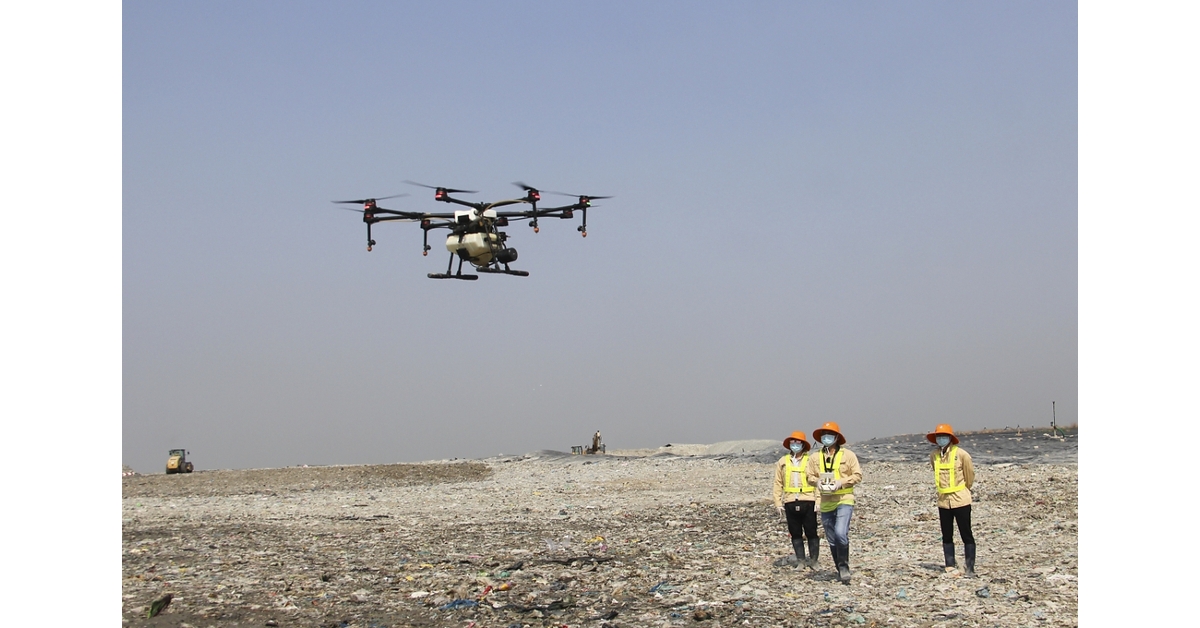
California Waste Solutions' Vietnam subsidiary expects to begin permit-approved industrial drone operations for odor control and disinfection at Ho Chi Minh City's Da Phuoc waste facility in October 2026. UAV spraying is expected to be 50-70 times faster than manual methods, with trials indicating one trained operator can replace a six-worker spraying task while reducing chemical exposure. The facility handles roughly 4,000-6,500 tonnes of waste daily, more than 50% of Ho Chi Minh City's municipal waste, and the initiative supports VWS's broader technology modernization and proposed $500M-plus, 50-60MW waste-to-energy project.
Analysis
This is not a WM earnings catalyst: the operator is privately held, and neither WM nor the listed U.S. solid-waste peer group has disclosed economic exposure to the project. The immediate read-through is therefore negligible. The more relevant second-order signal is that automation is becoming practical in hazardous, low-value-added landfill activities outside developed markets, where labor savings alone may not justify capex but regulatory, community-relations, and worker-safety benefits can protect operating licenses and municipal concessions.
For listed waste operators, the long-run implication is modestly favorable for incumbents with scale and digital operating systems—WM, RSG, and WCN—rather than a near-term disruption. If drone-based treatment demonstrably reduces odor complaints, chemical use, or environmental incidents over 6-18 months, municipalities may increasingly incorporate measurable environmental-control standards into tenders; this raises compliance costs for smaller regional operators and favors balance-sheet capacity. Conversely, the claimed productivity improvement is not independently verified and could be offset by permitting constraints, weather downtime, chemical replenishment, insurance, and trained-operator requirements.
The potentially material asset is the sponsor's future waste-to-energy development, not the UAV deployment. A successful operating and regulatory record could improve its ability to secure approvals and financing, but because the project sponsor is private, there is no clean public-equity expression. Watch for independently confirmed permit issuance, municipal contract amendments, measured reductions in complaints or labor hours, and any disclosed EPC, turbine, grid-equipment, or financing counterparties; those events could create investable supplier-specific implications.
AllMind Terminal
AI-powered research, real-time alerts, and portfolio analytics for institutional investors.
Request TrialMarket Sentiment
Overall Sentiment
moderately positive
Sentiment Score
0.48
Key Decisions for Investors
- No position in WM on this news. Treat any sympathy move in WM, RSG, or WCN as non-fundamental; reassess only if a listed operator announces comparable deployment with quantified labor, chemical, or incident-cost savings.
- Maintain a 6-18 month watchlist rather than a trade: WM/RSG/WCN could benefit if municipal procurement shifts toward auditable automation and environmental-performance requirements, but require evidence of margin or contract-win impact before adding exposure.
- Set an alert for disclosed waste-to-energy EPC and equipment awards tied to the Vietnamese development. Do not infer beneficiaries in GE Vernova (GEV), Siemens Energy (ENR), or waste-equipment suppliers without confirmed contract value, financing close, and grid interconnection approval.
- Falsification trigger for the automation thesis: delayed or denied operational approval, recurring safety/weather restrictions, or no measurable reduction in odor complaints and manual-treatment labor within 3-6 months of commercial operation.
More News
- UK Prime Minister Burnham says Iran 'played a part' in British air base incident
- South Korea’s exports hit record high on AI boom
- Asian stocks dip, bonds in focus after torrid September
- RAM supply set to worsen, says Micron, as CEO celebrates ‘much higher’ prices
- Tencent leases 100,000 chips from Oracle for $7 bln- FT
- Greer urges G20 to back Trump tariff agenda, takes aim at China
From AllMind Research
- Anthropic IPO Preview: Valuation, Timing, and What to Watch
- Shein After the IPO: Venue, Valuation, and What Must Be Proved
- What AI Research Tools Should a Small Hedge Fund Buy First?
- Index and ETF Holdings Data for AI Research
- Capital Intensity as Gravity: The AI Trade Enters Its Industrial Era (Looking at Q3 2025 Earnings in Tech)