
Alaska Air Advances With the Activation of Alaska Accelerate
Source: zacks.com
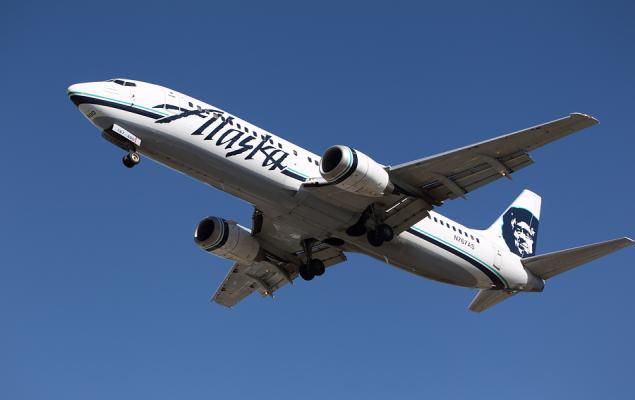
Alaska Air Group has achieved nearly two-thirds of its $1 billion incremental-profit target and remains on track to deliver the full amount by 2027, including $500 million in Hawaiian Airlines merger synergies. The carrier has completed three of four key integration milestones, plans to expand Seattle intercontinental destinations to at least 15 by 2030, and targets fleet growth from more than 400 aircraft to 550 by 2035. ALK expects its unified loyalty platform to generate nearly $4 billion of annual cash flow by 2030 and aims to raise non-main-cabin revenue contribution from 53% to 60% through premium products, international routes, loyalty and cargo.
Analysis
The investable issue is not the headline growth plan but whether Alaska converts network breadth into a structurally higher-margin revenue mix before fleet growth adds fixed costs. A larger loyalty base can improve direct booking economics, co-brand-card monetization and premium-cabin yield, reducing reliance on commodity domestic coach fares. If successful, ALK deserves to trade closer to premium-network peers rather than as a Pacific-coast cyclical airline; the earnings inflection should become measurable over the next 1-3 quarterly reports through unit-revenue outperformance and synergy realization.
The underappreciated risk is execution overlap: labor bargaining, remaining systems integration, international ramp-up and a major aircraft commitment can all pressure margins simultaneously. New long-haul routes are initially dilutive and Seattle is a competitive hub for Delta (DAL), while Hawaii capacity discipline remains vulnerable to competitive fare actions from DAL, United (UAL), and Southwest (LUV). A fuel spike or domestic capacity-led pricing downturn would expose the fact that much of the proposed benefit is still management-defined rather than independently validated.
Contrarian view: the plan may be too long-dated to justify an immediate rerating absent a raised near-term EPS/FCF framework. The key near-term catalyst is evidence that premium and loyalty monetization lifts unit revenue ex-fuel faster than added capacity lifts unit costs; without that, investors should treat the long-range cash-flow target as an aspiration. EXPD and SNDR have no direct read-through from this development; using them as transportation proxies would dilute the idiosyncratic airline thesis.
AllMind Terminal
AI-powered research, real-time alerts, and portfolio analytics for institutional investors.
Request TrialMarket Sentiment
Overall Sentiment
moderately positive
Sentiment Score
0.68
Ticker Sentiment
Key Decisions for Investors
- Maintain a watch-to-long bias on ALK over the next 1-3 months; initiate only after the next earnings release confirms unit-revenue ex-fuel growth above domestic-airline peers and management maintains or raises 2027 profit/synergy milestones. Target a 15-25% rerating over 6-18 months if execution validates; exit on a material reduction in synergy targets, adverse labor settlement, or sustained RASM underperformance versus DAL/UAL.
- Express the company-specific thesis as long ALK / short JETS rather than an outright airline beta position, sized for a 6-12 month horizon. The pair isolates loyalty, integration and premium-mix execution from fuel and macro demand shocks; close if ALK fails to outperform JETS by 10% after two reporting periods.
- Do not chase a short-term investor-day move. Set an entry alert around any post-results pullback driven by near-term route-launch or integration costs, provided liquidity, leverage and capacity guidance remain controlled; that is the better risk/reward setup than underwriting 2030 targets today.
- Monitor Seattle international load factors, Hawaii yields, non-ticket revenue per passenger, labor-contract terms, and fleet capital commitments each quarter. A deterioration in any two of these measures would shift the setup from rerating candidate to a balance-sheet and margin-risk short watch.
More News
- Palo Alto Networks’ Nikesh Arora is building a defense against the dark side of AI
- Stock Market News for Sep 30, 2026
- Factory CEO just accused his VC board advisor of spying for Cognition
- In photos: China's Xi hardens Taiwan warning as country celebrates week-long National Day holiday
- Paramount Skydance prices $42 billion debt for Warner Bros deal
- Tencent leases 100,000 chips from Oracle for $7 bln- FT
From AllMind Research
- Anthropic IPO Preview: Valuation, Timing, and What to Watch
- Shein After the IPO: Venue, Valuation, and What Must Be Proved
- What AI Research Tools Should a Small Hedge Fund Buy First?
- 2026 Global Markets Outlook: Asset Allocation After the Great Disconnect
- Fintool Alternatives After the Microsoft Acquisition