
Global Hair Color Market Set to Reach USD 61.18 Billion by 2034 as Personal Grooming, DIY Coloring and Ammonia-Free Formulations Strengthen, says Maximize Market Research
Source: PR Newswire
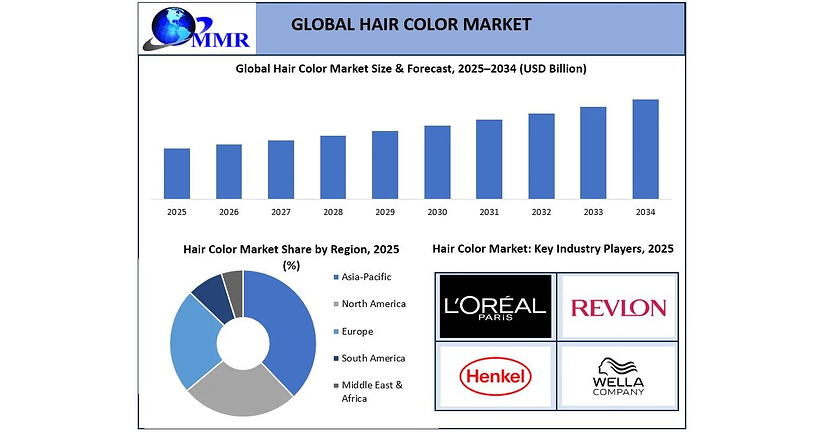
The global hair color market was valued at USD 31.12 billion in 2025 and is projected to reach USD 61.18 billion by 2034, a 7.8% CAGR for 2026–2034. The report cites demand for grooming, gray coverage, salon and at-home coloring, and ammonia-free and other hair-health-focused formulations as growth drivers; North America is a leading region, while Asia Pacific is expected to grow fastest. Recent product expansions include Wella’s 30-shade ammonia-free range, Schwarzkopf’s 52-shade IGORA ZERO AMM range, and Kao’s Liese expansion across seven Asian markets.
Analysis
The investable signal is mix shift, not the headline market forecast. If ammonia-free, bonding and hair-health claims support repeat purchases at higher price points, established brands could defend shelf space while smaller clean-label entrants face higher formulation and distribution hurdles. The countervailing effect is substitution: temporary and demi-permanent products may encourage more frequent use but could cannibalize durable permanent-color purchases rather than expand total spend. Online shade selection also pressures mass retailers unless they offer advice, availability and convenient fulfillment.
Henkel (HEN3) is the clearest mapped incumbent with a cited product push, but launches and shade counts do not establish sell-through, pricing power or material consolidated earnings impact. Sally Beauty (SBH) may be a channel read-through, while Olaplex (OLPX) is an adjacent hair-health exposure—not a direct beneficiary absent evidence that color-related products contribute materially. The broad market forecast is a weak catalyst: it comes from a report with an apparent scope inconsistency (its contents reference elastomers), and the article provides no methodology, realized sales or company-level revenue sensitivity.
Near term, this is unlikely to justify a standalone trade. Over 1–3 months, monitor HEN3 commentary and category-level sell-through, promotion intensity and repeat rates. Over 6–18 months, the thesis works if premium/low-damage products grow without requiring margin-dilutive promotions; it fails if launches merely shift existing buyers between formats or consumers reject safety claims. The consensus risk is treating a long-dated market forecast as earnings acceleration. No valuation, consensus estimates or launch economics are supplied, so relative-value conviction is low.
AllMind Terminal
AI-powered research, real-time alerts, and portfolio analytics for institutional investors.
Request TrialMarket Sentiment
Overall Sentiment
mildly positive
Sentiment Score
0.25
Ticker Sentiment
Key Decisions for Investors
- Do not trade the market-size forecast alone; treat the article as a category watch item, not evidence of near-term earnings upgrades.
- Track HEN3 as the most direct mapped product-innovation read-through. Reassess only with evidence on sell-through, realized pricing, repeat purchase and category-level contribution; launch breadth alone is not enough.
- Watch SBH for retail implications: improving hair-color sales alongside stable promotions would support category expansion; rising promotions or weak same-store trends would point to share transfers rather than incremental demand.
- Keep OLPX as an adjacent, not direct, beneficiary. Verify color-related sales exposure and whether hair-health claims translate into incremental purchases before considering a thematic position.
More News
- Stocks making the biggest moves midday: Microsoft, SpaceX, Vaxcyte, Banco Bradesco, DraftKings & more
- Stocks making the biggest moves premarket: DraftKings, Itau Unibanco, PTC & more
- Here are Monday's biggest analyst calls: Nvidia, SpaceX, Tesla, Apple, Microsoft, Wells Fargo, Samsara & more
- Cramer is closely watching Nvidia's massive buyback. Here's what he wants to see
- Nasdaq Index: Big Tech and Software Deals Drive Fresh Record High
- Nasdaq Index: Record High Tests Rally as Treasury Yields and Dow Diverge
From AllMind Research
- Anthropic IPO Preview: Valuation, Timing, and What to Watch
- Shein After the IPO: Venue, Valuation, and What Must Be Proved
- What AI Research Tools Should a Small Hedge Fund Buy First?
- AI Tools for Family Offices: A Stack by Decision Type
- Reading Conviction in the Tape: What Level 3 Order Book Data Really Tells Discretionary PMs