
Collegiate Entrepreneurs Impress with FinTech Solutions at the 2026 HuskyHack
Source: PR Newswire
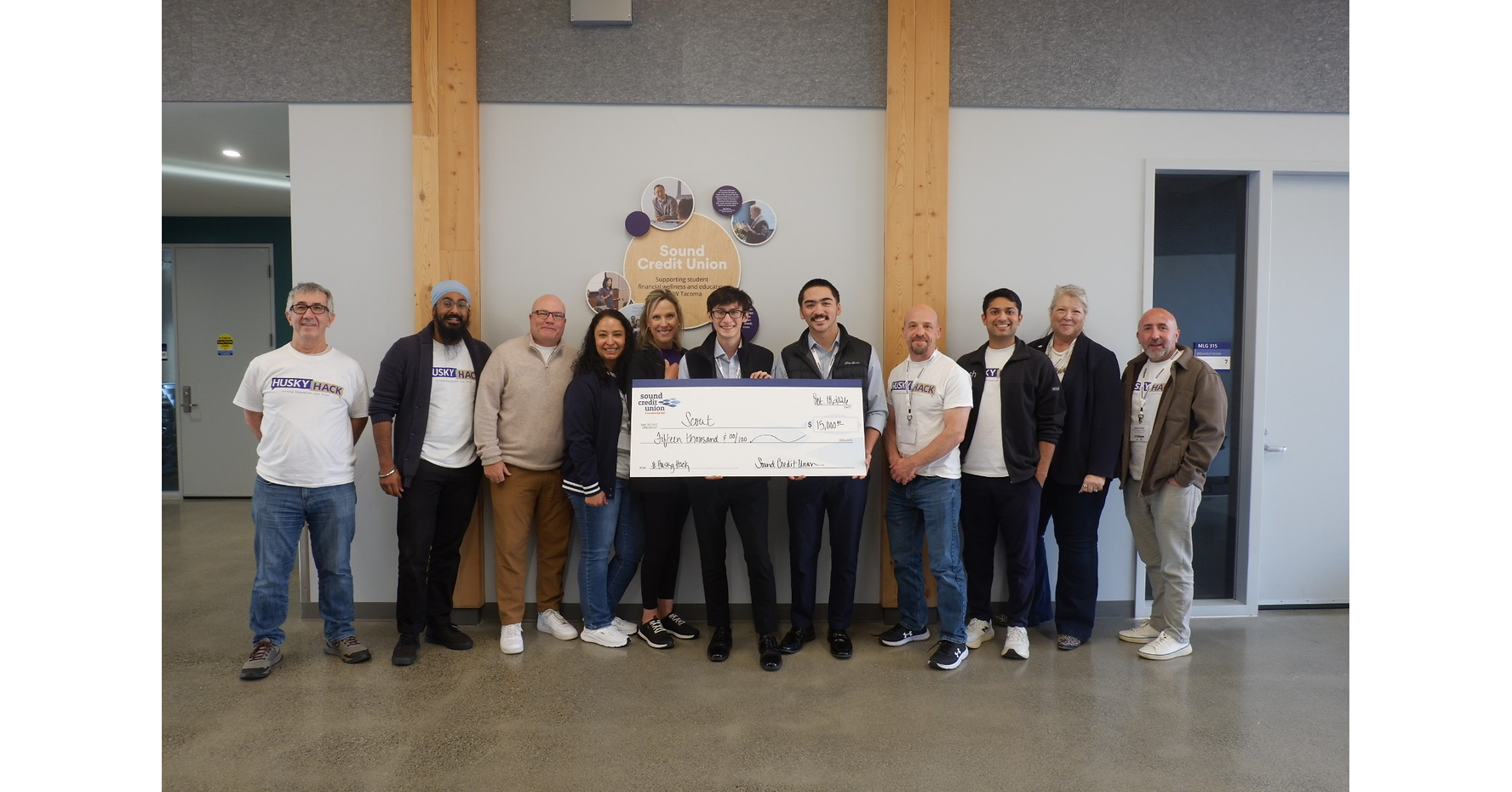
More than 100 Washington students registered for the 24-hour 2026 HuskyHack, focused on a fintech tool to help prevent fraud. UWT finance students Colin Sica and Noah Soepardi won the competition with Scout, a live scam-detection service that monitors phone conversations and alerts credit-union members to potential fraud. The event awarded the top three Phase 1 pitches $1,000 each; the overall winner received a $15,000 cash prize and six-month CoMotion Labs membership.
Analysis
This is an innovation signal, not yet an investable product signal. Scout’s proposed interception of scam calls could address a costly gap between transaction monitoring and the moment a member is socially engineered to authorize a transfer. If it proves effective, the economic value to Sound would come less from direct software revenue than from fewer member losses, lower fraud-handling burden, and stronger trust and retention. That case remains conditional: a weekend prototype is not evidence of detection accuracy, production readiness, or reduced losses.
The harder problem is deployment. Monitoring live calls raises privacy and consent questions, while false alerts could disrupt legitimate transactions and erode trust. Operating-system permissions, call-routing constraints, integration with credit-union systems, and the ability to distinguish evolving scam scripts could determine feasibility more than the initial model. Established fraud-prevention and customer-service technology providers could benefit if financial institutions seek similar tools, but this announcement does not establish a commercial market or displacement threat.
Near term, there is no clear public-equity read-through: Sound is a credit union, and no listed company is identified as a partner or vendor. Over 1–3 months, watch for a pilot, named technology partners, and independently measured intervention outcomes. Over 6–18 months, repeatable adoption across institutions—not hackathon recognition—would be the relevant structural catalyst. The contrarian point is that the concept may be directionally valuable while the most material risks sit in distribution, permissions, and false positives rather than fraud-detection novelty.
AllMind Terminal
AI-powered research, real-time alerts, and portfolio analytics for institutional investors.
Request TrialMarket Sentiment
Overall Sentiment
mildly positive
Sentiment Score
0.20
Key Decisions for Investors
- No trade on this announcement alone; it provides no verified revenue, vendor relationship, or public-company exposure.
- Treat follow-up as an alert: verify whether Sound funds a pilot, who owns and operates the technology, and whether it integrates with existing fraud systems.
- For any later investment case, seek measured results on scam detection, false-alert rates, member consent, prevented losses, and deployment costs; absent those data, do not infer meaningful earnings impact.
- Falsification watch: abandon the adoption thesis if privacy or call-platform constraints block deployment, or if a pilot shows high false positives or no demonstrable reduction in member losses.
More News
- Meta put out an ambitious roadmap to Muse monetization after strong quarter and guide
- New Mexico took on Meta alone and won a $25 billion judgment over Facebook’s privacy violations
- Elon Musk Thinks $3.5 Trillion Tesla-SpaceX Mashup Is a Good Idea
- Meta ordered to pay $25 billion in case related to Cambridge Analytica scandal
- Judge orders Meta to pay $25bn in fines for Facebook privacy violations
- Futures orbit around SpaceX as Tesla merger talk cheers investors
From AllMind Research
- Anthropic IPO Preview: Valuation, Timing, and What to Watch
- Shein After the IPO: Venue, Valuation, and What Must Be Proved
- What AI Research Tools Should a Small Hedge Fund Buy First?
- Weekly Update: AI-Powered Report Editing, Investor Relations, and Enhanced Search
- Automating Financial Model Updates: A Source-Controlled Workflow