
Singapore and Malaysia Lead the Largest AppliedEdu ASEAN Rankings to Date
Source: PR Newswire
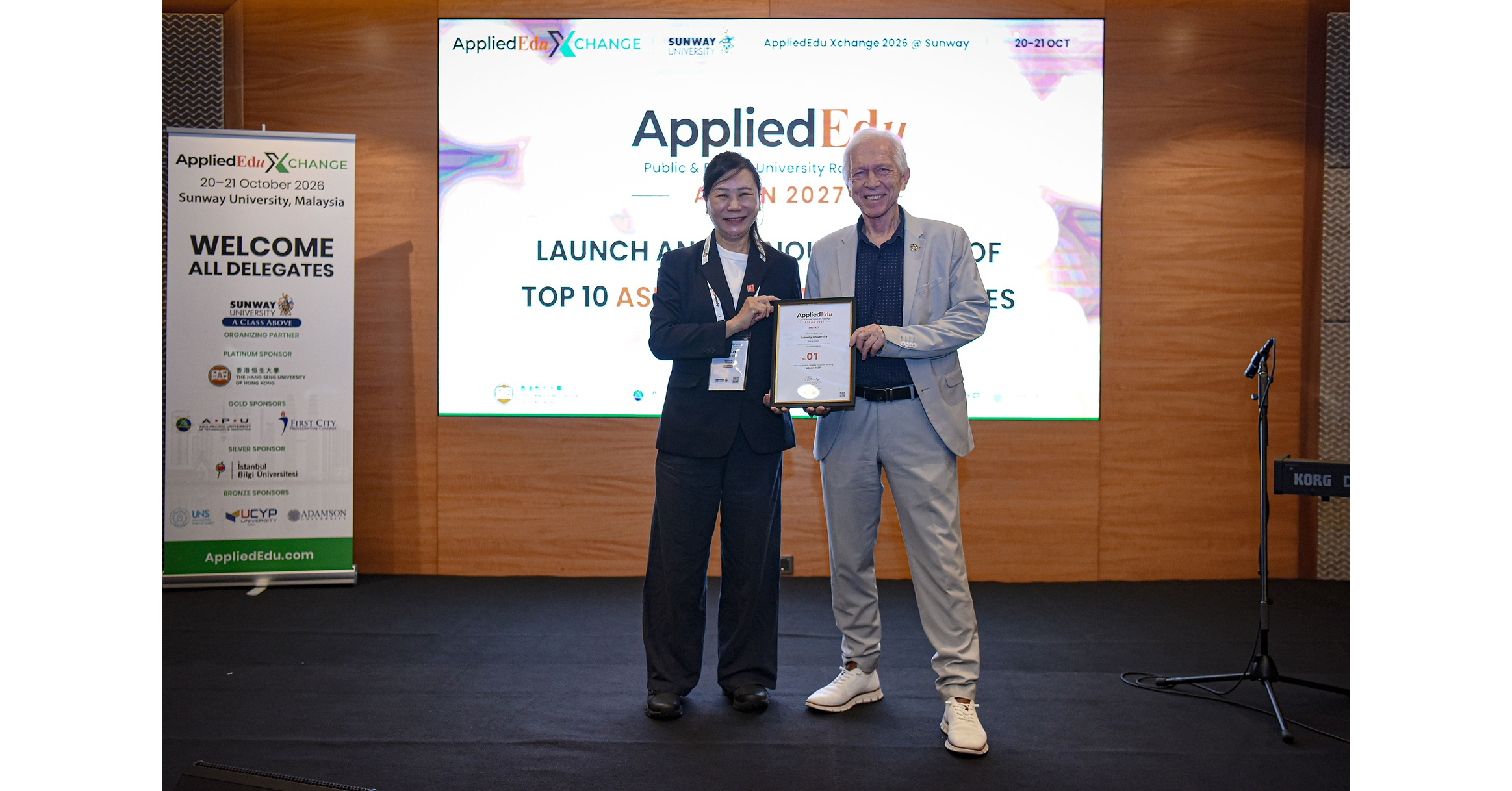
AppliedEdu ranked 316 universities across nine ASEAN countries for 2027, up from 237 institutions last year, using more than 100,000 validated student survey responses alongside academic nominations and institutional data. NUS retained the top public-university position for a third consecutive year, while Sunway University retained the private-university lead for a fourth; Malaysia had seven of the top 10 private universities and five of the top 10 public universities.
Analysis
The investable signal is less “which university won” than the region’s growing use of employability and student experience as competitive inputs. That may favor institutions able to fund employer partnerships, practical curricula and campus upgrades; if sustained, it could redirect enrollment toward leading Malaysian and Singaporean providers and pressure weaker operators to spend more simply to defend recruitment. But rankings are not evidence of higher tuition, enrollment or margins, and the article gives no institution-level financials or ownership links to listed companies.
The apparent year-on-year movers deserve caution: the field expanded by roughly one-third, so rank changes can reflect a larger comparison set as well as underlying improvement. Survey participation and self-submitted institutional data also make validation and methodology stability important. The concentration of Malaysian institutions near the top is a reputational advantage, not yet proof of countrywide education-sector economics.
Near term, the 30 November all-Asia rankings are a visibility catalyst, but likely a weak trading signal absent evidence that recruitment, international student applications or pricing respond. Over 6–18 months, the more durable question is whether rankings translate into enrollment growth and better operating economics—or instead trigger higher spending and a costly competition for faculty and industry partnerships. No direct security-level trade is supported by the supplied data.
AllMind Terminal
AI-powered research, real-time alerts, and portfolio analytics for institutional investors.
Request TrialMarket Sentiment
Overall Sentiment
mildly positive
Sentiment Score
0.15
Key Decisions for Investors
- No direct trade on the ASEAN rankings alone: supplied data identifies no listed companies or ticker mappings, and the article provides no financial impact evidence.
- Treat 30 November’s all-Asia rankings as a monitoring catalyst, not a standalone entry point; reassess only if named providers show measurable changes in applications, enrollment, international-student mix or tuition realization.
- For any later company-level work, verify university ownership and consolidation, then compare student growth and operating costs (faculty, recruitment and employer partnerships) against tuition revenue; ranking gains without improving economics would falsify the bullish interpretation.
- Watch for methodology or participation changes in the next release. If expanded coverage or altered survey composition explains rank movement, discount it as a competitive signal rather than extrapolating it into a multi-year enrollment advantage.
More News
- The U.S. market has never been more focused on one single bet—but AI’s payoff will likely take decades
- Meta put out an ambitious roadmap to Muse monetization after strong quarter and guide
- Jio IPO Sees Overwhelming Demand on Day One Even as Nifty Struggles
- CoreWeave’s market confidence erodes as bond yields spike and stock sinks
- New Mexico took on Meta alone and won a $25 billion judgment over Facebook’s privacy violations
- One killed, eight injured in attack on Saudi Arabia’s King Fahd airport