
xTool Introduces X1, a Next-Gen All-in-One Laser Platform Built for Speed, Scale, and Versatility
Source: PR Newswire
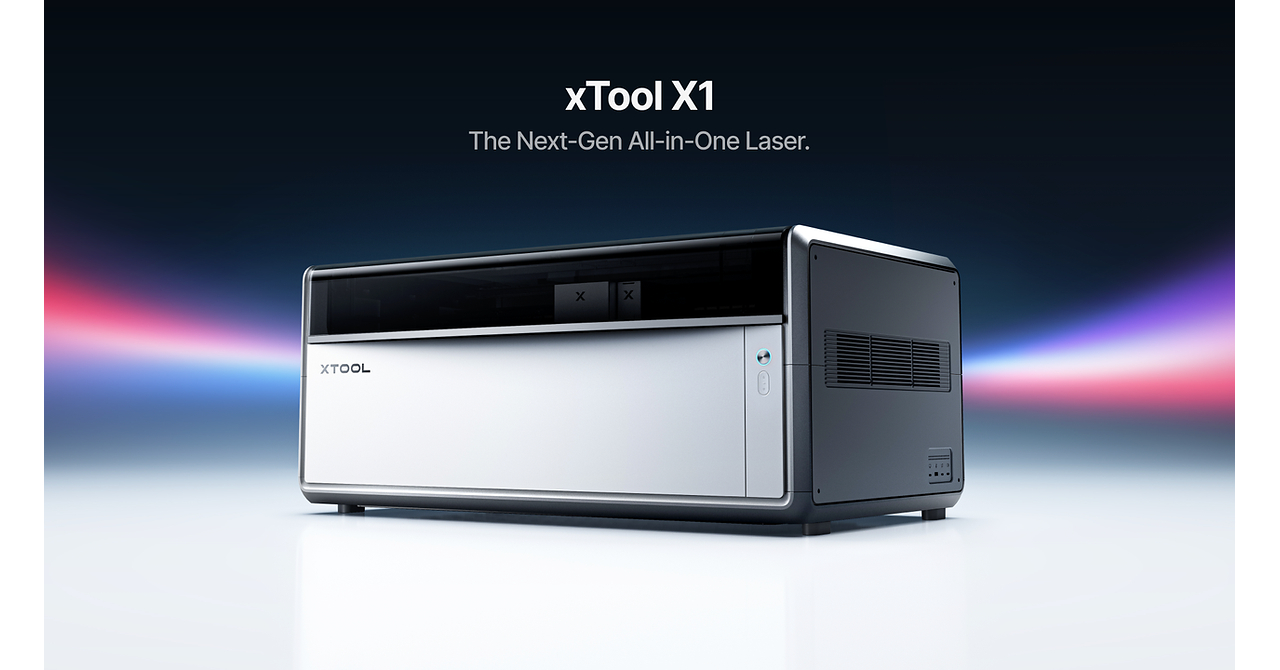
xTool launched its next-gen all-in-one laser platform, the xTool X1, combining up to 6,000 mm/s engraving speed with a modular Laser Swap™ upgrade path (supporting 30W Fiber, 60W MOPA, and 5W UV). The company also highlighted commercial traction for its xTool O1 Omni Printer, citing $20M+ in revenue and 6,000+ units sold on day one, alongside its AI creation suite Atomm for prompt-to-ready designs. Overall, the news is a positive product-and-ecosystem expansion but is unlikely to be market-moving beyond xTool/peer desktop fabrication makers.
Analysis
The investable signal is not the product launch itself; it is the lowering of fixed costs for micro-merchants and semi-pro creators. That mechanically expands the supply of custom goods, which is supportive for commerce platforms that monetize merchant formation, payments, and fulfillment layers. SHOP is the cleaner beneficiary because it captures more of the merchant stack; ETSY gets a smaller lift, but only if the mix stays genuinely differentiated rather than drifting toward cheaper, more easily replicated merchandise.
Second-order, this is a classic margin-vs-growth tradeoff. Easier desktop production should increase the number of sellers and SKU variety, but it can also compress uniqueness and intensify price competition, which is a headwind for ETSY’s discovery-driven marketplace economics. The same dynamic is mildly positive for consumables and accessory ecosystems, but a structural negative for any incumbent hardware vendor whose moat depends on single-function machines or closed workflows.
The market may be overrating near-term adoption. SMBs are slow to swap workflows, and the revenue effect will only matter if merchant cohorts actually convert the tooling into new store launches and higher GMV over the next 1-3 quarters. The thesis is falsified if platform data show no pickup in new merchant activity, personalized SKU counts, or average order values; absent that, this remains a niche productivity story rather than a broad commerce catalyst.
AllMind Terminal
AI-powered research, real-time alerts, and portfolio analytics for institutional investors.
Request TrialMarket Sentiment
Overall Sentiment
mildly positive
Sentiment Score
0.25
Ticker Sentiment
Key Decisions for Investors
- Initiate a modest SHOP/ETSY pair: long SHOP, short ETSY for a 1-3 month horizon. Rationale: SHOP monetizes merchant expansion more directly, while ETSY is more exposed to commoditization and margin pressure from easier product replication. Trim if ETSY reports accelerating GMV or SHOP shows weaker merchant adds.
- Use any post-news weakness to add to SHOP rather than chase strength. The cleaner catalyst is not the launch headline but follow-through in merchant acquisition and app/payment attach over the next quarter.
- Avoid forcing a direct trade in ETSY unless channel checks confirm that the launch is creating more differentiated, high-value listings rather than lower-quality supply. If listing mix deteriorates, the downside is discovery dilution and take-rate pressure rather than immediate volume loss.
- Set a watch item on merchant cohort data over the next 1-2 quarters: new store creation, personalized SKU growth, and repeat seller spend. If those metrics do not inflect, treat this as non-actionable noise and cover any pair exposure.
More News
- ‘If nothing is done, it’s almost inevitable’: Ukraine’s Yuriy Ryzhenkov on why steelmaking is on the brink of collapse as Russian bombing intensifies
- Why is LG Innotek stock plunging today?
- TotalEnergies, KKR expand U.S. solar venture with 700 MW addition
- Why is SK Hynix stock sliding today?
- TikTok CEO sees major scientific breakthroughs from AI within three years
- IIF CEO on Rising Global Debt
From AllMind Research
- Anthropic IPO Preview: Valuation, Timing, and What to Watch
- Shein After the IPO: Venue, Valuation, and What Must Be Proved
- What AI Research Tools Should a Small Hedge Fund Buy First?
- AllMind's Data Standardization Methodology: Our Approach to Fundamentals
- What Makes Financial Data Ready for AI Research?