
World Fire Congress 2026 concludes with global call for prevention, collaboration and shared resilience
Source: PR Newswire
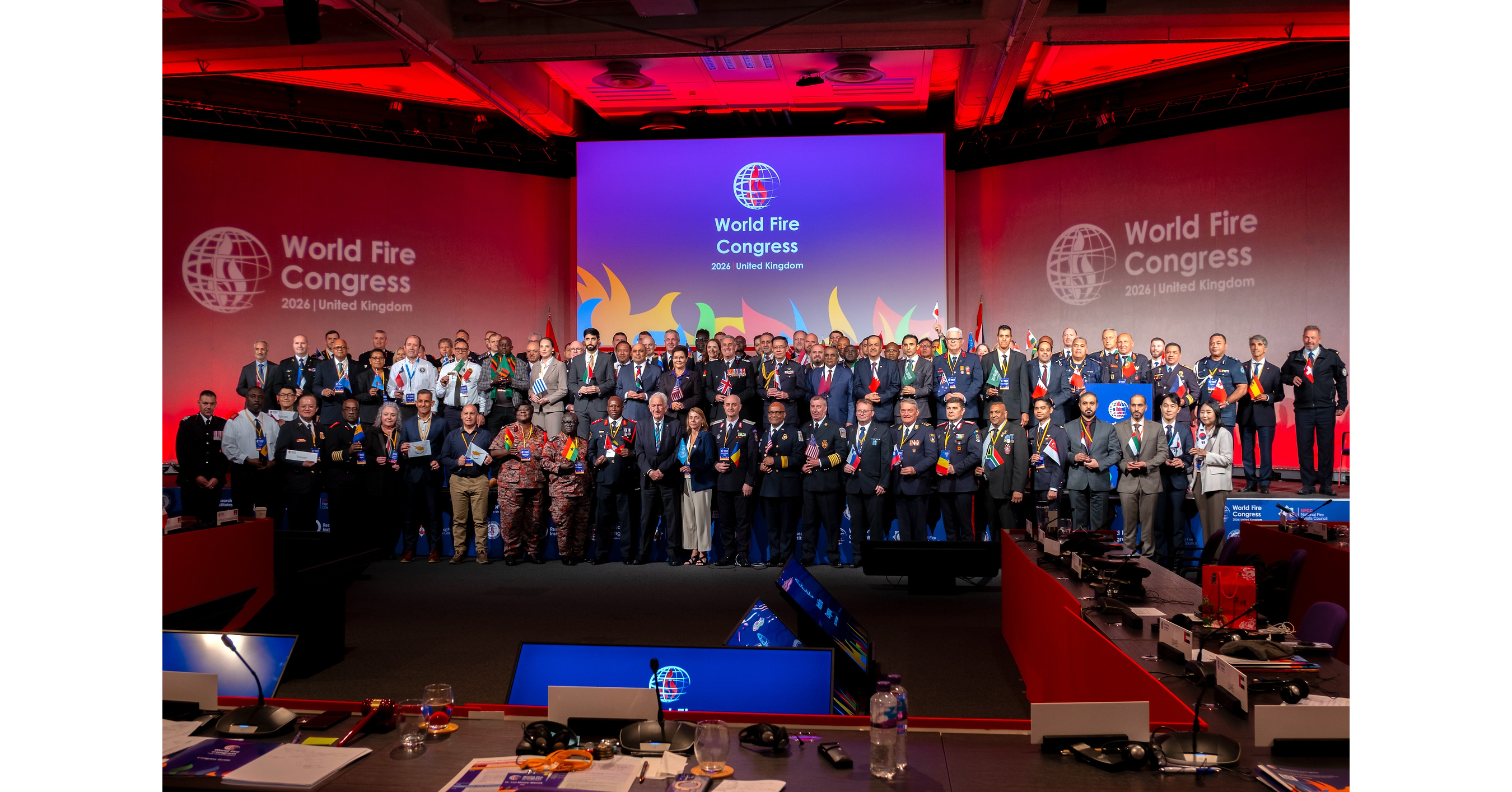
The World Fire Congress 2026 concluded with delegates from more than 60 countries calling for stronger international prevention, preparedness and knowledge-sharing in response to climate-driven wildfires, urbanisation, technological change and geopolitical instability. Dubai, UAE, was confirmed as host of the next Congress in 2028, while an eight-area Communities of Practice initiative will continue collaboration between meetings. The event highlighted firefighter physical and mental health risks, but announced no material policy, funding or commercial commitments.
Analysis
This is not a near-term earnings catalyst: the communication is aspirational, lacks procurement commitments, budgets, standards changes, or implementation deadlines, and should not be traded directly. The investable signal is a longer-duration policy direction toward prevention, detection, and resilience, where recurring inspection, monitoring, and code-compliance spending is typically more resilient than episodic emergency-capex demand.
Over 6-18 months, rising municipal and commercial focus on fire risk could modestly support listed exposure to detection and building-safety retrofits—particularly Honeywell (HON), Johnson Controls (JCI), and carrier/fire-safety exposure within Carrier Global (CARR). The more meaningful second-order beneficiary could be property insurers and reinsurers only if improved mitigation becomes tied to underwriting standards; without enforceable codes, premium credits, or public funding, the discussion does not alter catastrophe-loss assumptions.
The key catalyst is the forthcoming proceedings report: watch for specific cross-border standards, recommended building-retrofit requirements, firefighter PPE/health mandates, or named government commitments. A risk to any resilience-theme long is municipal fiscal pressure and weak construction activity, which delay retrofit cycles; thesis confirmation would require order-growth acceleration or backlog commentary in 2027 guidance rather than conference rhetoric.
AllMind Terminal
AI-powered research, real-time alerts, and portfolio analytics for institutional investors.
Request TrialMarket Sentiment
Overall Sentiment
mildly positive
Sentiment Score
0.12
Key Decisions for Investors
- No immediate directional trade; treat the proceedings report release as an alert rather than a catalyst until it identifies funding, mandates, or procurement pathways.
- Add HON, JCI, and CARR to a 6-18 month resilience-infrastructure watchlist; consider long exposure only after organic orders/backlog show sustained acceleration versus commercial-construction peers.
- For insurers such as AIG and RNR, monitor whether mitigation standards generate measurable loss-ratio or pricing benefits; do not underwrite a catastrophe-risk reduction from voluntary collaboration alone.
- Falsify a future building-safety long if 2027 guidance shows continued weak nonresidential retrofit demand, municipal-budget cuts, or no conversion of policy recommendations into enforceable codes.
More News
- Here’s the ‘core economic flaw’ in the AI bull case as stock and bond trades unravel, according to a top economist
- Iran says won’t allow US warships to get close as Trump ponders new attacks
- American embassies tighten security as Iran threat warnings intensify ahead of U.S. midterm elections
- France’s latest debt warning describes a country where governance is breaking down — and even doing too little, too late is barely possible
- Saudi-led coalition says it intercepted Houthi ballistic missiles targeting Saudi cities
- Biotech stocks are surging. How investors can play the new drug innovation boom