
Here’s how the Fed should reveal its outlook for the economy
Source: MarketWatch
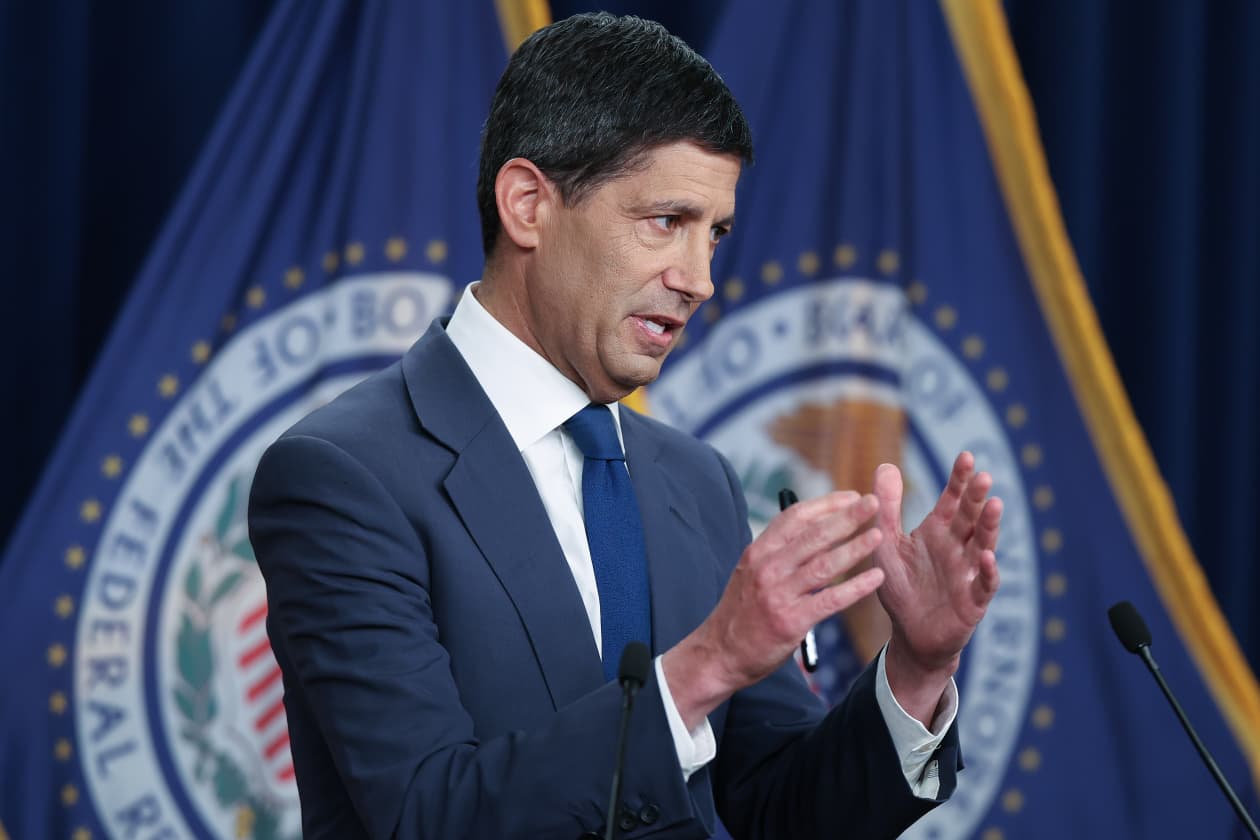
Fed Chairman Kevin Warsh is seeking to revamp the central bank’s communication strategy, and an external panel he appointed is considering changes. The opinion argues that the quarterly Summary of Economic Projections’ interest-rate dot plot, introduced by Ben Bernanke in 2012, is ripe for improvement; it reports no specific change or policy decision.
Analysis
This is a communications-design debate, not evidence of a change in the Fed’s reaction function or rate path. The market risk is therefore asymmetric around implementation: replacing a familiar signal before investors understand its substitute could temporarily increase front-end rate volatility, even if the eventual framework improves clarity. If the Fed moves toward ranges, scenarios, or a more collective outlook, investors may rely less on the median dot and more on incoming data and chair guidance. That could reduce false precision but make event-level repricing sharper when inflation or labor data surprise.
Near term (days to weeks), absent a formal proposal, there is little basis for a directional Treasury or equity position. Over 1–3 months, watch for the panel’s recommendations, the Fed’s adoption timeline, and whether officials offer a transition period; those are catalysts for repricing rate volatility, not necessarily yields. Over 6–18 months, genuinely clearer communication could reduce uncertainty premia, while a less comparable or less timely framework could make policy expectations harder to hedge. Rate-sensitive equities may feel this through discount-rate volatility, but the direction of their impact is unclear without a change in expected rates.
The contrarian point: better communication is not automatically market-stabilizing. A more detailed outlook can create additional anchors for investors to misread as commitments. No company-specific winners or losers are supported by the available information.
AllMind Terminal
AI-powered research, real-time alerts, and portfolio analytics for institutional investors.
Request TrialMarket Sentiment
Overall Sentiment
neutral
Sentiment Score
0.00
Key Decisions for Investors
- No immediate directional rates trade: the article supplies no proposed replacement framework, adoption date, or change in policy outlook.
- Add the panel’s recommendations and any Fed implementation timetable to the rates-volatility watchlist. Consider a limited, defined-risk position in front-end Treasury or SOFR options only if a formal proposal creates a dated catalyst; avoid paying event premium before timing is known.
- Track front-end implied volatility and the sensitivity of yields to CPI, payrolls, and Fed communication. A sustained volatility increase after the proposal would support the view that the transition is reducing signal clarity; stable or lower volatility would weaken it.
- Falsification: no material framework change, an explicit transition that preserves comparability, or no observable increase in front-end rate volatility would argue against a communications-driven risk premium.
More News
- U.S. budget deficit swells to almost $2 trillion for fiscal 2026, up 12% in a single year
- Dow falls 189 points as AI stocks slide and oil prices surge
- Yields continue to rattle investors. These sectors are most at risk if rates stay elevated
- We're downgrading this retail stock after a big comeback. Plus, AI names slide again
- Major earnings reports are due next week, but strong results may not be enough to quell market fears
- Why is VanEck Semiconductor ETF sliding today?
From AllMind Research
- Anthropic IPO Preview: Valuation, Timing, and What to Watch
- Shein After the IPO: Venue, Valuation, and What Must Be Proved
- What AI Research Tools Should a Small Hedge Fund Buy First?
- Stop Treating AI Like a Chatbot: What Are Agents, SubAgents, MCP, and Skills, and How Do They Actually Work?
- Earnings-Triggered Research Automations: A Control Guide