
Can Archer's Component Strategy Support Production Scaling?
Source: zacks.com
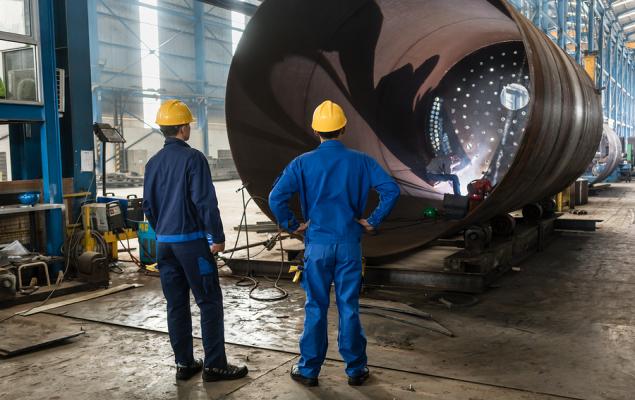
Archer Aviation is using an internal-development-plus-external-supplier strategy to scale Midnight eVTOL production, applying lessons from its California golden manufacturing line to its planned high-volume Georgia facility. The company is retaining electric/hybrid propulsion, flight-control software and composites in-house while outsourcing non-differentiating components, with supplier quality, cost and delivery execution remaining key ramp risks. ACHR trades at 2.24x trailing price-to-book versus a 5.72x industry average, while consensus forecasts EPS declines of 52.38% in 2026 before 15.63% growth in 2027; shares rose 0.5% over three months versus an 8.6% industry decline.
Analysis
The relevant valuation variable is not vertical integration itself but whether Archer can convert a prototype bill of materials into repeatable unit economics without supplier-driven delays. Retaining propulsion, controls and composites internally concentrates execution risk in the subsystems most likely to generate certification, reliability and warranty liabilities; outsourcing mature content preserves capital but reduces control over lead times and pricing during a low-volume ramp. The market should not award a manufacturing-scale multiple until Archer discloses stable build cadence, supplier qualification progress, and cash burn per aircraft.
JOBY has a relative strategic advantage through Toyota's manufacturing involvement: external validation of production engineering can lower perceived ramp risk and potentially improve supplier purchasing leverage. Conversely, Archer's architecture could create greater upside if its Georgia line demonstrates materially lower labor hours and rework than early California builds, but this is a 6-18 month operating proof point rather than a near-term earnings catalyst. EVEX remains a higher-risk read-through: its industrial plan is less valuable to equity holders until firm orders convert into funded production slots and supplier commitments.
The apparent book-value discount is not a compelling signal for pre-revenue aerospace companies, where book value is largely cash and development assets rather than proven earning power. Consensus may be underweight dilution risk: a delayed certification or production ramp extends the negative-free-cash-flow period, forcing equity issuance precisely when sector enthusiasm fades. Near-term news flow can support all eVTOL equities, but without quantified production milestones this article does not change intrinsic value.
Contrarian view: investors may be overpaying for the narrative that an established aerospace supply base de-risks commercialization. Suppliers can support quality, but they do not solve throughput, certification conformity, battery availability, aftermarket support, or demand activation. The key catalyst over the next 1-3 months is a verifiable update on aircraft build rate, flight-test progress, Georgia commissioning and liquidity runway; failure to provide these should compress the valuation gap versus better-capitalized or better-partnered peers.
AllMind Terminal
AI-powered research, real-time alerts, and portfolio analytics for institutional investors.
Request TrialMarket Sentiment
Overall Sentiment
mildly positive
Sentiment Score
0.12
Ticker Sentiment
Key Decisions for Investors
- No new directional ACHR position solely on this disclosure. Establish a monitoring trigger for reported build cadence, Georgia commissioning milestones and quarterly cash burn; consider a long only after evidence of repeatable production and a liquidity runway extending at least 24 months.
- Maintain a relative-quality pair bias: long JOBY / short ACHR over a 3-6 month horizon if JOBY continues to demonstrate manufacturing or certification milestones while ACHR does not. Size modestly because eVTOL sentiment and regulatory headlines can drive high beta across both names; exit if Archer reports demonstrably superior production cadence or receives incremental non-dilutive funding.
- For existing ACHR longs, treat any rally on manufacturing-language updates without quantified unit output, supplier commitments or cash-use guidance as an opportunity to reduce exposure. The downside case is a financing-driven multiple reset; invalidate that risk thesis with improving burn efficiency and explicit, funded production targets.
- Avoid using TM as a direct fundamental proxy for ACHR. Toyota's eVTOL exposure is immaterial to consolidated earnings, although stronger JOBY manufacturing execution could provide a modest sentiment benefit to TM's mobility-technology narrative.
More News
- PENSKE AUTOMOTIVE GROUP REPORTS QUARTERLY RESULTS
- What investors need to know about Alphabet's stock-busting earnings report
- Our next steps for Alphabet stock after earnings disappoint at nearly every turn
- Wendy's shares jump 15% as Nelson Peltz's Trian offers $1.4 billion to buy burger chain
- Fortinet’s stock is taking a dive after earnings. Here’s why.
- RBC Capital cuts Sprouts Farmers Market stock rating on margin concerns