
PatchBoyz Asbestos Removal : Nearly 60% of Ottawa Homes Were Built by 1990, Keeping Asbestos Risk in Focus for Renovations
Source: PR Newswire
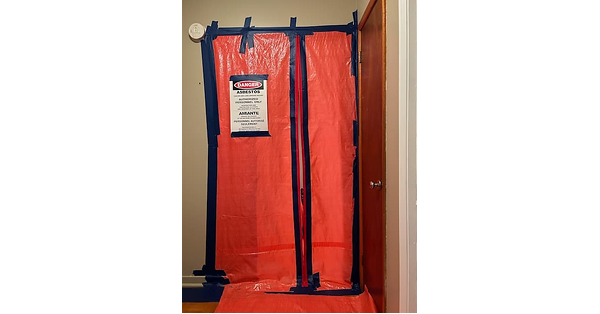
PatchBoyz analysis of Statistics Canada data found that 243,080 of Ottawa's 407,250 occupied private dwellings, or 59.7%, were built in 1990 or earlier, overlapping the period when asbestos was commonly used in construction. Ontario Regulation 278/05 requires an asbestos examination and report before renovation, repair, alteration, or demolition work that could disturb suspect materials. The release emphasizes that housing age is a screening indicator rather than proof of asbestos, while positioning pre-project assessment and abatement as a means to avoid safety risks, delays, and remediation costs.
Analysis
This is not investable public-market information in isolation. The economic effect is highly localized and fragmented: mandated pre-work assessment raises renovation project friction and can defer discretionary remodels, while shifting a larger share of spend toward licensed abatement, testing, waste handling and restoration contractors. The most material second-order beneficiary is likely regional specialty contractors with certifications, labor availability and insurer relationships; the likely loser is the small general contractor that cannot absorb scheduling delays or subcontractor markups.
For publicly traded Canadian exposures, the mechanism is marginally unfavorable to renovation-volume retailers such as Canadian Tire (CTC.A.TO) and home-improvement demand proxies, but Ottawa alone cannot move consolidated earnings. The more relevant read-through is whether enforcement broadens across Ontario and coincides with a recovery in turnover or renovation activity: compliance costs can redirect project budgets from kitchens, flooring and finishes toward remediation, reducing retail basket mix and gross-margin dollars even if total project spend rises.
The press release should not be treated as evidence of an acceleration in remediation demand; it relies on housing-age statistics rather than testing volumes, permit activity, enforcement actions, or contractor backlog. A tradable signal would require evidence that assessment requirements are being actively enforced and that testing/abatement lead times or pricing are rising. Over 6-18 months, persistent skilled-labor scarcity could consolidate local remediation markets, but this remains a private-company opportunity rather than a listed-equity catalyst.
Contrarian view: heightened awareness may initially suppress renovation starts rather than create incremental construction spend. Owners can defer disturbance work when remediation quotes exceed budget, particularly if housing turnover softens or consumer credit costs remain elevated. That outcome would be more negative for renovation-linked retailers and local contractors than for diversified building-materials suppliers, whose exposure is geographically and product-wise diluted.
AllMind Terminal
AI-powered research, real-time alerts, and portfolio analytics for institutional investors.
Request TrialMarket Sentiment
Overall Sentiment
neutral
Sentiment Score
-0.05
Key Decisions for Investors
- No standalone public-equity trade: the stated impact is too localized and no listed issuer has disclosed material Ottawa remediation exposure.
- Monitor Ontario building-permit data, renovation financing trends, provincial enforcement actions, and local asbestos-testing/abatement lead times over the next 1-3 months; rising permit activity plus lengthening lead times would validate a broader specialty-contractor pricing thesis.
- Keep CTC.A.TO on a renovation-budget watchlist rather than shorting: reassess only if Ontario-wide compliance enforcement coincides with weakening same-store sales or renovation-category guidance. Ottawa exposure alone is immaterial.
- For private-market sourcing, screen Ontario remediation and environmental-services platforms with testing, abatement, disposal and restoration capabilities; the attractive model is vertically integrated capacity, where project-delay avoidance supports pricing and cross-sell.
More News
- Paramount will need to release way more movies to make this merger work
- Sullivan: Wall Street admits it doesn't know where oil is headed. There's one stock they do agree on
- How Kevin Warsh’s rate hike exposed a 2-speed U.S. economy, with AI and housing at the poles
- U.S. regulators rush to write crypto rulebook after Clarity Act stalls in Senate
- China Vanke shares surge on report of regulatory debt intervention
- We Want This Country to Win Tokenization: SEC's Selway
From AllMind Research
- Anthropic IPO Preview: Valuation, Timing, and What to Watch
- Shein After the IPO: Venue, Valuation, and What Must Be Proved
- What AI Research Tools Should a Small Hedge Fund Buy First?
- AI Tools for Private Equity Due Diligence: A Buyer Workflow
- Weekly Update: In-App Tutorials, Futures Data, and Watchlist Enhancements