
Compal bringt NVIDIA-KI-Fabrikinfrastruktur auf den OCP Global Summit 2026
Source: PR Newswire
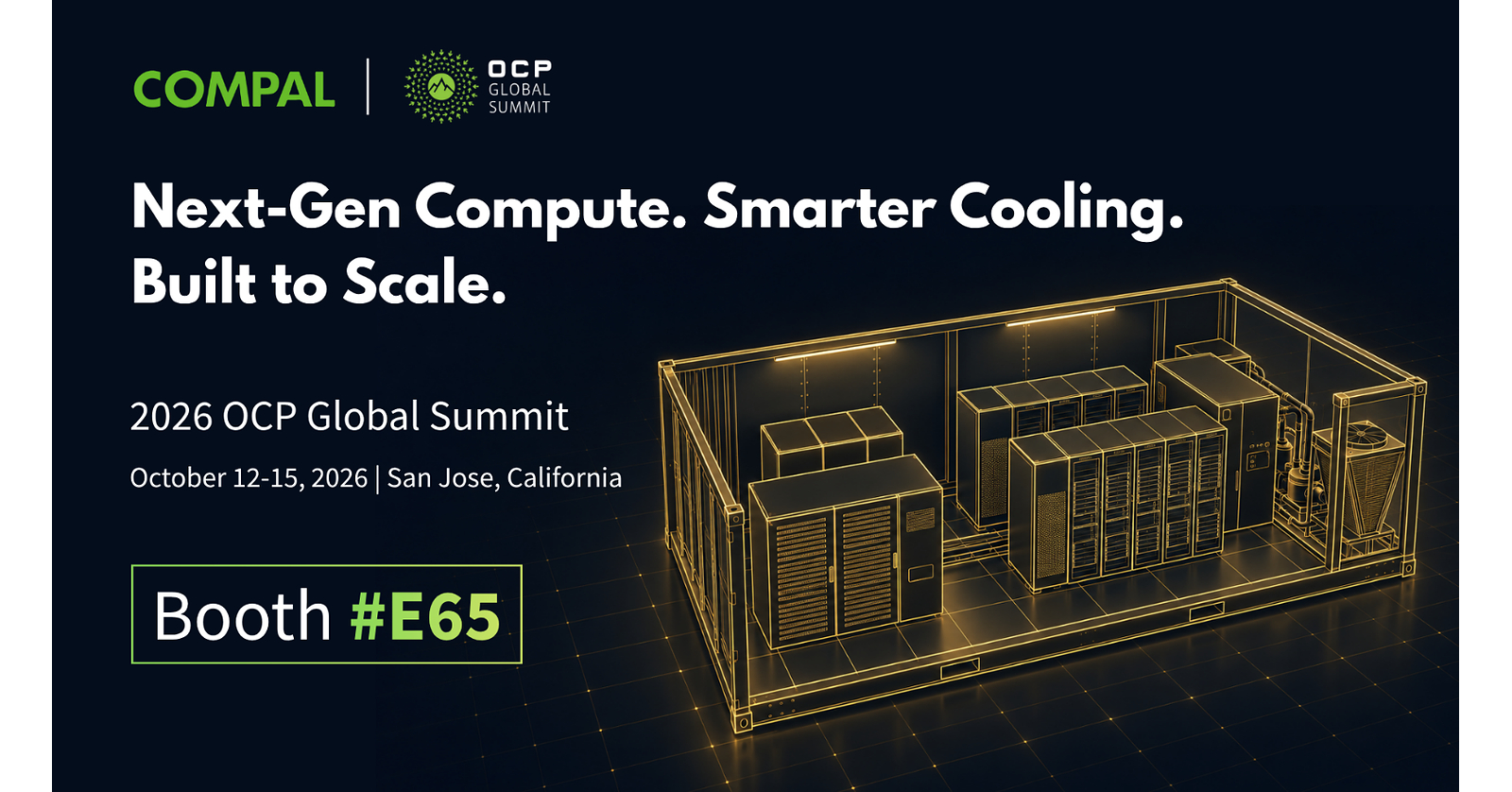
Compal will auf dem OCP Global Summit 2026 eine KI-Fabrik-Infrastruktur für NVIDIA-basiertes Accelerated Computing vorstellen, einschließlich einer 800-VDC-Stromversorgungsarchitektur, Megawatt-Stromkapazität und fortschrittlicher Flüssigkeitskühlung. Das Unternehmen positioniert sich über einzelne Server hinaus als integrierter Anbieter von Rack-, Energie- und Kühlinfrastruktur für hochdichte KI-Rechenzentren. Die Ankündigung enthält keine Finanzkennzahlen, Aufträge oder Prognoseänderungen und dürfte daher primär strategische Relevanz für Compals KI-Infrastrukturpositionierung haben.
Analysis
The investable implication is not incremental NVIDIA demand; it is a widening infrastructure bottleneck around power delivery, liquid cooling, commissioning, and utility interconnection. As rack densities rise, the bill of materials shifts from commodity server assembly toward higher-value electrical and thermal systems, favoring Vertiv (VRT), Eaton (ETN), nVent (NVT), Modine (MOD), and Powell Industries (POWL) more directly than ODMs such as Compal. Integrated rack-scale designs can also reduce deployment failures and time-to-revenue for hyperscalers, making validated power-and-cooling vendors increasingly difficult to substitute even if GPU supply normalizes.
For NVDA, the second-order effect is favorable but indirect: infrastructure readiness becomes the gating item for converting GPU backlog into recognized system revenue. If customer deployments are delayed by substation, switchgear, or liquid-cooling constraints, NVDA can retain demand visibility while shipment timing and networking attach rates become lumpier; this is a 1-3 quarter execution risk rather than a demand signal. The release contains no disclosed customer win, volume commitment, certification status, or margin economics, so it should not alter estimates for Compal or NVDA absent evidence of production orders.
Consensus may be underestimating the margin pressure on server ODMs. End-to-end rack integration raises content per deployment, but much of the incremental electrical and cooling value accrues to component vendors while ODMs absorb qualification, inventory, warranty, and working-capital risk; scale benefits depend on customer prepayments and pass-through terms. Over 6-18 months, the critical differentiator will be field deployment capacity and utility coordination, not presentation-level architecture claims.
Near-term upside for power/cooling equities is vulnerable to already-elevated AI-infrastructure multiples and any evidence that hyperscalers defer capex because grid interconnects lag. Falsify the bottleneck thesis if VRT/ETN report falling backlog conversion, shorter lead times without volume growth, or hyperscaler capex guidance shifts toward slower deployment rather than merely lower-cost deployment.
AllMind Terminal
AI-powered research, real-time alerts, and portfolio analytics for institutional investors.
Request TrialMarket Sentiment
Overall Sentiment
mildly positive
Sentiment Score
0.32
Ticker Sentiment
Key Decisions for Investors
- Maintain an overweight basket of VRT and ETN versus NVDA over the next 1-3 months: the relative trade benefits if AI deployment constraints migrate from chips to electrical infrastructure. Use a 10-12% relative stop-loss; take profits if either company reports backlog growth decelerating below revenue growth for two consecutive quarters.
- Initiate a measured long MOD / short SMCI pair for a 3-6 month horizon, subject to valuation review at entry. MOD has more direct exposure to thermal-content intensity, while SMCI carries greater execution, inventory, and gross-margin sensitivity if turnkey rack deployments are delayed; target 15% relative return with an 8% stop.
- Do not add directional NVDA exposure from this item alone. Add only if subsequent customer announcements identify funded rack-scale deployments or if NVDA commentary confirms that power-and-cooling constraints are extending delivery visibility without reducing networking and system attach rates.
- Create an earnings watchlist for POWL, NVT, VRT, ETN, and MOD: monitor order lead times, liquid-cooling revenue, electrical-equipment backlog, and customer deposits. A broad move from multi-quarter backlog to normal lead times without a corresponding revenue acceleration is a signal to reduce AI-infrastructure exposure.
More News
- Tencent leases 100,000 chips from Oracle for $7 bln- FT
- RAM supply set to worsen, says Micron, as CEO celebrates ‘much higher’ prices
- We're raising our Micron price target after an incredible quarter and robust guidance
- Micron beats on revenue and earnings as global memory shortage continues
- Trump’s AI lunch included every major tech company. Except Apple
- OpenAI is sued over rogue AI Hugging Face cyberattack