
POSCO to Boost Automotive Steel With New Galvanizing Plant
Source: zacks.com
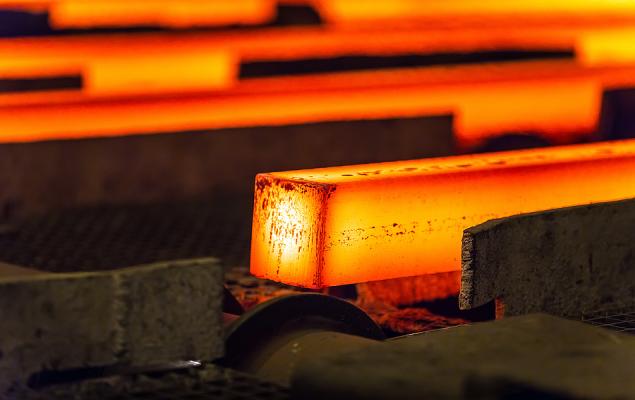
POSCO Holdings is investing KRW 480 billion in a 450,000-metric-ton-per-year automotive hot-dip galvanizing line at its Gwangyang Works, with completion targeted for 2028. The 8CGL project will lift total galvanized-steel capacity to 4.95 million metric tons annually and target extra-wide panels for midsize and large SUVs and RVs. Integration with a newly completed electric-arc furnace, AI process controls and robotics is intended to improve efficiency and enable lower-carbon automotive steel production.
Analysis
The economic signal is modest near term: the capital outlay is unlikely to move PKX earnings before 2028, while construction, commissioning and automotive qualification create execution risk. The investable issue is whether PKX can earn a persistent premium on low-carbon exposed-sheet steel rather than simply add capacity into a cyclical flat-steel market. If automotive customers accept a carbon premium and qualification wins begin appearing in 2027, the asset can improve product mix and reduce earnings sensitivity to commodity-grade steel spreads; absent that, depreciation and start-up costs dilute returns.
The EAF-linked route is strategically more valuable in Europe-facing and global OEM sourcing discussions than in domestic Korean volume alone. It potentially pressures Japanese and Korean auto-sheet peers—Nippon Steel (5401 JP) and Hyundai Steel (004020 KS)—whose decarbonized premium-sheet capacity and customer approvals may lag. The offset is raw-material economics: EAF cost and quality consistency depend on availability of low-residual scrap or substitutes, so a scrap-price spike could transfer much of the claimed efficiency gain to upstream ferrous scrap suppliers rather than PKX margins.
Consensus may over-credit automation as incremental EBITDA before line utilization is proven. AI/robotics in a mature continuous galvanizing process mostly protects yield, labor safety and defect rates; material upside requires lower claims/rework and premium OEM contracts. For the next 1-3 months, this is a low-impact capex announcement rather than an earnings catalyst. Over 6-18 months, monitor OEM nomination disclosures, automotive-sheet mix, capex guidance and the spread between automotive galvanized sheet and benchmark HRC; those determine whether a rerating is justified.
AllMind Terminal
AI-powered research, real-time alerts, and portfolio analytics for institutional investors.
Request TrialMarket Sentiment
Overall Sentiment
moderately positive
Sentiment Score
0.48
Ticker Sentiment
Key Decisions for Investors
- No event-driven add to PKX solely on this announcement; maintain/watch until FY2027 disclosures show named OEM qualifications or a measurable increase in automotive premium-product mix. Thesis is falsified if project capex rises materially above KRW 480bn or commissioning slips beyond 2028.
- Build a 6-18 month relative-value watch: long PKX versus short 5401 JP or 004020 KS only after evidence that low-carbon automotive-sheet premiums are being contracted. Target 10-15% relative upside from mix/multiple divergence; exit if scrap costs compress EAF margins or competitors secure equivalent OEM awards.
- Set alerts on Korean ferrous-scrap pricing and PKX automotive steel spread versus HRC. A sustained scrap-price increase without corresponding sheet-premium expansion is a margin-warning signal and argues against treating the EAF integration as structurally accretive.
- Do not infer read-through to TSLA, NVDA, AMZN, GOOG, META, MSFT, ORCL or QUBT; none has a disclosed economic linkage to the project. Exclude the promotional quantum-computing content from portfolio decisions.
More News
- Wall Street’s Nasdaq hits all-time high as AI frenzy gathers pace
- Data-Center Bet Makes ESDS One of India’s Best New Listings
- Asia stocks ride tech wave higher, oil stays subdued
- Meta is breaking out after introducing Muse AI agent. Where the stock is going, according to the charts
- Anthropic in talks to lease 1 gigawatt from Stream Data Centers- The Information
- U.S. stock futures flat as markets parse Iran talks, AI optimism