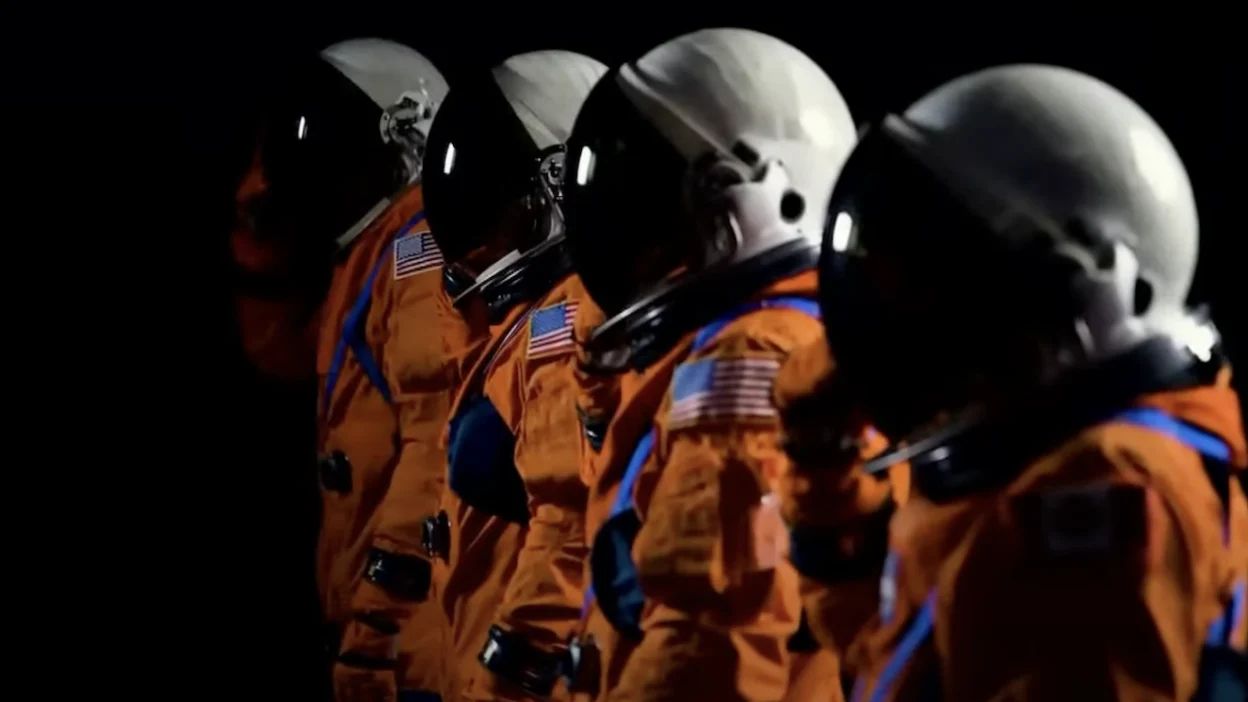
NASA is scheduled to announce the four-person Artemis 3 crew on June 9, with the mission targeted for mid- to late-2027 and focused on Orion operations, rendezvous/docking, and EVA suit testing rather than a lunar landing. The article identifies Raja Chari, Nicole Mann, Kayla Barron and Andre Douglas as top NASA candidates, with Jasmin Moghbeli, Frank Rubio, Zena Cardman and Stephanie Wilson also in the mix. International seats remain uncertain after Gateway’s cancellation, though ESA astronauts Samantha Cristoforetti, Matthias Maurer and Alexander Gerst are cited as possibilities.
The market implication is not the crew announcement itself but the signaling of what NASA now values operationally: proximity to the lunar lander interface, EVA readiness, and prior work on mission architecture. That shifts the value chain toward contractors and subsystems with exposure to rendezvous/docking, suits, avionics, and human-rating software rather than pure “moon landing” headlines. In other words, the near-term beneficiary set is less about launch narrative and more about whose hardware gets validated in the rehearsal phase.
The biggest second-order effect is on schedule risk. If Artemis 3 is effectively a low-Earth-orbit integration dress rehearsal, then any crew choice that prioritizes systems competence over public-profile diversity likely raises the odds of a smoother Artemis 4/5 cadence. That matters for names leveraged to NASA milestones: delays tend to compress funding recognition and push out sentiment inflections by 6-12 months, but successful crew selection can create a fast rerating if it implies program discipline after a history of slippage.
The contrarian point is that the market may be overindexing on the “who” and underpricing the “what if the landers aren’t ready” scenario. If one HLS provider slips, Artemis 3 still likely flies, but the entire beneficiary stack shifts toward the alternate provider and toward NASA’s core Orion/SLS ecosystem. That creates a hidden barbell: prime contractors and mission-critical subsystems may outperform on delay, while the more speculative lunar surface value chain can underperform if the mission remains a systems demo rather than a true lunar-ops catalyst.
AI-powered research, real-time alerts, and portfolio analytics for institutional investors.
Overall Sentiment
neutral
Sentiment Score
0.05
Ticker Sentiment
