
Clockwork.io Raises $31M as LinkedIn, Together AI and WhiteFiber Adopt Its Resilience Software to Stop Wasting GPU-Hours
Source: PR Newswire
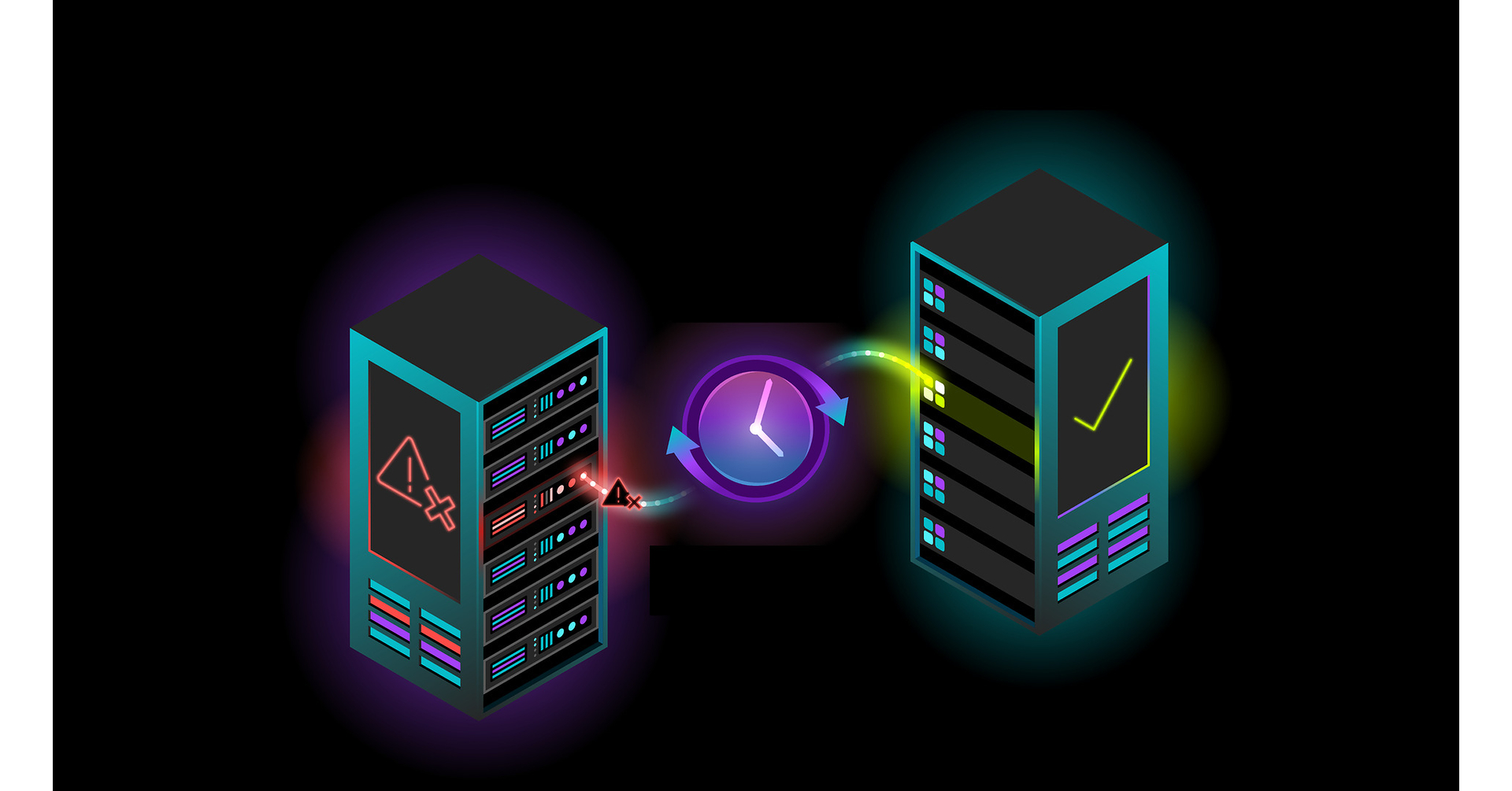
Clockwork.io raised $31 million, bringing total funding to $73 million, and announced production deployments at LinkedIn and Together AI plus expanded adoption by WhiteFiber. LinkedIn says LinkPass prevents tens of thousands of GPU-hours of downtime monthly; SemiAnalysis reported TorchPass reduced training goodput loss from 14% to under 3% for a gold-rated neocloud. The company also introduced code-free multi-node job snapshots and faster asynchronous checkpoints to protect and accelerate AI training, inference and reinforcement-learning workloads.
Analysis
The investable read-through is operational, not a near-term earnings estimate. For WhiteFiber (WYFI), cluster validation and resilience could shorten time from installation to customer-ready capacity and reduce customer-visible service failures—supporting utilization and retention if the deployment scales. But the announcement gives no software cost, contract size, deployment schedule, or before/after utilization, so it does not establish a material margin uplift. Together AI’s productization also suggests resilience may become a differentiator in GPU cloud bids; competitors will face pressure to offer comparable recovery or absorb weaker goodput. Over time, higher effective capacity per installed GPU could temper urgency for incremental GPU purchases, though lower effective compute costs may also stimulate workload demand. Net effect on accelerator demand is ambiguous, and likely second-order to cloud capacity growth near term.
Clockwork remains private; the funding round is not itself a public-equity catalyst. Treat customer testimonials and the cited third-party benchmark as directional until independently verified across workloads. In the next 1–3 months, the key signal is whether WhiteFiber converts expansion into faster capacity acceptance, utilization, or improved service metrics. Over 6–18 months, broad adoption could make fault tolerance table stakes and shift differentiation toward reliability-adjusted cost per useful GPU-hour. The thesis weakens if deployments remain limited, reliability gains fail to improve customer economics, or cloud providers build equivalent tools internally. The article’s Meta training example is not evidence of a Meta deployment.
AllMind Terminal
AI-powered research, real-time alerts, and portfolio analytics for institutional investors.
Request TrialMarket Sentiment
Overall Sentiment
strongly positive
Sentiment Score
0.70
Ticker Sentiment
Key Decisions for Investors
- WYFI: place on a positive watchlist, not an automatic buy. Consider a starter long only if subsequent disclosures show expanding deployed clusters alongside improving utilization, time-to-revenue, or customer retention; set a thesis review if those metrics do not improve over the next 1–2 reporting cycles.
- Before sizing WYFI, verify the Clockwork contract economics, rollout scope, and whether faster cluster acceptance translates into billable capacity rather than only operational benefit. Also monitor capex and funding needs: utilization gains can be offset if capacity expansion outruns demand.
- NBIS: no incremental position from this item alone. Its inclusion as a customer does not establish deployment scale or financial contribution; revisit only with quantified adoption or reliability-adjusted economics.
- Avoid treating the article as a META catalyst: the cited training incident is an industry example, not a disclosed META customer relationship. For the broader GPU-cloud thesis, watch whether competitors report reliability-driven win rates or whether internal resilience tooling makes third-party software less differentiated.
More News
- SpaceX stock climbs to highest since June, returning Musk to trillionaire status
- Wells Fargo gets a bold upgrade ahead of earnings. Why the stock can play catch-up
- U.S. stock futures steady after Nasdaq hits record on reduced Fed hike bets
- Wall Street rewards Microsoft's AI pivot. A longtime skeptic says it's just the beginning
- Nvidia-backed Reflection AI unveils its first open model, Beam. Could it be America’s best chance to compete with China?
- It’s ‘more likely than not’ humanity loses control: Former AI insiders testify safety fixes may be ‘duct tape that will fall off later’